










A federal appeals court on Friday, Aug. 26, vacated the Federal Motor Carrier Safety Administration’s electronic onboard recorder regulation for not addressing how the rule could prevent the devices from being used to harass drivers.
A three-judge panel for the U.S. Court of Appeals for the Seventh Circuit concluded that “the rule cannot stand because the agency failed to consider an issue that it was statutorily required to address.” The Truck and Bus Safety and Regulatory Reform Act of 1988 “requires the agency to ensure that any such device is not used to ‘harass vehicle operators.’ ”
The Owner-Operator Independent Drivers Association appealed FMCSA’s April 5, 2010 rule last year. That regulation required EOBRs for all the trucks used by a carrier that has a greater than 10 percent rate of noncompliance with hours-of-service rules in any single compliance review.
However, existing regulations require EOBRs be used “to monitor safety, not workplace productivity.” Any future EOBR rule should contain “an adequate explanation that addresses the distinction between productivity and harassment (that) must also describe what precisely it is that will prevent harassment from occurring,” the court wrote.
The court disposed of the rule on “a narrow basis,” referring to the absence of a guard against harassment. It stated OOIDA had presented several arguments against the rule in February and noted “the briefing raises a litany of issues that would make for a difficult and exhaustive administrative law final exam.”
An agency official said she is reviewing the court’s decision and that FMCSA “is committed to raising the bar for commercial truck and bus safety.”
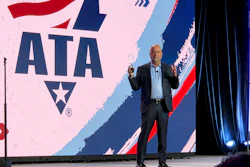
The American Trucking Associations said it supports FMCSA’s efforts to mandate the adoption and use of EOBRs for hours-of-service compliance. “FMCSA’s research shows that compliance with the current hours-of-service rules is strongly associated with reduced crash risk,” said Bill Graves, ATA president and chief executive officer. “Of course, electronic logging devices are an important tool for improving hours of service compliance.

“We hope FMCSA will work quickly to address the court’s decision and the important device design and performance specifications being evaluated by the administrator’s Motor Carrier Safety Advisory Committee,” Graves said. “As demonstrated by the record improvement in the industry’s safety record since the framework for the current hours-of-service rules went into effect and the agency’s own compliance and crash data, increasing compliance with the rules is vital. Of course, electronic logging devices are an important and effective means to this end.”