













 The new Interstate 35W bridge spanning the Mississippi River in downtown Minneapolis has an anti-icing system that automatically sprays the road surface with corrosive chemicals in advance of a winter storm.
The new Interstate 35W bridge spanning the Mississippi River in downtown Minneapolis is a showcase of modern innovation. With 14-foot-wide shoulders, 10 traffic lanes and LED highway lighting, the structure also is light rail-ready to meet future transportation needs. But one feature of this “smart bridge” technology highlights a growing concern for the trucking industry: An automated system automatically sprays the road surface with anti-icing chemicals in advance of a winter storm, laying down a corrosive substance that literally eats away at trailers, brake systems and related components.
In the last several years, state departments of transportation across the country increasingly are switching from comparatively mild sodium chloride and salt brine applications to more effective yet more corrosive chemicals. The two most common options are magnesium chloride and calcium chloride.
What makes these chemicals so troublesome for fleets is their ability to wick into seams, cracks and paint chips and dry. When the chemical comes in contact with moisture, the chemical process begins; oxidation occurs within 24 hours and is visible in as little as three days.
“Where trucks and trailers used to last 10 to 15 years, now every time there is a nick in the paint and the metal is exposed to these chemicals, you run the chance of developing a huge mass of rust and corrosion,” says Al Anderson, director of national fleet accounts for Jost International. “When you have several hundred or thousands of trucks running around, that can quickly become expensive.”
Despite the corrosive effects of the chemicals on commercial vehicles, state DOTs’ primary objectives are to keep roads open and improve safety. “When roads get icy and cars start sliding around, it seems to us the better choice is to use chemicals that we know are effective while continuing to look for something that might replace them,” says Kevin Gutknecht, communications director for the Minnesota Department of Transportation.
As these chemicals become more prevalent nationwide, the trucking industry is left searching for answers. The increase in corrosion caused by these chemicals has become so pervasive that the American Trucking Associations’ Technology & Maintenance Council and other industry groups have formed committees and task forces to tackle the issue head on. “By the time our industry realized the problem, states were too engrained in using [the chemicals] and weren’t going to stop,” says Roy Gambrell, maintenance director for Nashville, Tenn.-based Truck It.
The trucking industry’s efforts gained some momentum with SAE J2721, a new recommended practice developed by the Society of Automotive Engineers Truck and Bus Corrosion Committee to address corrosion in commercial vehicle parts in favor of the traditional salt spray test from the American Society of Testing and Materials. J2721 mimics real-world applications with conditions including corrosive chemicals, drying, humidity and abrasive exposure. “When the chemical dries and starts to react with humidity is when corrosion begins to occur,” says Gambrell, who has been involved with TMC’s anti-corrosion initiative since its inception.
Suppliers step up efforts
Hearing the industry’s call for improved corrosion resistance, suppliers have been hard at work to prevent corrosion, especially in wiring connections, materials and coatings in the “hot zone,” the area up to 42 inches off the ground most susceptible to splash and spray.
“Ten years ago, corrosion wasn’t a big issue if you took well-known precautions and made proper material and coating selections,” says Randy Petresh, vice president of technical services for Haldex Commercial Vehicle Systems. “In the last four years with the advent of more aggressive compounds being used by state DOTs, the corrosion issue has gone north again and has been growing ever since.” Compounding the problem are recent bans on hexavalent chromium and cadmium plating previously used by suppliers and manufacturers to prevent corrosion.
Petresh says Haldex’s strategy involves new coatings and formulas to improve performance and durability as well as improved sealing components. “Even if you get cosmetic exterior corrosion, you don’t want to deal with internal contamination that can affect the performance and lifespan of the product,” he says. “We are focused on improving the seals on all our parts, valves, spring brakes and brake adjusters.”
Jost International re-engineered its landing gear with its Magnum product that has a unique lubrication package to limit corrosion. The gear box has been upgraded with extra seals and is filled with moisture-preventative grease, and the landing gear doesn’t require manual lubrication for five years.
ArvinMeritor uses a special coating process for OE brake shoes to prevent corrosion. The process uses electronically charged coating particles that are pulled into crevices and hard-to-reach areas, providing a uniform coating. Remanufactured shoes are treated with PlatinumShield, a multistep coating process where shoes are shot-blasted, washed and treated with iron phosphate before a final coating is applied.
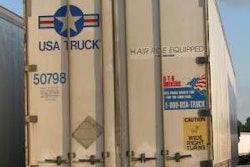
Trailer manufacturers also recognize the increase in corrosion and are looking at new methods to protect trailer parts. “[Corrosive anti-icing chemicals] definitely weed out the better designs and materials, because they are detrimental to the trailer lifespan unless proper coatings are used and maintained,” says Charlie Fetz, vice president of research and development for Great Dane Trailers. “As a consequence, paint and coatings have improved along with electrical systems and lamps.”
Underbody components are most affected due to not only splash and spray but also the increased exposure to paint chips caused by gravel and road debris. Some companies use galvanizing techniques and zinc-based coatings that molecularly bond to steel for a corrosion-resistant finish. Electrical connectors are more commonly weather-sealed and coated to prevent chemicals from entering cabling, where it can travel as much as 10 feet.
An ounce of prevention …
On the road, the best way to limit the effects of magnesium chloride and calcium chloride is to develop a regimented vehicle wash program during the winter months to remove the chemicals before corrosion sets in, then regularly inspect and seal any connections and exposed metals.
Fort Dodge, Iowa-based Decker Truck Line washes its fleet with high-pressure solvents as often as possible to remove salts and chemicals, never going more than three weeks at a time between washes. “If a driver doesn’t come to our terminal on a routine basis, then we wash them on the road,” says Joe Fell, senior vice president. “It is a good selling tool for us that our equipment looks as good as it can when we go to our customer, and that pays off in preventing excessive corrosion.”
During routine service, inspect brake linings for abnormal wear and out-of-service conditions. “Cracks or voids more than 1⁄16 inch wide, cracks that exceed 1½ inches in length, cracks across the lining face that extend through the lining edges and cracks that result in missing chunks of lining … any of these conditions may indicate rust jacking,” says Joe Kay, chief engineer of brake systems for ArvinMeritor.
The biggest challenge for fleet owners is that the chlorides are difficult to remove once they’ve dried. Some fleets use acid washes that lower the pH of anti-icing agents to a more neutral level to aid in removal.
Another method to limit corrosion is adding splash guards to reduce road spray and keep chemicals away from some of the more susceptible parts and components.
Patti Olsgard, director of safety for the Colorado Motor Carriers Association, suggests fleet managers get involved with organizations at the state level to work with DOTs to educate them on application methods. “We explain that we aren’t opposed to using [the chemicals], but they have to use it in a responsible manner to keep roads open while not crucifying an industry that lives on the road.”
When Colorado first started using magnesium chloride, DOT would apply the chemical 24 hours ahead of a forecasted storm, too early for pre-application because too often the bad weather never materialized. “We worked with them on tightening up the application window and training their employees on how heavy to apply the solution to the road,” says Olsgard, who conducted research into the corrosive effects of liquid deicers several years ago when she was ATA’s manager of safety and human factors research.
Also important, says Olsgard, is to urge DOTs to test the corrosive effects of these chemicals on metal and to add corrosion inhibitors in their anti-icing solutions. “We have had luck with that, but you have to work with them every year,” says Olsgard. “A lot of DOTs are finding the same problem that we face – their spray nozzles and tubing are being corroded as well.”
Understanding how new anti-icing chemicals react with metal and wiring and addressing problem areas before oxidation occurs is the best method for extending trailer and component life.