










Most of our focus at NACFE is on Class 8 heavy-duty trucks, and rightfully so, since these trucks consume the majority of the fuel used in trucking. However, we do not overlook medium-duty trucks—specifically Classes 4–7.
Medium-duty trucks still consume a significant amount of fuel. Some studies show the fuel consumed by medium-duty trucks is almost 25% of the total fuel consumed by large on-road trucks (e.g., Classes 4 to 8). Medium-duty trucks also run in cities where there is a lot of stop-and-go traffic and people. One study of line-haul trucks showed that trucks emit seven times more NOx than the 2010 standard in stop-and-go traffic. While the study was not conducted on medium-duty trucks, it is likely the same problem exists in the medium-duty sector. EPA27 regulations should help this, but it will come at a cost. Sales of medium-duty trucks are also significant.
Get 80 tips to boost your fuel efficiency
One 2023 study indicated Class 5 to 7 vehicles accounted for approximately 42% of the annual sales from original equipment manufacturers (OEMs). If you include Class 4 vehicles, this becomes substantial.
We hear a lot about alternative energy technologies such as battery-electric (BEV), hydrogen fuel cell electric (FCEV), natural gas, renewable diesel, and biodiesel. For medium-duty trucks, one other fuel worth considering is propane autogas. For a fleet that puts a lot of miles on its vehicles, propane autogas can offer an attractive total cost of ownership (TCO) and has impressive environmental characteristics. More specifically, it provides ultra-low nitrogen oxides NOx nearly zero particulate matter (PM), and a reduction in carbon dioxide CO2. Often in life, and certainly when it comes to alternative powertrains, there are trade-offs between cost and emissions. With propane autogas, you get both low cost of ownership and low emissions.
Low TCO
The cost of propane autogas is significantly lower than that of diesel and gasoline. Figure 1 shows the price throughout the U.S. (Note that prices were based on the week of April 10, a month into the Iran war.) The $1.80-ish propane price translates to about $2.70 per gallon on a diesel gallon equivalent basis. In addition to low fuel prices, it is worth noting the stability of these prices. More specifically, the price of propane autogas has increased by only 1% to 2% over the last three months, while diesel fuel has increased by 30%+. This stability helps fleets budget their expenses more accurately.

Maintenance costs are also a factor. Given the simplicity of the emission architecture of a propane autogas engine, the need for diesel particulate filter (DPF) cleaning, diesel exhaust fluid (DEF) tank filter replacement, and diagnostic issues related to aftertreatment is eliminated. This provides more uptime and lower maintenance costs. Other maintenance items are similar to those of gasoline engines and, in general, are less costly than diesel.


Ultra-low emissions and simplicity
Propane offers ultra-low NOx, nearly zero PM, and some CO2 reduction relative to diesel.
The clean combustion characteristics, low combustion temperatures, and efficient three-way catalyst (TWC) of propane autogas result in ultra-low NOx. Most propane engines have been certified at 0.02 g/bhp-hr which is far below the upcoming 0.035 g/bhp-hr threshold of EPA27. Due to the low carbon characteristics of the fuel, a propane engine emits nearly zero PM.
These ultra-low NOx levels are achieved with a simple aftertreatment strategy. Referring to Figure 2, you can see a representative TWC. There are two key components to the TWC: the catalyst and oxygen sensors. Conventional diesel requires multiple selective catalyst reduction (SCR) bricks, diesel oxidation catalyst (DOC), DPF, urea doser, ammonia slip catalyst, DEF tank, DEF tank heater, NOx sensors, mid-bed ammonia sensor, and complicated aftertreatment software. This is a big contrast to propane autogas engine. The simplicity of the propane Autogas system translates directly to reliability.
As we look at the EPA27 regulation, the complexity of diesel increases. The major OEMs have chosen two different strategies. One requires the addition of two 5kW heaters and a 48-volt alternator. Others are adding a urea doser at the hot side of the aftertreatment. In addition to the need to add these extra components, the heaters will likely increase idle fuel consumption. As for the strategy of adding an additional doser, DEF consumption will likely double, relative to pre-EPA27 engines. Note, with the Iran war and the closure of the strait of Hormuz, DEF prices have also increased. DEF spot prices are trading $4.70 to $4.80/gallon in April 2026 and were about $4.40/gallon in early February 2026.
 Figure 2: Illustration of a TWC PERC
Finally, as we think about medium-duty trucks and emissions, it is worth noting that many of these trucks run in urban areas with high stop-and-go traffic and high population density. While they do not have zero tailpipe emissions, propane engines provide the best solution within the internal combustion engine family given their ultra-low NOx, virtually zero PM, and lowest total cost of ownership.
What types of propane autogas vehicles are available and where is the sweet spot?
Figure 3 illustrates the different types of propane-autogas-powered trucks that are available. Most medium-duty applications—such as step vans, pick-up and delivery vehicles, utility/service, box trucks, shuttles, school buses, and municipal trucks—are available with a propane engine.
Major chassis are the Ford F-150, F-250,E-450,F-59, F-650 and F-750. Roush CleanTech provides propane engines in lot of these chassis. There is plenty of horsepower in these applications, in the 350+ hp range, and supported by the Ford 7.3-liter V8, and GM 6.6 V8 engines. Alliance Autogas offers bi-fuel options, which can run on propane or gasoline. They offer products in Ford, Isuzu, Toyota, and GM chassis. As we look into the future, Bluebird will be offering a propane autogas delivery truck later this year and Nexio will be taking orders for trucks later in the year.
Fleets that run medium-duty trucks can benefit from propane. The sweet spot for propane has these characteristics:
- High mileage, more than 25,000 miles per year
- Return to base
- Moderate power ratings for medium-duty applications
- Tight schedules that demand quick refueling
- Regions where ultra–low Nox and PM are critical
- Fleets that want some sustainability (e.g. GHG) improvement
 Figure 3: Illustration of propane truck options PERC
What are the challenges of propane-powered vehicles?
There are some key challenges for propane-powered vehicles.
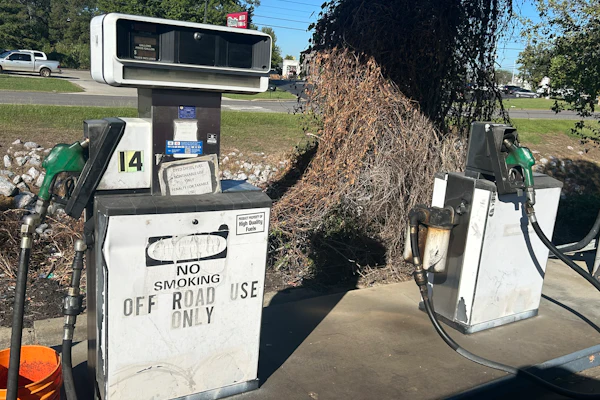
- Availability and infrastructure: Compared to diesel and gasoline, propane is at a disadvantage because there are fewer fueling stations. Fleets need to work with propane fuel providers. Fleets have the option to build their own fueling stations or work with providers that often supply infrastructure in exchange for a long-term contract. Fueling stations are much simpler and lower cost than those for natural gas.
- Upfront costs: While propane provides a low TCO due to fuel and maintenance savings, there is an upfront cost to modify vehicles. Depending on the type of upfit, costs can range from $10,000 to $20,000 per vehicle. This is why high mileage is important to offset initial costs.
- Broad supply of vehicles: Propane-powered vehicles are available on Ford, GM, Isuzu, and Nexio chassis. Currently, other OEMs such as PACCAR, Daimler, International, and Volvo do not offer a propane product.
- Maintenance and repair: No specific facility upgrades are needed for garages currently working on diesel and gasoline engines; however, special service tools and technician training are required. This is provided by both Roush and Alliance Autogas.
- Residual value: If a fleet trades vehicles frequently, a diesel vehicle typically commands a higher residual value.
As the industry navigates the "Messy Middle," there are numerous product offerings, each with its own set of advantages and disadvantages. Propane autogas is an alternative that offers attractive features for fleets operating medium-duty trucks. I encourage you to look into PERC, Roush, Alliance Autogas, Blue Bird, Nexio, and any others that offer propane autogas technology to become more educated on this topic.