










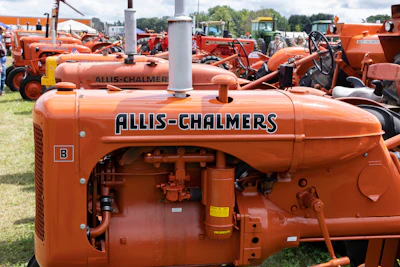
- The 1959 milestone: Allis-Chalmers' fuel cell tractor used 1,008 cells to power a 20 HP motor.
- Production reality: The North American heavy-duty market produces 220,000 to 350,000 trucks per year.
- Adoption lag: New technology units from the "Big Four" (Daimler, Volvo, PACCAR, International) are projected at only 5,000–10,000 units annually in the near term.
- 2030 outlook: Independent analysis projects hydrogen fuel cell sales at 5,000–10,000 trucks per year by 2030.
The oft used saying is that “hydrogen is the fuel of the future, and always will be.” Did you know that Allis-Chalmers built a hydrogen fuel cell farm tractor in 1959? The Smithsonian has a picture and brief story on this impressive feat and there are more than a few videos on it on YouTube.
Hopefully your first reaction is not “who is Allis-Chalmers?” Although that’s a fair response considering they went out of business and had sold off all their assets before 1999. Their farm tractor production under that name ended in 1985. Today, you probably have to go to an antique farm tractor pull or swap-meet to see one in operation.
The 1959 hydrogen tractor: A one-off that predicted the future
Allis-Chalmers was, at one point in time, one of the largest industrial companies in America with footprints as diverse as water turbines for the Hoover Dam, generators for the New York City electrical grid, nuclear power products, aircraft engine turbochargers, fuel cells for the early NASA space program, and literally hundreds of product lines including their Persian orange farm tractors.
That 1959 Allis-Chalmers fuel cell tractor had an impressive 1,008 fuel cells, but was essentially the same size as a traditional D10/D12 gasoline tractor. Research for this began in 1951. The fuel cells powered a standard DC 20 HP electric motor. The hydrogen fuel was actually in the form of propane, a hydrocarbon rich in hydrogen with the chemical formula C3H8. The operating pressure appears to be typical low pressure found in propane tanks used for barbecues and forklifts, so probably not a lot of range.
Allis-Chalmers’ timing with that tractor may make it the first manufacturer to publicly have shown a fuel cell powered vehicle. They even manufactured them for golf carts. General Electric won the race to put one in the Gemini capsule for the NASA space program. You can see one from the Gemini program at the Hutcheson, Kansas, Cosmosphere Space Museum.
The fuel cell farm tractor was a one-off technology demonstrator. Allis-Chalmers exited fuel cell products by 1970, selling its division to Teledyne Corporation. The tractor is reportedly on display now at the McLeod County Historical Society in Hutchinson, Minnesota on loan from the Smithsonian.

Market saturation: Why new powertrains face an uphill battle
Our current decade is producing a range of technologies to power freight trucks. NACFE has written extensively on new prototype diesels demonstrated in the DOE SuperTruck programs, new production diesels demonstrated in several of the Run On Less events since 2017, natural gas engines including new 15 liter ones demonstrated in Run on Less – Messy Middle, battery electric trucks from both traditional and new OEMs, hydrogen fuel cell vehicles, and even autonomous trucks.
Never in my history in this business have I seen so many competing powertrain technologies, all rapidly improving and maturing.
To some extent, you can view the market for truck powertrains as saturated. Perhaps too many choices. Perhaps too many manufacturers. The last few years of the current freight recession, truck/driver over-capacity and depressed freight demand clearly present challenges in light of all these technology choices.
Take note of numbers. Traditional OEMs have existing product lines to support. These existing products represent somewhat predictable cash flows. They represent a long-term capital investment in tooling and operations that require them to be in production for years to achieve the required paybacks. These traditional OEMs might, each in total, produce 15,000 units to 30,000 units a year. How much of that existing production capacity will they now allocate to new technologies? Realistically, new production lines at traditional OEMs start with numbers on the order of a few hundred to maybe a few thousand a year.
The entire heavy-duty truck market in North America produces somewhere between 220,000 to as high as 350,000 trucks per year. Those numbers are inherently limited by buyers’ capacity to order and use those vehicles. Yes, factories could likely produce more vehicles, especially with new manufacturers bringing added capacity to the industry, but the market could not buy more of them.
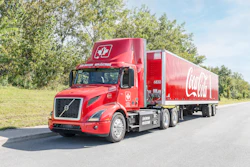
A projection of 5,000 to 10,000 new technology units a year might be optimistic in the near term combining all of the big four traditional US semi-truck OEMs — Daimler, Volvo, PACCAR and International. There are millions of trucks in use. It will take time for these new product lines to make any dent in the total population mix of technologies on the road.
The Allis-Chalmers lesson: Avoiding brand dilution in the "Messy Middle"
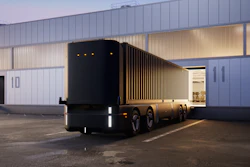
The new manufacturers entering the North American heavy-duty truck market, names like Tesla, Windrose, and Hyundai, have the potential to increase the capacity for new product volumes. But it’s not just getting the supply chains and production capacity up and running, they also have to win customers from the established truck makers. How fast will that go? Tesla seems to have order commitments for approximately 1,000 Semis, just looking at the most current California grant information. Windrose has publicly stated it expects to put approximately 200 trucks into the U.S. market this year. Hyundai reportedly has approximately 50 Xcient’s in U.S. operations, but sales projections are unavailable. One independent analysis projects North American sales for fuel cells on the order of 5,000 to 10,000 trucks a year possibly by 2030.
All those new technologies are not going to instantly replace existing product lines, even under optimistic projections. There is a great deal of inertia involved in carving out market share for new products and in ultimately retiring old ones. It can take decades. Technology preeminence and market preeminence require new customers and repeat customers. The market chooses the winners and the losers, but the choices manufacturers make on which products they produce and which they retire shapes customer purchases.
A lot can happen to companies in a matter of a couple decades. Allis-Chalmers went from being one of the biggest, innovative, industrial powerhouses in America to being an antique collector’s badge at county fairs in about 20 years. Much of their equipment is still running, still providing value, but the company badge is a memory. There are many lessons to learn from Allis-Chalmers’ history.
One lesson is brand management requires OEMs focusing on the long-term health of their companies and making smart technology choices early when volumes are small while avoiding over-diversification and dilution of their brands. The Goldilocks challenge for OEMs is not to have too few or too many products.
As the market for new technologies heats up, cash flow from low volume sales will be tight, while demand for capital investment and R&D will increase. Companies with existing product lines with experience-based cash flows will have hard decisions to make on promoting new lines. Startup OEMs will be challenged to ramp up sales to maintain positive cash flow before the deep pockets run dry.
An “all of the above” product line likely will lead to disappointing company bottom lines. Similarly, picking the wrong horse in the technology race will result in market share lost to competitors.
The near-term future of truck sales will be a critical influence to the long-term brand equity of OEMs. Which badges of companies will the antique dealers be coveting in 20 years’ time? Which OEMs will choose wisely and remain healthy?