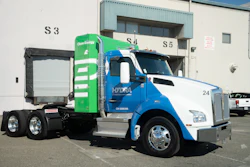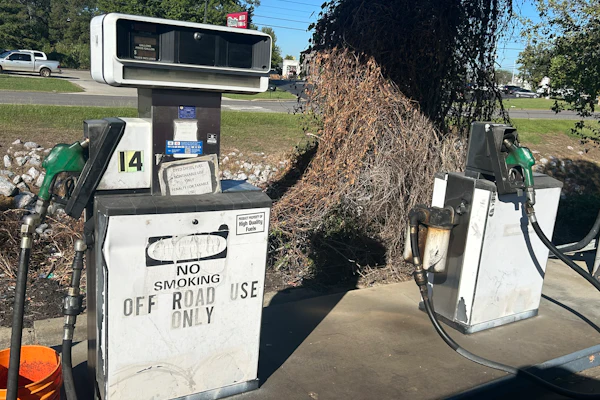











Driven by aggressive state policy investments and a surging rebound in commercial cargo vans, the adoption of zero-emission trucks in the U.S. jumped in the second half of last year, accounting for more than 4% of all new truck deployments, according to a report compiled by clean transportation industry group CALSTART.
The June 2026 edition of the biannual Zeroing in on ZETs report revealed that zero-emission trucks (ZETs) represented 4.14% of all commercial truck deployments nationwide from July through December 2025. The figure marks a significant shift from the first half of the year, when clean-energy trucks accounted for just 1.32% of deployments as part of a broad industry slowdown.
By December 2025, cumulative zero-emission truck deployments reached 72,309 vehicles across the country, expanding from 52,787 at the end of 2024, according to the report. The commercial market added 19,522 total vehicles over the course of the year. The second-half volume of 12,996 units nearly doubled the 6,526 vehicles deployed from January through June, representing a 31% year-over-year increase compared to the same period in 2024.
The sharp acceleration came despite a steep 35% year-over-year drop in overall U.S. truck sales during the final six months of 2025, which fell to 314,067 units. CALSTART analysts attributed the resilience of the zero-emission segment to fleet operators acting before federal tax incentives expired, alongside growing fleet confidence in the technology's lower operational costs relative to fossil fuels.
"The market, even absent tax credits, has shown positive growth," said Jared Schnader, executive vice president of initiatives at CALSTART’s Florida regional office. "The data points to a strong zero-emission future as operational cost advantages continue to accelerate over fossil fuels, capital costs continue declining, and operator acceptance trends in a positive direction."
Life after federal incentives: The 'spark spread'
CALSTART's data challenged assumptions regarding reliance on government subsidies. Despite the expiration of certain federal tax credits at the end of September 2025, a post-incentive sales surge occurred.


CALSTART Technical Project Manager Jacob Richard attributed the resilience to maturing total cost of ownership (TCO) cases. Modern OEMs are offering robust battery warranties lasting seven to eight years, he noted, giving carriers the confidence to hold onto ZEV assets longer and reliably project long-term fuel savings on their business ledgers.
Additionally, state-level voucher stacking—which can still reach up to $120,000 per vehicle in states like California, New York, and New Jersey—continues to lower the financial barrier to entry for mid-sized and smaller fleets.
Surprisingly, the data reveals bubbling ZEV momentum in southern states like Georgia and Texas, which lack aggressive local incentive programs. According to CalSTART, this is driven by ideal regional freight hubs and a highly favorable "spark spread"—the delta between high local diesel prices and low electricity utility rates. Regional 200-to-300-mile daily loops connecting shipping nodes like Houston, Dallas, and Atlanta are proving to be economic sweet spots where electric trucks make perfect financial sense on a per-mile basis, even without federal aid, Richard said.
Geographically, 22 states have crossed the threshold of 1,000 cumulative clean truck deployments, up from 18 in the previous market update. Colorado, Indiana, Oregon, and Tennessee each surpassed 1,000 vehicles, while Illinois, Michigan, and Washington topped 2,000 units. On a pure volumetric basis, California led with 12,874 cumulative deployments, followed by Florida at 6,179 and Texas at 5,953. However, Florida and Texas ranked below the national average on a normalized basis due to a heavy concentration of light cargo vans that failed to keep pace with their massive total truck stocks.
Vocational 'Slam Dunk'
The standout surprise from the late 2025 data was a massive surge in zero-emission refuse truck deployments.
"It had kind of been slow, steady, but finally in the back half of last year, it took a huge spike up... to about 3.92% of all deployments," Richard noted, pointing out that the previous peak in any six-month reporting interval was just 1.52%.
The success of refuse trucks mirrors the steady climb of zero-emission yard tractors, which are now approaching nearly 10% of all new deployments. Both vehicle types represent ideal use cases due to their predictable, repetitive operations, Richard said. Refuse trucks, in particular, maximize energy efficiency by clawing back massive amounts of power through regenerative braking during constant stop-and-go city routing.
By vehicle segment, commercial cargo vans remained the primary market driver, accounting for 12,158 deployments in the latter half of 2025, compared to 5,374 in the first half. Non-cargo-van categories contributed 838 deployments during the same period.
Yard tractors maintained the highest overall zero-emission penetration rate of any individual segment, reaching 3.21% of all units in operation nationwide.
Hydrogen's 'very slim' market
While battery-electric vocational vehicles thrive, the outlook for hydrogen fuel cell technology in the heavy-duty sector has dimmed. Once seen as long-haul's zero emissions solution, hydrogen adoption has effectively stalled out.
Only one new hydrogen fuel cell truck was deployed nationwide in the back half of 2025, bringing the U.S. total to 198 vehicles—all confined to the heavy-duty segment.
Richard highlighted several compounding pressures currently suffocating the hydrogen market:
- Lack of Competition: Following Nikola's exit from the market, Hyundai—with its XCIENT model—is currently the only original equipment manufacturer (OEM) actively competing in the U.S. Class 8 hydrogen segment.
- Infrastructure gaps: sizable infrastructure development has failed to materialize, leaving fleets with no reliable network to support regional or long-haul corridors.
- High fuel costs: Even where hydrogen infrastructure exists, fuel pricing remains restrictively high compared to electric charging.
Because battery-electric vehicle (BEV) models continue to rapidly improve in forward pricing, production volume, and range, Richard predicted hydrogen will likely find itself a "very slim market in the future." Too, Nikola's spectacular and very public face-plant left early adopters with a "bad taste in their mouth," Richard noted, adding some motor carriers are still stuck with those fuel cell trucks that now sit idle on fleet lots due to a lack of ongoing support networks.
Makings of a used market... finally
The report also noted early indications of a secondary clean-vehicle market. In 2025, 120 zero-emission trucks were taken out of active service. Experts indicated these units were not permanently retired, but rather transitioned off initial leases, entered dealer inventories, or moved into commercial remarketing and auction channels.