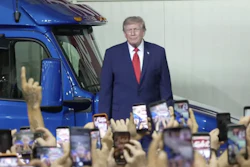











Testifying before a Senate subcommittee on transportation technology Tuesday, American Trucking Associations (ATA) President and CEO Chris Spear lobbed criticism at the California Air Resources Board (CARB), blasting its regulatory framework as economically unworkable and completely detached from operational reality.
"California Air Resources Board does not sit down with our industry," Spear told lawmakers. "They don't care what our industry has to say. Their attitude is: 'You'll figure it out.'"
The trucking industry narrowly avoided being the epicenter of what Spear characterized as an economic collapse when the Trump administration last year spiked the California Truck Emission Standards (CARB's Omnibus rule) and California Truck NOx Emission Standards (CARB's Advanced Clean Trucks regulations), respectively. California withdrew its waiver request in January 2025 to implement its Advanced Clean Fleets rule, which would have effectively mandated electric trucks in the state.
Spear cautioned that California’s push to rapidly electrify heavy-duty commercial fleets ignored massive deficits in power generation, grid capacity, and raw material supply chains.
"It was one of the dumbest ideas I have ever seen put forward by anyone, including California, which I refer to as the breeding ground of all bad public policy," Spear testified.
The reality of operational and cost parity
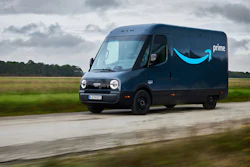
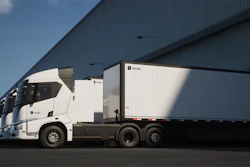
Electric semis accounted for just 0.2% of total heavy-duty truck sales last year, and Spear noted that zero-emission tractors cost three-and-a-half times more than modern, clean diesel equipment.
Fleet managers, too, face operational hurdles with current battery-electric setups, which can require six to eight hours of charging to achieve maximum rage (generally just more than 200 miles), compared to a 15-minute diesel fill up that can cover 1,200 miles.
Spear stated that if the now-repealed truck rules had remained intact, laws would have forced a mandatory 10% adoption rate by 2030, requiring roughly 3.5 million electric trucks to hit the road over a five year period.


Asked by Sen. Bernie Moreno (R-Ohio) whether such mandates would trigger a catastrophic financial hit for American consumers, Spear's reply was biting.
"To push us toward an electric platform with infrastructure that doesn't exist would have been horrendous in terms of cost and capability," Spear said. "It would have imploded our economy."
Spear further noted the irony that California relies on an electrical grid already plagued by seasonal rolling blackouts; that the critical minerals needed for vehicle batteries are currently sourced almost exclusively from international adversaries and volatile regions like China and the Democratic Republic of the Congo; and that domestic environmentalists routinely block mining initiatives stateside that take upwards of a decade to permit.
Overlooking clean diesel gains
ATA's top executive argued that state regulators often ignore the environmental leaps achieved by modern internal combustion technology.
"Sixty trucks today on the road—brand new diesels—emit what one truck emitted in 1988," Spear said. "That's how far we've come... If they just focused on getting the 2010 or older trucks off the roads in California, they would've exponentially reduced emissions. They could've done that right now without turning on electricity, which they don't have."