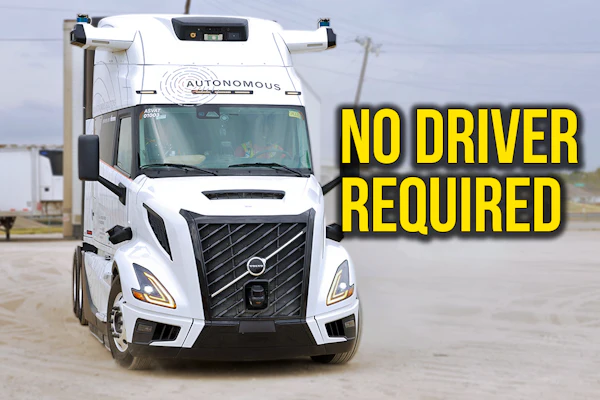











Autonomous trucking is already injecting billions of dollars into the U.S. economy and is poised to become a $70 billion contributor to the national gross domestic product by 2035, according to a new report released Thursday by Aurora Innovation.
The study, conducted by the Steer Group, found that the nascent self-driving freight sector currently supports 17,000 jobs and generates $3.3 billion in total economic output. As the technology scales over the next decade, researchers project it will serve as a massive efficiency engine for the $1 trillion U.S. trucking industry.
"We believe that autonomous trucking can be a massive engine for the American economy and fortify the national transportation industry," said Chris Urmson, co-founder and CEO of Aurora.
Semi-trucks drive over 200 billion miles each year, completing 89% of trips on interstates, freeways, and other arterials well-suited for self-driving. The report estimates that, by 2035, there could be 170,000 self-driving trucks on the highway (8% of the trucking fleet), representing 33 billion self-driving truck miles.
Regionality of driverless trucking
Texas has emerged as the primary hub for the autonomous trucking industry, fueled by early commercial pilots from pioneers like Aurora and Kodiak. The state's dominance is attributed to a combination of industry-friendly regulations and its massive existing freight market.
While the "Sun Belt" remains the current hotspot—with Arizona, Florida, Georgia, and Tennessee seeing significant activity—the geographic landscape of self-driving freight is expected to shift dramatically over the next decade.
Industry forecasts suggest that while Texas will maintain its top spot through 2030, a major regulatory shift could propel California to the number two position, overtaking current leaders in the Southeast. This projection hinges on California updating state laws to explicitly permit autonomous freight operations on its highways.
By 2035, the pilot phase is expected to be a thing of the past and the report projects that self-driving technology will be integrated across the entire continental United States.



Economic impact
The analysis suggests that self-driving technology could solve a potential labor crisis and by enabling "always-on" 24/7 operations, autonomous fleets could more than double current vehicle utilization rates.
Reduced fuel costs, improved fleet utilization and insurance savings, alongside a reduced reliance on drivers, could lead to a 15% to 25% reduction in the costs of operating a truck per mile.
For consumers, these efficiencies may hit the wallet in a positive way. The report estimates that lower transportation costs and a potential 32% reduction in fuel waste could translate into $9 billion in increased annual purchasing power for American households by 2035.
Safety dividends
By 2035, the deployment of technology like the Aurora Driver is projected to prevent 490 fatalities per year, 8,800 injuries and 23,000 total crashes–what the report calls a significant "safety dividend."
The U.S. Department of Transportation standards value these safety improvements at roughly $9.4 billion annually. The report also anticipates a 40% drop in insurance premiums for freight companies as human error is mitigated on long-haul routes.
Workforce evolution
While the rise of automation often sparks fears of job loss, the report indicates that 82% of current autonomous vehicle workers earn above the national median wage, with many roles accessible to those without college degrees.
To address the transition, Aurora announced a $1 million commitment to its "Aurora Works" initiative. The program aims to establish technical training and educational partnerships to prepare the workforce for new roles in the evolving industry.
"Aurora has been a steadfast partner in advancing workforce leadership efforts," said Tara Andringa, Executive Director of Partners for Automated Vehicle Education. She noted the report proves the sector is already supporting jobs across the country while laying the groundwork for future economic resilience.