










What you need to know
- Bot Auto, an L4 autonomous trucking company offering Transportation as a Service (TaaS) through its AI-driven fleet, took a 75,000 pound load (gross) 230 miles.
- The cost per mile was under $2, the company said.
- The delivery was completed overnight between Houston and Hutchins, Texas, and was a standard commercial booking through Ryan Transportation, a third-party brokerage
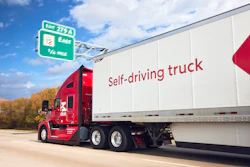
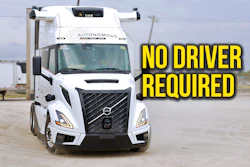
Autonomous trucking startup Bot Auto completed Wednesday morning what it describes as the industry’s first "humanless" commercial truckload delivery, transporting freight 230 miles across Texas without someone in the cab or remote intervention by a person. According to the company, the vehicle operated without a safety driver, an in-cab observer, or low-latency remote steering.
In September, Bot Auto completed its first humanless hub-to-hub validation run in Houston and had been operating fully autonomous commercial operations between Houston and San Antonio with safety drivers onboard.
"People told me autonomous trucking commercialization still had a long way to go. This load is my answer," said Dr. Xiaodi Hou, founder and CEO of Bot Auto. "We did not build a demonstration; we built a business: commercial freight, on public roads, with no human in the cab... making money on every mile."
The delivery, completed overnight between Houston and Hutchins, was a standard commercial booking through Ryan Transportation, a third-party brokerage, and not a controlled demonstration. Through a partnership forged in February, Ryan Transportation integrates Bot Auto's Transportation as a Service (TaaS) model and driverless fleet into its logistics network.
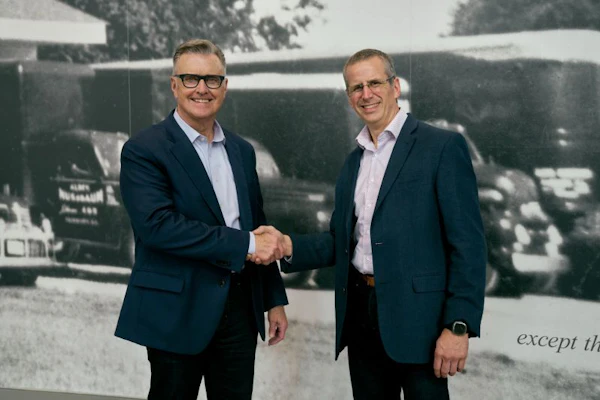
"Forming this partnership is a strategic decision based on Bot Auto’s proven technology and the role autonomous trucking will play long-term in logistics," said Jeff Henderson, senior vice president at Ryan Transportation.
The truck left Riggy’s Truck Parking in northeast Houston at 1:16 a.m. Central Time for a Safe Stop location south of Dallas, arriving at 4:57 a.m. with an average speed of 65 mph.
The lane was selected specifically for a shipper with a high-service requirement and a tight delivery window—parameters that often stress traditional carriers due to federal hours-of-service regulations and driver fatigue. Bot Auto’s head of communications and marketing, Kaylee Nix, told CCJ the time window wasn't a matter of trying to avoid traffic; rather, it was a requirement of the customer.


"They have us pick up in Houston in the evening and require an overnight run with morning delivery," she said, noting the load consisted of home products and the gross weight was around 75,000 pounds. "The service lane has historically been difficult for them to find consistent, reliable service for, which is why they selected Bot Auto as their carrier of choice."
Bot Auto, which operates a fleet of 12 trucks from Brookshire, Texas—located approximately 35 miles west of downtown Houston—claims the Houston-to-Dallas run was completed at a cost per mile under $2. "I can say that this was a profitable load for us," Nix said, adding that the cost is already lower than that of a human driver.
Bot Auto faces a competitive landscape and ongoing public scrutiny regarding the safety of driverless heavy trucks on public highways, but Hou said his company intends to scale by focusing on economic autonomy that avoids the hidden costs of remote-driving layers.
"Houston to Dallas is mile one," Hou said.
The company plans to use this lane as a foundation for a broader network of self-operating freight routes across the U.S. Nix added that humanless runs will continue on the northbound I-45 lane as weather conditions and the regular demands of the customer permit. "I will say that we are already mapping southbound I-45 with plans to expand humanless capabilities to that service lane around summertime," she said.
While the load didn't require a human touch, Nix noted there was a team of dispatch and fleet operations personnel "who use fleet telematics to watch the load—like any other carrier uses visibility tools—and there were several vehicles in a caravan of sorts watching the run, but zero human interaction with the operation of the vehicle."
Had something gone wrong, Nix noted the truck would have entered the Mitigated Risk Condition protocol—"a standard safety protocol that would have the vehicle move off the highway and out of the lane of moving traffic, then notify emergency services and the fleet operations team at HQ."
What is Bot Auto?
Bot Auto was founded in 2023 by Xiaodi Hou, formerly the founder of TuSimple. Nix said the company was able to go from concept to commercialization quickly because of Hou's experience in autonomy and because the team was kept intentionally lean with a narrow focus.
"The entire goal was simply to make a truck that can drive itself," she said, adding that competitors face the difficulty of being large corporate entities with significant overhead and selling their products as hardware/software-as-a-service packages.
"Because we own the asset, upfit it, iterate on it, test it, and manage it ourselves, we were able to reduce the go-to-market time by an exponential amount," she said. "We have also shifted to a specific type of AI learning, called compute, that allows our system to learn and adapt faster than before."