










The House of Representatives Transportation and Infrastructure Committee on Sunday released the text of a bipartisan, five-year surface transportation reauthorization bill that invests in America’s roads, bridges, transit, rail transportation, and highway and motor carrier safety programs.
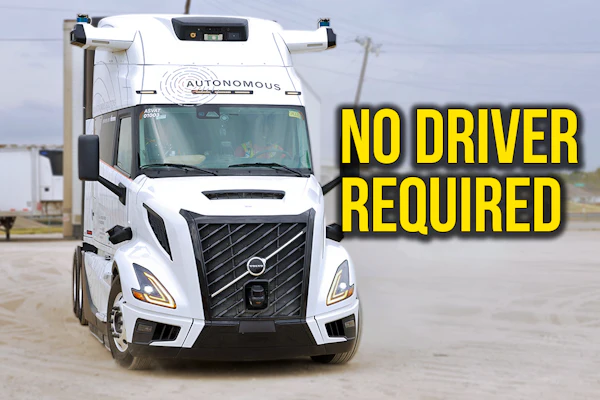
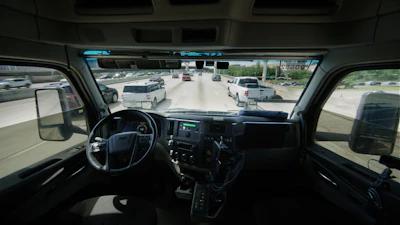
The BUILD America 250 Act also includes language that would for the first time create a comprehensive federal policy framework to regulate the safe deployment of autonomous trucks.
"By replacing today’s patchwork of state regulations with a single federal standard, the BUILD America 250 Act would ensure Americans benefit from the safety and economic advantages that autonomous driving technology delivers," said Don Burnette, founder and CEO of autonomous trucking company Kodiak AI.
For autonomous trucking to reach its full potential, Torc CEO Peter Vaughn Schmidt told CCJ the industry needs a national approach that prioritizes safety, supports innovation, and gives developers a clear path to responsible deployment.
The bill creates a detailed regulatory framework for what it defines as an "ADS-equipped commercial motor vehicle" (a commercial motor vehicle equipped with an Automated Driving System meeting automation Level 3, Level 4, or Level 5).
The bill explicitly mandates that a human operator must be located within the vehicle during the operation of an ADS-equipped commercial motor vehicle if it is transporting minors (such as school bus transportation) and placarded hazardous materials.
The bill would also set strong safety standards, Burnette noted, affirming the U.S. Department of Transportation has the tools it needs to oversee the scaled rollout of autonomous trucks, while supporting American innovation and investing in the transportation workforce.
"The inclusion of a first-ever federal framework for autonomous commercial vehicles in the BUILD America 250 Act signals that Congress recognizes the immense potential of autonomous trucking to fortify the American economy," Gerardo Interiano, Aurora's senior vice president of government relations and public affairs told CCJ, adding, "this bill strengthens interstate commerce and establishes safety standards for our nation’s highways. We look forward to continuing to work with lawmakers and the U.S. Department of Transportation to safely scale autonomous trucking nationwide."
Jeff Farrah, CEO of the Autonomous Vehicle Industry Association (AVIA) noted the legislation "takes a bold step forward in establishing a federal policy framework for autonomous commercial motor vehicles in the U.S.," adding that such a framework will allow the U.S. "to remain the global leader in autonomous vehicles and beat China."



Onus on the manufacturer
For Level 4 or Level 5 autonomous systems, the manufacturer must assume and observe the duties normally applicable to a human driver regarding real-time vehicle operation and dynamic driving tasks (DDT) when the ADS is engaged within its operational design domain (ODD). This also applies if the vehicle fails to detect that its ODD conditions are no longer met or fails to achieve a minimal risk condition (MRC).
The bill noted that the Transportation Secretary may issue additional requirements to ensure that remote assistants, remote drivers, or DDT fallback-ready users possess appropriate CDL endorsements or specialized training. The bill also requires the DOT to establish a cap on the maximum number of autonomous vehicles a single remote assistant or driverless dispatcher can be responsible for at one time.
Manufacturers must also provide arguments and evidence to the Secretary of Transportation proving that the autonomous vehicle provides an equivalent or greater level of safety than a human-driven truck. This must include hardware/software breakdowns, sensor integration details, comprehensive ODD explanations, and validation test environments.
Manufacturers must maintain a strict cybersecurity plan, which includes a written policy to detect and respond to attacks/false control commands, incident response plans, and a designated cybersecurity management officer.
Systems must be detailed that provide a visual or digital hazard alert to nearby road users when executing or entering a minimal risk condition (such as automatically activating high-conspicuity lighting or transmitting warnings to connected infrastructure).
The bill clarifies that the Transportation Secretary cannot exempt autonomous trucks or their operators from standard attendance and surveillance requirements for hazardous materials transport, standard vehicle safety and maintenance inspections, and relevant Federal Motor Carrier Safety Regulations governing remote personnel capable of issuing vehicle commands.
Incident and crash reporting
The bill instructs the Transportation Secretary to prescribe reporting requirements that align with National Highway Traffic Safety Administration rules. At a minimum, autonomous truck operators/manufacturers must report any crash resulting in a fatality, serious injury, a strike of a vulnerable road user, an airbag deployment, or a vehicle tow-away.
Workforce and consumer impact
The bill authorizes $27.5 million for fiscal year 2027 (increasing incrementally to $29.5 million by FY 2031) to establish a workforce grant program that will fund projects to train current CDL holders, mechanics, and technicians on how to safely operate, inspect, and maintain ADS-equipped trucks, and to support registered tech-focused apprenticeships.
The National Consumer Complaint Database will be updated to explicitly track and display safety violations specific to ADS-equipped commercial motor vehicles, allowing the public to view this data both separately and aggregated.
The bill orders the DOT to establish an 18-member transportation rulemaking committee consisting of autonomous technology providers, truck manufacturers, law enforcement, trucking industry members, and labor organizations to continually adjust safety fitness determinations and inspection procedures specifically for autonomous commercial trucks.
“As freight demand continues to grow, autonomous trucks have the potential to strengthen supply chains, improve roadway safety, and reinforce America’s leadership in advanced transportation technology," added Schmidt.