The U.S. Supreme Court is currently presiding over a pivotal case, Montgomery v. Caribe II Transport, which could redefine liability for the multi-billion dollar freight brokerage industry. The core legal debate centers on whether the Federal Aviation Administration Authorization Act (F4A) of 1994 preempts state-level "negligent hiring" claims against brokers when a selected motor carrier is involved in a catastrophic accident.
Currently, federal circuit courts are split on the issue:
- The Ninth Circuit has previously ruled that brokers can be held responsible for negligent selection.
- The Seventh Circuit (where this case originated) has ruled they are not liable.
Legal experts anticipate the Supreme Court will side with the brokerage industry, ruling that the F4A preempts these lawsuits. However, such a decision may not be the final word. A ruling in favor of brokers could spark significant congressional regulatory reforms to close perceived "loopholes" in crash liability.
Ultimately, the decision—expected by June—will determine if brokers must take a more active role in carrier safety or if victims of truck accidents will lose a primary avenue for legal recourse.
Contents of this video
00:00 10-44 intro
00:51 Can freight brokers be held liable?
02:45 Regulatory reforms
04:41 The "Data Gap" & FMCSA Safety Records
06:12 Out-of-Service rates and unsafe drivers
07:45 Defining motor vehicles and broker liability
09:51 What more can freight brokers do?
Speaker 1:
A case before the US Supreme Court right now could spark sweeping regulatory reforms for freight brokers regardless of what the justices decide. Hey everybody. Welcome back. I'm Jason Cannon and my co-host is Matt Colt. Montgomery versus Karib Transport centers on the scope of the Federal Aviation Administration Authorization Act of 1994, and the outcome could reshape the liability landscape for the multi-billion dollar logistics industry and affect the rights of victims injured in commercial truck accidents. A decision is expected by the end of the term in June.
Speaker 2:
During oral arguments earlier this month, the panel of justices asked a lot of questions and said a lot of things. Things like brokers could do more with regard to picking safe motor carriers to haul freight and trying to define what role brokers play in the movement of goods. But that's not really the question at hand.
Speaker 3:
The real fundamental question being asked in the Montgomery case is whether or not brokers can be held liable for negligent hiring. Under this broader statute, we call F4A, the Federal Aviation Authorization Act. 1994, I believe the act was put in place. But what has happened over the last 30 years or so is we've watched brokers take over enormous amounts of market share for transportation of products. So brokers today move maybe 20 or maybe even 30% of all freight. And so what we see happening over the last 30 years is this expansion of brokers. And what follows that is, okay, we've had a catastrophic or significant vehicle accident. There was a broker involved with this. Can the broker be held liable? And when they made the selection of this particular motor carrier. The real issue before SCOTUS was that this question had been asked to a bunch of federal circuits.
And so the way it works is the Supreme Court on the very top. Then you have the appellate courts and underneath them are these lower district courts. And the appellate courts have come up with different answers. So these courts looking at the exact same language of F4A and coming to different conclusions. That's why the Supreme Court took this case on was to resolve a split among the circuits so we had seen kind of develop. So there was the Ninth Circuit on one side, the Seventh Circuit on the other side. Under the Ninth Circuit's kind of the Miller case, actually another C.H. Robinson case, brokers had the potential of being held responsible for negligently selecting a motor carrier. And on the Seventh Circuit, which is where the global trans case was initially and where this particular Montgomery case originated from, they had found that brokers were not going to be held liable.
So the fundamental question is whether or not a broker can be held responsible for negligently hiring a motor carrier. And that question will be answered in the months ahead.
Speaker 1:
Now the prevailing wisdom is that C.H. Robinson will win this case and the justice's opinion will hold brokers not liable for selecting an unsafe carrier should an accident occur. But that decision, if indeed that is the decision that they hand down, could spark regulatory reforms at the congressional level that close what some see as gaps or loopholes in crash liability.
Speaker 3:
What I ultimately think happens here is that the Supreme Court will rule that F4A preempts these negligent hiring cases. Now that doesn't mean it's over. It just means in the court system it's over. Presumably there could be legislative action that changes things. We've seen talk of Delilah's law and that has some different permutations around driver qualification. We've seen some talk of broker things being involved. But what I think happens is we are going to see that brokers are likely not going to be liable in negligent hiring cases with this existing law. That may change with outside pressure when people start realizing this industry's dangerous. For driving a truck, it's the eighth most dangerous job in the country. It's still one of the most common jobs in the US, but we have a lot of work to do. And if we see anything, like for me specifically, I would love to see some action on increased resources and funding for the FMCSA.
I think they need it. I think they can use it. And I also think that there's a pathway for reevaluating the insurance rates that motor carriers are running. If we want to hold people responsible, we want to hold people responsible for things when they're unsafe. We need to really focus on the underlying safety regulations. Just like with the federal government, initially under the Biden administration, they were in favor of brokers being held liable. But under the Trump administration, they've pivoted. The FMCSA and Department of Transportation are on the side of brokers not being held responsible because they realize brokers don't have access to the same kind of data that they do. And we really do need to see FMCSA step up a lot more with funding and regulation because that's what's going to make the road safer.
Speaker 2:
Among the points the Justice has heard from C.H. Robinson was that FMCSA is understaffed, that brokers don't have access to all that data that exists relative to a carrier or driver's safety record. And in some cases, FMCSA data is crap.
Speaker 3:
Well, one of the pieces of information that's discussed throughout the opinion, or at least in certain sections, is driver qualification files. So if you're a motor carrier and you're going to hire a driver to come work for you, you are absolutely going to have their driver qualification file. You will know how good of a driver they are based on what data you can pull. That information, driver qualification files, are not allowed to be shared with brokers. There's a lot of privacy regulations in place, other statutes in place. And so there is data, for example, that brokers, if they were to be held negligently liable for hiring somebody for not paying attention or not vetting properly, presumably they would have to see those files then. Because if you're a broker and a truck driver falls asleep and hits somebody and they come after you, they're going to say, "What vetting did you do?
" And you'll say, "I used RMIS. I used gen logs. I used this and that and this. " And still the driver had an accident. That's again, why the fight is so interesting is that you have so many motor carriers that are underinsured for the risk that they create. And then we're left scratching our heads and saying, "Who else can we hold responsible?" And that's where the brokers become so interesting for the plaintiff attorneys, as well as many state governments.
Speaker 1:
But things like a motor carriers at a service rate are publicly available and they're easily available. And it's not difficult to make a case based on assumptions that carriers with a high out of service rate overall. Let's say 60% for equipment violations. They have a higher probability than those with lower rates of employing unsafe drivers.
Speaker 3:
We as an industry still maintain around a 22% national out of service rate. So we have one in five commercial vehicles are unsafe at any speed. When you're talking about brokers making selections, their motivation is not always, I mean, obviously to find the safest motor carrier, their job is to find who's available in the area, maybe to make sure they have all the licensing and insurance that's required, but their job is to find capacity at a reasonable price that's beneath what they're being paid for by the shipper. And so their incentive is not always to say, "We're going to find the absolute safest motor carrier." And a lot of brokers, I think, fall into the trapping of thinking, if they're authorized by the FMCSA, clearly they're good enough to move freight for me. And again, the fundamental problem is that the regulator is not able to enforce all of the existing regulations across a wide industry that we have.
And so we're left with these private companies kind of filling in the gap. And maybe to your point, the 60% out of service rate, you should be out of business. You shouldn't even be on the road anymore. But FMCSA hasn't pulled your authority and you're looking for capacity. So it's a lot about training for brokers, training for motor carriers, and really realizing that we don't have the resources at the regulators level to really push out a systemics at safety chains that we really do need.
Speaker 2:
There was a lot of discussion during oral arguments around the definition of a motor vehicle, and that's important relative to broker liability because the broker does not own and does not control the truck. Brokers argue that they simply make the connection between a freight shipper and a federally approved owner of that equipment.
Speaker 3:
It's a very important question. And the definition is not necessarily about motor vehicle, though that's very important and we'll explain why in a second, but the real question is related to a motor vehicle. So as we talk about the statute of F4A, brokers are in charge of price, route and service. That's like the thing that they provide. And if a regulation happens at the state level, if it impacts the price route and service related to a motor vehicle, that's this key piece that gets brought up. So the question becomes, all right, what is a negligence lawsuit in a state court? And that's kind of a regulation to an extent of how states regulate different types of companies, motor vehicles and motor carriers. And negligence lawsuits had been blocked in some circuits and they had not been blocked in others. And it goes back to this question of how it relates to the motor vehicle.
So as the Supreme Court correctly identifies, brokers do not own the transportation. They don't own the truck. They don't own the trailer typically. They don't have control over the driver. They don't have any driver qualification files. So the brokers are in a very distinct disadvantage when it comes to understanding whether or not a motor vehicle and a motor vehicle, a motor carrier is going to be safe. And so this is the big fight around what is the broker's relationship to the motor vehicle? And that's why this piece gets carved out and talked about in every single brief we saw filed by both the folks on the side of C.H. Robinson, like the TIA and the US government, and the same question on the opposite side for the states that are saying, "We think there should be some level of liability." So again, it all boils down to this very small section of this statute of whether or not those claims are going to be preempted.
And we're going to find out, but that was a lot of the big part of that oral argument.
Speaker 1:
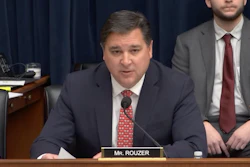
Justice Brett Kavanaugh mentioned a broker's ability to do more with regard to on highway safety than what brokers currently claim they're responsible for. And the entire 90-minute argument seemed to be an eye-opening exercise for the justices on how the freight transport process works, and in some cases, how flawed it can be.
Speaker 3:
I think the Supreme Court is wrestling with what our supply chain reveals. And I fundamentally believe we have the supply chain that we deserve. When we might want things different, I think one thing's more safe or whatever, safer generally, but we have what we kind of deserve. And what Justice Kavanaugh and other justices understood was that you have 94% of motor carriers have no safety rating with the FMCSA. So there is a regulator that is talked about throughout the opinion of being overworked, underfunded for the mission in front of them. And so the natural progression is, okay, if the federal government isn't getting us enough, what else could the brokers be doing? What other things could they do? And the Montgomery case is really interesting because this motor carrier that C.H. Robinson selected ostensibly had a conditional safety rating. And so C.H. Robinson, again, per the internal documents, C.H.
Robinson, their own routing guide would not generally allow them to use this motor carrier. But ultimately, the way that the court looks at this, and I think this way that it's ultimately going to kind of pan out, is the broker relies on the federal government to tell them who is allowed to operate commercial vehicles in the movement of freight. And so they're just picking folks that are already on this pre-approved list with some additional level of scrutiny. What Kavanaugh brought up, and I think Stan's repeating, there is no standard that is set across every state for what is a good amount of vetting for a motor carrier. There is no standard of, if you do this, this, and this, that's going to be sufficient. The reality is you can always do more. You can always do more. And if that is the idea, just like we talked about years ago with the Werner case, could the driver for Werner and Texas have gone slower and that car who crossed the center line and smashed into them, would that accident have been avoided?
Maybe. So it all goes back to how far the causation pathway you go. For the brokers, we know that they're doing generally as best they can with the data available and there's a ton of tools that exist for them, but we have a significant amount of motor carriers, and this was talked about in the oral arguments. Six to 7,000 motor carriers enter the industry every month. So you have a bunch of new authorities coming in with a regulator that is stretched as thin as they possibly can trying to tell the country these are motor carriers that we think are safe and these are ones that you shouldn't use. It's an interesting time, and that's why this case is so fascinating.
Speaker 1:
That's it for this week's 10:44. You can read more on ccJdigital.com while you're there, sign up for our newsletter and stay up to date on the latest in trucking industry news and trends. If you have any questions or feedback, please let us know in the comments below. Don't forget to subscribe and hit the bell for notifications so you can catch us again next week.