










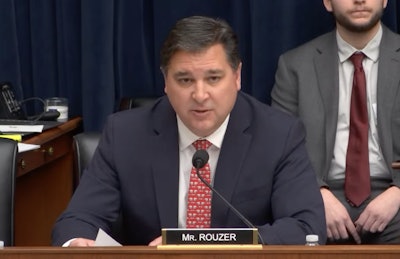
The U.S. House Transportation and Infrastructure Committee on Wednesday moved Dalilah’s Law forward with a 35–26 vote.
The bill, spearheaded by Highways and Transit Subcommittee Chairman Rep. David Rouzer (R-NC), gained momentum following President Trump’s recent State of the Union address, where he urged lawmakers to take legislative action on the matter.
"I look forward to working to get this bill through the House and Senate to answer President Trump’s call to restore public trust on our roadways," said Rouzer.
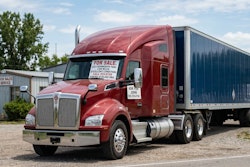
The bill would require all commercial truck drivers to demonstrate English language proficiency and ban motor carriers from using certain foreign-based dispatch services. It also takes aim at the self-certification of CDL training, which has led to a cottage industry of "CDL mills." DOT has dropped 7,000 CDL training providers from its registry in recent months and 4,500 more have placed on notice for potential removal.
"Representative Rouzer’s bill, Dalilah’s Law, codifies a simple premise: no English, no license," said Transportation Secretary Sean Duffy. "Unqualified and unvetted foreigners have no business getting behind the wheel of an 80,000-pound vehicle and killing innocent American families."
To ensure states follow the mandates, the bill proposes withholding federal highway funds from non-compliant states. A state could lose up to 8% of its apportioned federal highway funds for the first offense and a maximum of 12% for subsequent violations. The financial penalties would take effect Oct. 1, 2026.
"Today we’re one step closer to safer roads for Dalilah Coleman, her family, and all Americans," said Rouzer. "Ensuring each truck driver is qualified and legally operating will protect the public from these tragic, yet preventable accidents."
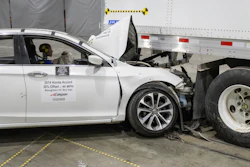
The proposed legislation is named after Dalilah Coleman, who was five years old when she suffered critical injuries in a collision caused by an undocumented immigrant operating a semi-truck.
Earlier this year, Dalilah was a guest of President Trump at the State of the Union address. During the speech, the President highlighted her story to advocate for a federal ban on granting commercial driver’s licenses (CDLs) to unqualified individuals and those in the country illegally. Proponents of the bill argue that Dalilah’s tragic accident is part of a broader trend of safety incidents involving drivers who lack the proper qualifications to operate heavy commercial vehicles safely.



The American Trucking Associations, Truckload Carriers Association, National Tank Truck Carriers, Owner-Operator Independent Drivers Association and state trucking associations across the country are among the more than 50 trucking stakeholders to support of Dalilah’s Law.
“Dalilah’s Law would restore accountability by establishing rigorous, consistent requirements for CDL testing, issuance, and oversight," said ATA President & CEO Chris Spear. "This legislation would protect the overwhelming majority of motor carriers and truck drivers who are committed to upholding the highest standards."
Among other provisions, Dalilah’s Law seeks to improve roadway safety by:
- Ensuring consistent enforcement of English language proficiency requirements during roadside inspections and making clear that drivers who cannot meet those standards should be placed out of service.
- Modernizing the driver record notification system so motor carriers are promptly alerted if a driver’s CDL has been revoked, suspended, or is otherwise invalid.
- Requiring the U.S. Department of Transportation to strengthen oversight of training providers, ensuring new drivers receive the instruction they need to operate safely.