










Western Express (CCJ Top 250, No. 31) installed Intelligent Speed Assistance on 100 of its 3,600 trucks in 2019 to test its impact on driver safety. The company, which operates primarily as an over-the-road carrier, expanded deployment across all trucks beginning in 2020.
Western Express Director of Safety Daniel Patterson said ISA led to a 56% improvement in average miles per accident and a 53% reduction in speeding violations in the first year. He noted that the carrier also implemented collision mitigation technology around the same time.
“I can't say that every single one of these accidents or this improvement was solely because of ISA, but it was a major part of that improvement,” Patterson said.
Western Express uses the E-SMART speed limiter, which uses proprietary advanced position systems technology within a GPS embedded into its onboard device to accurately locate vehicles and actively manage the maximum allowed speed by reducing acceleration based on speed-limit data for U.S. roads that is gathered across multiple databases.
In a joint study involving nine fleets, primarily commercial motor vehicle operators from both the public and private sectors that had deployed or were seriously considering deploying ISA, the U.S. Department of Transportation Volpe National Transportation Systems Center and the Insurance Institute for Highway Safety/Highway Loss Data Institute (IIHS) reported that fleets observed a mix of direct safety gains, cost savings and operational improvements.
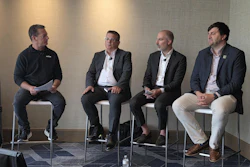
Representatives from the two agencies joined Patterson and Peter Goldwasser, executive director of Together for Safer Roads (TSR), for a recent TSR Talks webinar to discuss the benefits and challenges associated with installing active ISA – technology that actively throttles the vehicle to prevent speeding above the speed limit or some threshold above the speed limit.
“Speeding is a huge problem and something that hasn't changed much over the years,” said Jessica Cicchino, senior vice president of behavior and infrastructure research at IIHS. “We see that about one-third of traffic fatalities are due to speeding, and we know that commercial vehicles and fleets are a useful place to be able to demonstrate these technologies.”




Sarah Yahoodik, an engineering psychologist at the USDOT Volpe Center, said one goal of this report, titled “Intelligent Speed Assistance in Fleet Management,” was to drive home the fact that the act of speeding is killing people.
“Since the pandemic, we have seen a general increase in fatalities on the road, unfortunately, but one thing that we haven't necessarily talked about is the fact that the proportion of those fatalities that are related to speeding is increasing,” Yahoodik said.
The study found that ISA was proven effective at decreasing speeding risks among fleets that had adopted it. Though there were indirect benefits that IIHS and the Volpe Center weren’t expecting, fleets’ motivating factors for deploying ISA fell into two primary categories: safety and cost savings.
Safety
ISA simultaneously served a safety imperative, resulting in large reductions in speeding behavior and fewer crashes, and a business imperative, resulting in fewer violations, reduced costs, better CSA scores, reputational protection and more efficient operations.
In addition to a reduction in speeding violations, Patterson said Western Express also saw a 50% reduction in the severity of those violations. Yahoodik noted that one fleet saw a drop in speeding tickets from six to eight per week to just one over a nine-week period post ISA installation. She said internal telematics-based speeding violations also dropped significantly across fleets.
“ISA isn’t just about fewer tickets,” she said. “Fleets saw fewer hard braking alerts, fewer red-light infractions and about a 30% reduction in preventable collisions.”
She added that geofencing high-risk driving areas like steep curves, for example, also contributed to fewer crashes. Geofencing ISA has also reduced weather-related crashes and low bridge strikes.
Patterson said Western Express implemented weather-related geofences for the first time in Q1 of this year using state 511 portals that provide access to real-time travel, traffic and road condition information. It resulted in a 22% drop in weather-related crashes compared to prior years.
He added that it nearly eliminated collisions with bridges
“If we do have one today, it's at a very, very low speed, which in turn also reduces the cost significantly,” Patterson said.
Costs
The biggest cost savings observed were related to speeding, like the savings recognized from fewer traffic tickets as well as from the costs associated with crashes.
One unexpected cost saving was theft prevention and recovery.
Patterson offered an anecdote in which two of Western Express’ trucks were stolen in New York City on a Saturday night while the drivers were taking their home time. The ISA allowed the carrier to immobilize the trucks once they found out they were stolen. Additionally, Patterson said the thieves disconnected the ELD and GPS signal, but they weren’t aware of the ISA, which provided GPS coordinates, enabling law enforcement to quickly locate and recover the stolen equipment.
More obvious is the potential for insurance savings. Goldwasser said it takes years of research and data surrounding technologies for them to impact insurance pricing. Fleets have been sharing telematics data with insurers in recent years to help them underwrite policies tailored to their specific risk. While no fleet that participated in the study recognized an insurance discount because of ISA, Yahoodik said there are indirect savings.
“Because insurance can be tied to CSA scores, indirectly, they were able to stabilize or reduce their insurance costs,” she said.
Compliance & Liability
Yahoodik said fleets that participated in the study noticed that speeding reductions led to an improvement in CSA scores. One fleet reduced their CSA score from 65 to about 20.
“I do also want to note with these CSA scores is that when a commercial motor vehicle is pulled over for speeding, then sometimes that can prompt a vehicle inspection, which can then reveal additional violations,” she added. “So, again, the benefit of reducing speeding resulted in a lot of indirect benefits that we did not necessarily anticipate when we first started this project.”
Another of those indirect benefits was improved reputation among the public, customers and regulators, she said, noting that implementing ISA signaled a strong safety culture and reduced customer and citizen complaints about speeding trucks. Patterson said Western Express noticed a major increase in compliance with safety rules on customer yards after installing ISA.
Yahoodik said deploying ISA also looks good in the event of litigation. Avoiding nuclear verdicts that can cost millions was another motivation among fleets to adopt this technology. Fleets also use dash cameras and telematics to coach drivers, which experts have said can go a long way in preventing nuclear verdicts as well. Yahoodik pointed out that, in addition to cost savings, fleets noticed time savings associated with ISA as well.
“When you eliminate the problem completely, you don't have to coach,” she said. “Some fleets noted that they had a lot of … time savings with coaching – up to 25% reduction in coaching time in one case.”
Challenges
Like with most or all other tech deployments, the greatest challenge is driver acceptance, Patterson noted, but educating drivers has proven to gain their buy-in. Yahoodik noted that it may be difficult to get support from leadership of smaller or mid-size fleets because much of the ROI is anecdotal.
“One lesson learned from a couple fleets: they did not necessarily establish baseline metrics to demonstrate the need for active ISA,” she said. “They wish that they had because then the benefits would have been a lot clearer.”
Formalized performance and economic evidence and more rigorous, large-scale and long-term studies will be needed to translate ISA’s safety benefits into clear business cases and support insurance and regulatory frameworks.
While ISA isn’t new, its active use in fleets, especially in North America, is “niche,” Yahoodik said, adding that there is growing federal and fleet interest.
Many drivers have experienced passive ISA without realizing it, she said, offering Waze speed indicators that light up red when the speed limit is exceeded as an example. Active ISA limits speed by reducing acceleration – never braking in response to a change in a speed limit zone – so drivers can’t exceed a set limit. This differs from static speed limiters that limit speed at a set maximum, not based on the posted speed limit.
Other challenges include accuracy of speed limit data and missing low-clearance data, Patterson said. If the system picks up the wrong posted speed, or a geofence is incorrect, ISA will enforce an incorrect limit, which could impact the driver’s route and schedule.
Additional integration with modern fleet technology like collision mitigation systems, telematics, geofencing and AI cameras is needed to improve upon ISA’s current benefits.
“One of the defining challenges in fleet safety today is not necessarily a lack of technology,” Goldwasser said. “It's understanding which technologies deliver meaningful safety value, how they fit into real-world operations, and what it takes to successfully deploy them at scale.”