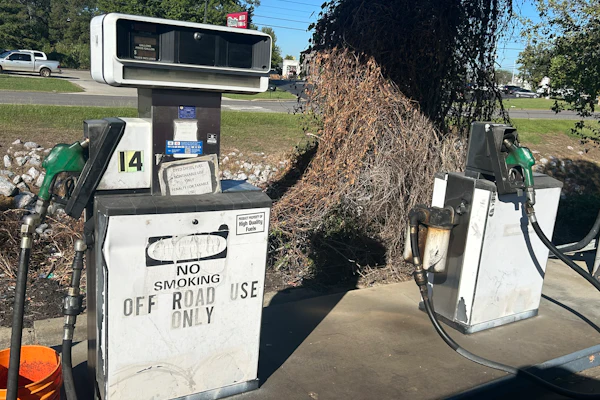











While a temporary federal order now permits semi-trucks to run on cheaper red-dyed diesel without voiding warranties or facing federal penalties, truckers must still watch out for varying state-level tax rules.
- No Mechanical or Warranty Risk: Chemically identical to standard ultra-low sulfur diesel, red diesel will not harm modern semi engines, emissions equipment, or void manufacturer warranties.
- The Federal Relief: President Trump’s executive order temporarily waives federal highway excise taxes (24.4 cents per gallon) on dyed diesel for highway vehicles through December 31.
- State Tax Traps Remain: Because the order only covers federal taxes, drivers can still be held liable for state-level taxes via IFTA unless individual states issue matching declarations.
- Storage Quality Concerns: Off-road fuel storage tanks can sometimes be poorly maintained, meaning the primary risk to your engine comes from fuel contamination rather than the red dyed fuel itself.
Red isn't always bad.
Red was a popular Taylor Swift song, and Redd Foxx was hilarious.
But until this week, red diesel was off-limits for on-highway use, and getting caught running it meant steep penalties: $1,000 or $10 per gallon (whichever is greater), plus unpaid back taxes and additional state-level fines.
President Donald Trump signed an executive order this week permitting truck drivers to use red-dyed diesel on public highways through the end of the year to help lower fuel pump prices.
A number of states have already enacted state-level tax measures, including some that have also unlocked red diesel for on-highway use. However, those are for a shorter period of time than the remainder of this year, which was President Trump's directive.
What is dyed diesel fuel?
The easy answer: It is just fuel, but red.
Dyed diesel is, for all practical purposes, the exact same ultra-low sulfur diesel found at regular on-highway pumps. The only difference is its color. A red solvent dye is added solely to distinguish tax-exempt fuel from taxed clear fuel. Red diesel meets the same ASTM fuel quality and lubricity standards that clear diesel does.
"Dyed diesel comes from the same refineries as on-road diesel," Mack Trucks noted to CCJ Wednesday. "Dye is then added to the diesel for off-highway applications."
Because it is meant for off-road machinery rather than public highways, it is exempt from the federal highway tax (24.4 cents per gallon) along with most state road taxes.
Can it damage my engine?
No, red diesel won't damage your engine.
Well, it shouldn't damage your engine. Because dyed diesel historically has been legally available only for off-road equipment, on-site storage can sometimes be sketchy. If that is the case for where you are planning your tax-free top-off, you are rolling the dice—not due to the dye, but because of the overall quality of the fuel and how it was stored.
If your local station or truck stop also sells off-road diesel, you're probably good to go.
Will it void my warranty?
No.
"As long as it meets the specs for approved diesel fuel," Mack Trucks told me, "it will not void the engine warranty."


Modern emissions systems and high-pressure common-rail fuel injectors handle dyed diesel the same way they handle clear diesel because the chemical properties and sulfur limits are identical.
I could not find any warranty terms that explicitly prohibit the use of dyed diesel, likely because federal warranty protections prohibit a manufacturer from blanket-voiding a warranty simply because a specific fluid was used, unless they can prove that fluid directly caused component failure.
Because dyed diesel is chemically the same as regular diesel, it is impossible to lay blame for any mechanical failure on the fuel itself, unless you went the sketchy route I mentioned earlier. And, again, that would be because the fuel was somehow contaminated, not because it was red.
"The presence of red dye alone would not determine warranty coverage. Engine fuel must meet the requirements outlined in our fluids and fuel guidelines, including ASTM D975 specifications," Daimler Truck North America confirmed to me Wednesday. "Red-dyed diesel itself does not indicate whether the fuel does or does not comply."
Cummins agreed, telling me that "there would be no warrantable impact based specifically on the use of taxed versus untaxed fuel."
Trump's order is not clear-cut
If you have ever filed with the International Fuel Tax Agreement (IFTA), you know it is a balance of having a master's degree in advanced mathematics and geography with a minor in accounting, so it is also important to understand what rules cross state lines and which ones do not.
If you want to avoid a tax headache, it is best to understand the use limits for dyed diesel in the state where you are filling up and the states you are traveling through.
The good news is that your dealer (and inspection officers) will not give you any problems or leave you seeing red.