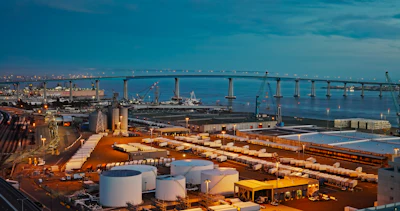
The Port of San Diego announced late last month that it has approved agreements that clear the way for a new bulk sugar import and storage facility at the Tenth Avenue Marine Terminal, a project that could become the port's first cargo operation to rely exclusively on battery-electric Class 8 trucks.
The Port of San Diego Board of Port Commissioners approved an Option to Lease Agreement and authorized a Coastal Development Permit for California Sugar Equipment LLC, a subsidiary of Mexican sugar producer Zucarmex. The company says it plans to construct a bulk sugar handling and storage facility capable of importing up to 280,000 metric tons of raw sugar annually.
Zucarmex has imported raw sugar through the terminal since 2018, but without on-site storage. Sugar has been unloaded directly from ships into trucks for transport to the company's processing facility in Otay Mesa, which requires a large number of trucks to quickly clear arriving vessels.
[Related: California's new electric truck incentive program sparks debate over who needs the money most]
The proposed project would change that operating model by adding approximately 50,000 square feet of warehouse space and a bulk unloading and conveyor system. Raw sugar would move directly from ships into on-site storage before being transported to the Otay Mesa facility, allowing deliveries to be spread out over time.
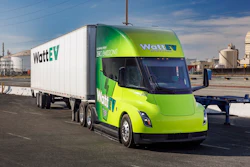
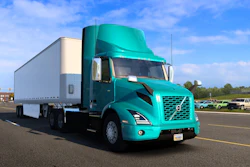
According to the Port, the new logistics model makes it economically feasible to replace diesel trucks with battery-electric Class 8 tractors for all terminal-to-processing facility movements. Officials estimate the transition would eliminate roughly 1,000 diesel truck trips per month associated with the operation.
The project also includes a rooftop solar array designed to supply renewable electricity for charging the electric truck fleet. In addition, the conveyor system and bulk unloading equipment will incorporate emissions-control technology intended to capture at least 95% of particulate emissions generated during cargo handling.

[Related: Port of Long Beach proposes 70-megawatt battery energy storage system]
Port officials say the facility aligns with the agency's broader strategy to reduce emissions from maritime cargo operations while supporting redevelopment of the Tenth Avenue Marine Terminal.
Before construction can begin, California Sugar Equipment must satisfy conditions outlined in the Option to Lease Agreement within 18 months. Once those requirements are met, the Port will then execute a 10-year lease with two optional five-year extensions, allowing development of the facility to move forward.
If completed as planned, the project would represent a notable example of zero-emission trucking being integrated into port cargo logistics, an area where diesel-powered drayage trucks have traditionally dominated freight movement.