










Nate Springer knows that when a commercial fleet manager looks at a heavy truck, they are not looking at a shiny status symbol. They are looking at a revenue-generating tool that cannot afford to sit idle.
"All the devil is going to be in the details on the aftermarket support, the performance, the uptime," said Springer, lead author of the annual State of Sustainable Fleets Report. "Does this product still deliver at the same level that I expect all of my diesel products? That has killed more companies and more great products that we have seen than any other factor."
Speaking on the current state of commercial battery-electric vehicles, Springer mapped out an industry navigating a chaotic transition. Federal funding cuts and shifting regulatory landscape have delivered recent shocks, yet the technology continues to make steady headways where the economics already make sense.
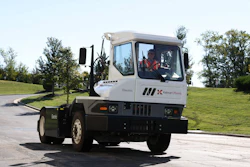
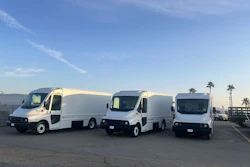
In medium-duty delivery applications and yard tractors, electric power is rapidly moving from trial run to standard operational strategy. Nearly 60% of surveyed fleets in the medium-duty sector report a positive total cost of ownership when swapping out traditional gasoline or diesel engines for electric alternatives.
The heavy-duty market, however, remains the ultimate proving ground. While Class 7 and Class 8 registrations saw a year-over-year decline, grant pipeline data out of California points to a substantial surge of electric tractors and straight trucks arriving over the next 18 months.
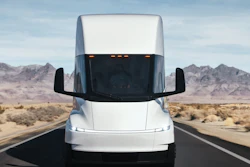
At the center of industry conversation is the Tesla Semi, a platform that promises a 500-mile long-range capability at a competitive price point. Early real-world feedback from early adopters like PepsiCo and DHL has been favorable, with production expected to scale into the low thousands of units per year over the next one to two years.
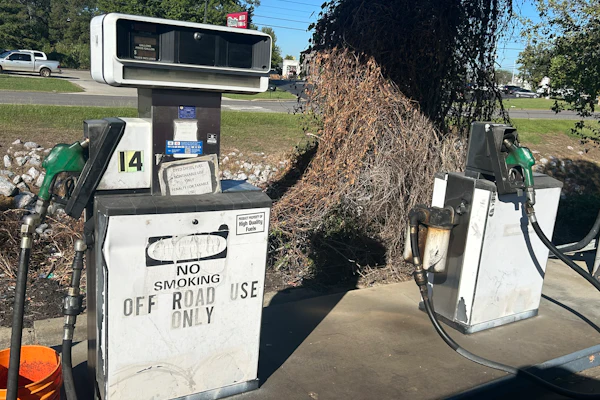
Yet Springer warned that hardware is only half the equation. Unlike diesel, which relied on a century-old infrastructure, charging heavy fleets requires navigating complex regional utility grids, fluctuating power rates, and new depot charging arrangements. To bridge that gap, fleets are increasingly turning to turnkey models like Trucking-as-a-Service to manage operational friction.

Looking ahead toward 2035, industry models project that battery electrics could ultimately outperform diesel on total cost across almost every application, driven by global supply chain scale and improving energy density. Still, Springer advises against treating any long-term forecast as a certainty in a market shifting this rapidly.
"In this industry, you don't bet on anything as being the be-all, end-all," Springer said. "It's just awesome to be in this market. It's never a dull moment. But it's also one that I would just not bet my retirement on any one outcome."
00;00;00;03 - 00;00;27;29
Nate Springer
Have every indicator that suggests that the production of those Teslas and the deliveries are going to start to ramp pretty quickly into the low thousands of units delivered every year. But all the devil is going to be in the details on the aftermarket support, the performance, the uptime. Does this product still deliver at the same level that I expect all of my diesel products that has killed more companies and more great products that we have seen than any other factor.
00;00;28;01 - 00;00;49;11
Jay Traugott
Every year at Expo, the largest fleet technology show in America, the organizers publish a report called the State of Sustainable Fleets Report, and this report breaks down the current status of every powertrain technology on the market. In this video, we'll be speaking to Nate Springer, the lead author of the report about the current status of the battery electric market.
00;00;49;11 - 00;00;56;04
Jay Traugott
And to get stories like these delivered straight to your inbox, sign up for our newsletter using the link below.
00;00;56;06 - 00;01;24;22
Nate Springer
Yeah. J it's been it's been a wild ride. It's been a crazy year for sure. The market has. As everyone knows, it's gone through a lot of shocks and we've seen a big rollback on both regulations and funding and incentives at the federal level. And at the same time, the market is actually proving surprisingly resilient. In fact, in the last year, we actually saw a new peak registrations where a battery electric vehicles year over year from 2025.
00;01;24;22 - 00;01;50;01
Nate Springer
And it is beginning to emerge that in the medium duty segment, almost 60% of the fleets that we work with and we survey are seeing a positive total cost of ownership in their battery electric vehicles against the diesel or gasoline vehicles they replaced. The yard tractor segment is really having a moment. And while the heavy duty trucking market on road trucking market like class seven and eight trucks was down, the registrations were down year over year.
00;01;50;01 - 00;02;08;24
Nate Springer
We've got a lot of good data coming out of California, especially on grant programs, that there are very likely to be an uptick, a surge, really, in new battery electric tractors hitting the and straight trucks hitting the road here in the next 18 months. So it's been a while and crazy year, but the technology in the market has grown in advance.
00;02;08;24 - 00;02;26;23
Nate Springer
Or it's advanced for sure. And fleets are beginning to see the real benefits where battery electrics fit best, those medium duty delivery type scenarios. And now the yard tractor. And we'll see a surge in tractor sales here soon.
00;02;26;24 - 00;02;46;13
Jay Traugott
Right. So it's pretty clear there's a lot of data out there like you said for last mile medium duty yard tractors. That's really growing. But like you said the heavy duties there's just fewer battery electric heavy duty semis out there. But there is one semi that's everyone's been talking about this year. Needless to say it's the Tesla Semi.
00;02;46;15 - 00;02;52;10
Jay Traugott
What are your thoughts on that? Could it be the game changer this industry has been looking for for heavy duty hauling?
00;02;52;18 - 00;02;59;22
Nate Springer
It's an exciting. Everyone's very excited about it. The price point is much more favorable and the range is much longer than.
00;02;59;22 - 00;03;01;26
Jay Traugott
The long range 500 miles.
00;03;01;28 - 00;03;29;14
Nate Springer
Yeah. Than any basically any other track heavy duty battery electric tractor product out there today and the fleet. So we collect a fair amount of data on just how is it performing for them, DHL and other companies that PepsiCo that are actually using those. They're saying, yeah, it seems to perform well. You know, what tends to make or break though, in our industry is not just can I sell this truck, but do I get the support and service and reliability that I've come to expect?
00;03;29;14 - 00;03;52;09
Nate Springer
And so that's going to be the big thing to watch over the next few years. Here we have every indicator that suggests that the production of those Teslas in the deliveries are going to start to ramp pretty quickly into the low thousands of units delivered every year within the next 12, 18, 24 months. But all the devil's going to be in the details on the aftermarket, support the performance, be up time.
00;03;52;11 - 00;04;21;14
Nate Springer
Does this product still deliver at the same level that I expect all of my diesel products that has killed more companies and more great products that we have seen than any other factor. Now, with the trucking as a service and the depot charging developers coming into the market again, it's going to be all about execution and support of a customer needs.
00;04;21;16 - 00;04;34;23
Nate Springer
I think there's going to be a lot of promise for that. They really do solve a problem for the fleet owners, which is for decades. For a century or more, fleets have really only had to master two, you know, two fuels, basically gasoline and diesel.
00;04;34;24 - 00;04;35;06
Jay Traugott
That's it.
00;04;35;08 - 00;04;41;10
Nate Springer
There's so much more complexity when you come to electricity. Different rates, different utilities, different.
00;04;41;12 - 00;04;44;28
Jay Traugott
Every state is going to be a bit different because of the different utilities.
00;04;44;29 - 00;04;57;17
Nate Springer
So these I'm very optimistic about those types of partnerships. But individual companies, it will depend entirely on their level of service. Can they continue to deliver maintain that uptime for their fleet customers?
00;04;57;19 - 00;05;13;29
Jay Traugott
Last question regarding battery electrics. Navy just released a report. They just said that the TCO models are looking at ten years from now, 2035. Well, a little less than ten years, that battery electric is going to surpass diesel. From a TCO perspective, what are your thoughts on that?
00;05;14;00 - 00;05;29;09
Nate Springer
I think there's a lot of potential for that to be true, you know, and but if we have learned anything in the last five, ten years of the fleet market is that there's a lot of variability and a lot of uncertainty and things that we thought were true two years ago now are just being thrown into the air.
00;05;29;10 - 00;05;53;11
Nate Springer
Right. And people are trying to figure things out. I think we're in an era of extreme uncertainty, in no small part because there is so much new technology and innovation coming at us. And I think especially with some of the scaling, early market scaling that we're seeing in China a little bit in Europe, we looked into that a bit this year and stated sustainable fleets as proof points.
00;05;53;11 - 00;06;17;27
Nate Springer
If you can build those supply chains and in the case of battery technology, continue to improve your increasing density, reducing weight, reducing cost. If that remains on track and investment continues to be put towards that, then it will be the superior technology across nearly all applications. And so I have a lot of confidence that that can be true.
00;06;17;27 - 00;06;25;04
Nate Springer
But in this industry, you don't bet on anything as being the be all, end all and having been settled because things can change.
00;06;25;04 - 00;06;30;13
Jay Traugott
Very perhaps the best thing in this industry is for the technology to get out there and let's see what happens.
00;06;30;19 - 00;06;53;04
Nate Springer
Yeah. And I think, you know, you again, it's about those partnerships and delivering on all of that aftermarket support. The fleets have come to expect building the ecosystem of reliable partners who are going to be there for you, including existing OEMs and startups, but also your infrastructure ecosystem, your parts, your maintenance, your tax, your education and all that.
00;06;53;05 - 00;07;03;06
Nate Springer
It's just awesome to be in this market. It's never a dull moment. Never. But it's also one that I would just not bet my retirement on anyone. Any one outcome.