










Illinois dry van carrier GP Transco (CCJ Top 250, No. 146) has a plan to put an additional 50 drivers on the road by the end of this year, and so far, the company has made strides toward its goal.
Sergey Bort, vice president of marketing and communication, said the company’s classrooms have been 50% bigger in recent months, though he noted there are numerous reasons for that. The carrier has been working on a multitude of new IT projects, has changed its driver onboarding process and driver pay, and has completely shifted its freight network, nearly doubling its contracted freight.
Amos Savickas, executive vice president of operations, said because of the manifold changes, it is difficult to measure the benefits of the tools it earned recognition for earlier this year. The company was named the 2026 CCJ Innovator of the Year for its hours-of-service ETA/ETE simulator and loads and drivers recommender.
Though he can’t attribute the company’s improved financial performance entirely to those tools, Savickas said he can pinpoint one solid outcome: increasing the number of drivers a planner can manage at one time.
“We have four less planners on the team doing the same work, and the number of active trucks increased so I could say as a guaranteed thing that we have less personnel doing the same work and more trucks at the same time,” he said.
That’s because prior to implementing those tools, ETA was calculated by driver managers, which would cause friction between them and the planning team because they would oftentimes miscalculate.
Adding AI
Since winning Innovator, the company has made significant improvements to its tools.
“It was still making mistakes when it was doing calculations, so the team polished the algorithm and improved it,” Savickas said. “But what we still were struggling with was there's that human factor always at the end of the day.”
For example, the driver says they’re tired or they don’t want to move more than 300 miles today.
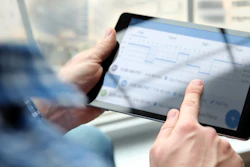
The team is now working on adding an AI layer to sit on top of its algorithm but to also sweep additional information, such as notes left by the driver or driver manager, to account for the human factor when making calculations.


Gedas Baranauskas, director of product and engineering, said the first versions of the tools were standalone applications outside of the company’s self-developed OpenRoad TMS, resulting in mismatched miles on some occasions. The IT team has since migrated all the scoring logic into OpenRoad, creating a unified system so the future AI assistant that is currently in the works will function on the same data and technical aspects. Additionally, the team revised the tools’ business logic. He said they no longer look at empty miles alone but also consider customer- and driver-specific factors that were not included in the first versions.
Baranauskas said the system will maintain the code-based scoring engine, which filters the best drivers for loads to the top through multiple steps, but Claude Code will now be layered on top of the final round of filtering to account for human context.
“All the driver notes, safety notes, weather alerts — in the scoring in the original engine, that contextual information was not evaluated properly,” he said. “It was just notetaking, ‘okay if a truck is grounded, we'll eliminate it,’ but we have multiple additional factors.”
He noted that the IT team continues to polish the tools.
The human stays
Baranauskas said the human still makes the final decision.
Bort highlighted the importance of that element, noting that GP Transco is being selective about where it implements AI because it can “get out of hand.”
All the company’s safety alerts are automated because that enables it to reach mass amounts of drivers in a timely manner. For example, the AI can call multiple drivers at once to relay weather information that may not be useful by the time a human is able to make the call.
But when it comes to the ETA and driver recommender tools, Savickas said GP Transco draws a fine line in the sand. With the technology, he said the company could reduce its driver manager personnel even further or add even more drivers per driver manager, but that’s unrealistic to him.
“My logic is I want my driver managers to have the connection with their drivers, the rapport,” Savickas said. "Depending how you're running, some companies will manage 50 drivers per driver manager — 75, I've heard before. But we don't want to be that company.”