










While improving fuel economy should always be a goal for fleet managers, with diesel at more than $5 a gallon, it has taken on additional importance. I am often asked just how many miles a fleet can get from a gallon of diesel fuel.
While each fleet is different, I know that fleets can do better than the 6.9 MPG national average. For example, a Mesilla Valley Transportation truck that participated in Run on Less – Messy Middle had an overall MPG of 11.73 over the three weeks of the event. MVT has always been a leader in pushing for better MPG, and there are other fleets and owner-operators that are also hyper-focused on MPG.
Each of them achieves high MPG in different ways. Since there is no one right way to improve MPG, fleets can choose from a variety of technologies and practices to move the needle.
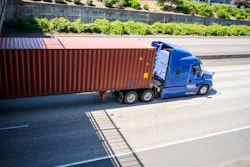
Focusing on vehicle aerodynamics—for both the tractor and the trailer—is a good place to start improving fuel economy. MVT Solutions has tested a variety of products that reduce aerodynamic drag, including trailer skirts, mud flaps, roof fairings, trailer tail devices, wheel covers, gap-management devices, complete aero kits, and more.
However, while improving aerodynamics can lead to big MPG gains, that is not the only way to improve fuel economy. Tire-inflation systems, lubricants, solar panels, and low-rolling-resistance tires are some of the other technologies that a fleet can invest in if they are looking to improve fuel economy.
At MVTS, we use a measurement of gallons per 1,000 miles when calculating fuel economy improvements. Units of gal/1,000 miles more reliably calculate fuel savings when compared to other units such as MPG and percentages. Those units are prone to error from changing variables such as vehicle baseline fuel economy, load, driver behavior, and duty cycle.
Get 80 tips to maximize fleet fuel efficiency
For example, gal/1,000 miles values are not affected by load for an aerodynamic product. An empty Class 8 unit at 34,000 lbs. will save the same fuel in gal/1,000 miles as one loaded to 80,000 lbs. However, when viewed in percentages or MPG, the values change with load. This causes a carrier to experience varied results in real-world operations and difficulty predicting the financial benefits of the product unless units of gal/1,000 miles are used.


With that background, in our testing we have seen savings of 11.68, 8.70, and 6.61 gal/1,000 miles on the high end. On the lower end, savings have been 1.12, 0.96, and 0.39 gal/1,000 miles. Those lower improvements typically come from devices like wheel covers and vented mud flaps rather than full aero systems or other, more complex solutions.
Overall, as a result of our testing, fleets have saved two million gallons of fuel, which resulted in $7.2 million in additional profits, and they have avoided 21,000 metric tons of CO2.
There are many ways a fleet can improve its MPG. Just how large that improvement can be depends on what they spec on their trucks and the way they train and coach drivers to operate with efficiency in mind.