










Donald Taylor was a truck driver for most of his life, until the early 2010s when he came off the road due to health problems. Aside from the basic necessities – food, clothes and toiletries – there were always two things my grandfather kept in his big rig: a miniature pistol and a miniature Louisville Slugger that he called his “tire knocker.”
He would hit it against the tires of the trailer he was hauling, listening intently for any anomalies in sound, from one tire to the next.
Renato Sarzano, head of truck tire in the Americas at Continental Tire, said some small trucking companies and owner operators still use this method, but “this is really old school. That's the way it used to work in the ’60s,” he said. “Now, with all this technology, no one needs that anymore.”
But Mark Wallin, general manager and senior vice president of product at Phillips Connect, which provides a fleet management platform for smart trailers, said while north of 50% of fleets use automated tire inflation systems (ATIS) to reinflate tires when small instances of underinflation occur, only a small number of fleets (he estimates about 15%) use tire pressure monitoring systems (TPMS) on their trailers.
That technology and the platforms that provide insights into tire status can help move the needle on fuel spend: one of fleets’ highest costs, especially with the diesel fuel prices skyrocketing due to the conflict in the Middle East.
[RELATED: How weigh station and toll bypass tech help fleets save on fuel costs]
Underinflated tires drive greater fuel inefficiency
Only 46% of tractor tires and 38% of trailer tires are properly inflated, according to research from the North American Council for Freight Efficiency (NACFE) and the American Trucking Associations Technology & Maintenance Council (TMC). One in five vehicles operate with at least one tire underinflated by 20+ PSI, and more than 3% of vehicles experience severe underinflation (50+ PSI).
Even a 10 PSI drop in tire pressure can reduce fuel efficiency by up to 1%, according to analysis by Revvo, which delivers predictive tire insights, automated alerts and actionable intelligence via its AI-powered TireIQ platform. The tech company’s dataset shows that about 20% of vehicles lose greater than or equal to 1% fuel efficiency, and another 3.5% lose about 4% efficiency, resulting in an estimated 1.2% average fuel loss across fleets.



80 tips to maximize fleet fuel efficiency
Sarzano said truck tires are properly inflated at 101 to 110 PSI. If a tire is at 94 PSI, he said it results in a loss of 1.6 miles per gallon in fuel.
“By really understanding the proper tire pressure and by correcting the tire pressure as soon as an event comes, you really can save a lot of fuel. No tire can work well and perform to the highest possible level if the pressure is wrong,” he said. “If you do not correct the pressure, on top of losing more fuel, you also lose the tire because the tire life is 100% related to the pressure and the condition it's running.”
Tire loss altogether, of course, causes roadside and out-of-service events that can result in greater idle time – another top driver of fuel inefficiency.
Tim Chrulski, chief operations officer at Garner Trucking, said the carrier tried some tire monitoring on its trailers but had issues with the sensors that ultimately rendered the technology unworthy of the cost.
Platforms offer tire insights that drive action
Continental Tire offers intelligent tires made for low-rolling resistance. Continental research indicates a fuel efficiency improvement of approximately 0.45 miles per gallon when comparing a properly inflated, fuel efficient Tier 1 tire to a properly inflated Tier 3 or Tier 4 tire. They are equipped with a sensor that provides real-time insights into tire pressure via the ContiConnect platform.
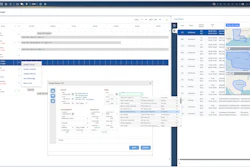
The platform allows a fleet to define tire pressure limits for their trailers and sends alerts if that pressure is off. The company also offers a yard solution that reads tire pressure when vehicles return to yards and sends alerts if it differs from the defined PSI. And finally, the solution combines with telematics to transmit tire pressure, temperature, etc. to inform the fleet when tire pressure variates. Fleets can choose who receives the alerts: drivers, fleet managers, maintenance managers, etc. and automatically open a work order when a tire event occurs.
Revvo and Phillips Connect integrate with telematics platforms, too.
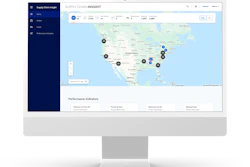
Phillips Connect goes beyond tire monitoring. It also connects to transportation management systems (TMS) and maintenance systems to help fleets move from insights to action.
Wallin said it’s a whole tire management ecosystem: pressure monitoring, maintenance management and trailer tire status within TMS platforms.
“We've got fleets that have done a really good job of getting the data and knowing they need to fix it, and then they struggle on the actioning,” he said.
[RELATED: Fuel card providers offer capabilites for greater fuel management]
Phillips Connect color codes tires, from green, yellow, orange and red, based on the severity of the tire’s problem, highlighting the most critical issues that need immediate attention. The smart trailer platform can automatically generate work orders when connected to a fleet’s maintenance management system.
The platform also notates healthy and unhealthy trailers based on trailer functionality, including brake, lift gate and tire pressure status, highlighting within the TMS which trailers should and should not be dispatched to prevent downtime on the road. Once fixed, it is moved back into the queue.
“Do not take trailers out (on the road) that have low tire pressure because, one, it's a fuel-efficiency issue; two, you are going to have a down trailer during the middle of a trip,” Wallin said.
Providers measure potential ROI of tire platforms
Steven Roberts, manager of fleet operations at Deseret Transportation, said the carrier uses tire monitoring on its trailers mostly to improve tire wear and avoid tire road calls.
“Of course, we assume there are fuel economy improvements also, but we do not attempt to measure that,” he said.
Sarzano said the Continental Tire platform offers modules that provide insight into fuel advantages as well as the number of tire events incurred per truck per year.
According to Revvo’s analysis, even modest improvements in tire pressure management can deliver substantial financial impact. Based on 98 million miles of fleet data, Revvo reported that proper tire pressure resulted in about 163,000 gallons of fuel saved, a reduction of about $922,000 in fuel costs and 1% or greater improvement in fuel efficiency at scale.
“Keep the tire pressure at the recommended level. That sounds so simple, sounds so easy, but in real life, it is really an art,” Sarzano said. “The big fleets … monitor pressure as a kind of religion because they know good tires and proper pressure will make them more efficient and competitive when they have to bid for the next business.”