Trucking news and briefs for Thursday, May 28, 2026:
Walmart consolidating LTL shipments

Walmart has unveiled a new supply chain strategy that could significantly alter freight patterns and volume distribution for trucking fleets handling retail supplier accounts.
Under the new Prepaid Consolidation program, prepaid suppliers will ship products under a single national purchase order to a centralized automated consolidation center (ACC). From there, Walmart will handle the outbound transportation to distribute the inventory across its 42 regional distribution centers (RDCs).
Suppliers will pay a per-case fee, but the change should enable shippers to move fewer, larger loads which should translate to lower transportation charges per pallet.
Suppliers maintain their prepaid freight terms but can choose to manage shipments directly through Walmart or utilize approved third-party logistics (3PL) partners, like C.H. Robinson, Hub Group, and RJW Logistics.
Walmart said it is utilizing a published, region-specific price-per-case rate card covering both case handling and outbound transportation, with no additional markups from participating 3PLs.
This shift aims to reduce inbound variability and improve replenishment precision for Walmart. For carriers, this likely means a concentration of freight moving into centralized ACCs rather than fragmented runs to multiple RDCs. Fleets aligned with the designated 3PLs or hauling large-volume supplier freight directly to Walmart hubs may see shifting lane demands and a need for tighter scheduling to match Walmart's focus on first-mile efficiency.
The program is rolling out in phases based on volume alignment and capacity expansion. Fleet managers overseeing Walmart supplier freight can expect changes to carrier networks as the retail giant scales this consolidated model.
Specialized nuclear fuel transport fleet acquired by nuclear energy company
Nuclear energy development company Nano Nuclear Energy is acquiring Secured Transportation Services LLC (STS), a nuclear logistics, transportation and services company specializing in moving radioactive and nuclear materials.


The acquisition represents a significant strategic milestone in Nano Nuclear’s evolution into a vertically integrated nuclear energy company by adding one of the most important and challenging elements of the nuclear fuel cycle: the capability to plan, coordinate, license, secure and execute nuclear materials transportation and related deployment activities.
 With the addition of STS, Nano Nuclear is taking a decisive step toward becoming a leader in the next generation of nuclear energy infrastructure, with capabilities designed to support reactor deployment and the broader ecosystem required to enable commercialization at scale, the company said.Nano Nuclear Energy
“This acquisition is about more than logistics, it’s about unlocking the full potential of advanced nuclear,” said Jay Yu, Chairman and President of Nano Nuclear. “With STS, we now control a vital link in the nuclear value chain that very few companies possess globally. This capability will allow us to move faster, deploy quicker, and deliver our technologies anywhere in the world. We are building infrastructure for the next generation of nuclear energy, and this is a major step forward.”
Nano noted that one of the most significant barriers to scaling advanced nuclear technologies is not the reactor itself, but the infrastructure required to support it, particularly fuel transportation. The transport of nuclear materials, particularly spent fuel, HALEU fuel and advanced reactor components, is one of the most highly regulated and operationally complex segments of the nuclear fuel cycle, with emerging capacity constraints expected as next-generation reactor deployments accelerate.
With STS part of the organization, Nano said it is now competitively well positioned to:
- Control and coordinate critical nuclear fuel transportation logistics.
- Support deployment planning for microreactors and related advanced nuclear systems.
- Reduce reliance on third-party nuclear logistics providers for core transportation and deployment functions.
- Navigate complex regulatory, security and route-approval requirements.
- Develop repeatable deployment models for defense, data center, industrial, remote and international customers.
- Support a broader ecosystem of nuclear fuel-cycle services expected to be required by NANO Nuclear and other nuclear industry participants.
STS was founded in 2005 and currently holds approvals for more than 90% of the active U.S. Nuclear Regulatory Commission-approved spent fuel routes in the U.S.
Torc partners with Canadian AI institute
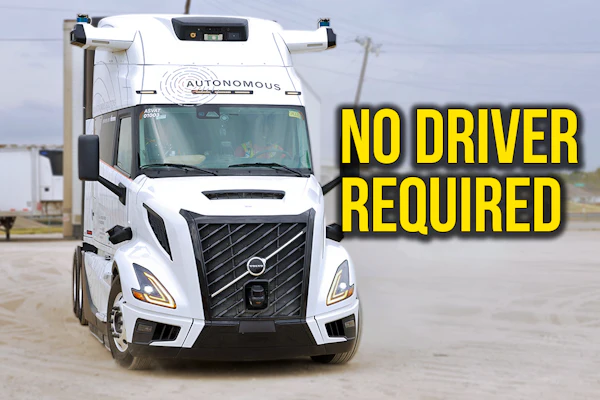
Autonomous trucking company Torc Robotics has announced a new strategic partnership with Mila – Quebec Artificial Intelligence Institute, one of the world’s leading centers for machine learning research.
Through this collaboration, Torc will establish a presence within Mila’s ecosystem in Montreal, becoming the only autonomous trucking company to join the institute, and gaining access to top-tier academic talent, including students, researchers, and faculty, the company said.
The partnership also includes dedicated research space on site and is designed to build on Torc’s existing AI and autonomy research to deepen its capabilities in physical AI through direct collaboration with Mila’s faculty and researchers.
Mila has been recognized for its contributions to machine learning and applied AI research, with a large community of researchers, strong ties to leading universities in Canada, and a reputation as a launchpad for top AI talent, with alumni and affiliates holding leadership roles in well-known companies such as OpenAI and Google.
By embedding within Mila's collaborative environment, Torc said it will deepen its research capabilities in emerging areas of autonomy, including generative world models, multi-agent behavior modelling, reinforcement learning, and foundation models for physical AI systems.
“Torc is focused on building safe, scalable autonomous trucks, and advancing the next generation of physical AI is central to that mission,” said Felix Heide, Head of Artificial Intelligence at Torc. “As a long-time Mila collaborator, I can definitively say that partnering enables deeper collaboration at the intersection of research and real-world deployment, collaboration that supports continued progress toward commercializing autonomous trucking at scale.”
The partnership builds on Torc’s existing presence in Montreal and an affiliation with Mila that dates back to 2020, reinforcing its commitment to investing in global AI talent and research partnerships. Together, Torc and Mila will explore new approaches to physical AI that bridge simulation and real-world performance, helping to unlock safer and more efficient autonomous transportation.
Lumper charged for defrauding trucking companies, grocer out of $250K
A Missouri-based lumper has been accused of stealing more than $250,000 from trucking companies and a grocery chain and subsequently arrested.
Richard Lind, 39, of Florissant, Missouri, was indicted with five counts of wire fraud on April 22. He appeared in court last week and pleaded not guilty.
The indictment alleged that Lind worked as the site manager for a logistics company at a grocer’s distribution center. Lind’s employer supplied lumper services -- the physical labor and heavy equipment to unload trailers containing the grocer’s inventory -- as well as software for tracking shipments.
Lind allegedly defrauded the grocery chain by creating false records for inventory shipments that had never occurred and false invoices seeking payment from the trucking companies for unloading those shipments, according to the indictment. The trucking companies then sought reimbursement from the grocery chain.
Lind then allegedly voided the false records to conceal his scheme from his employer. He used the electronic payment authorization codes that resulted from his scheme to obtain cash payments at truck stops, triggering more than 600 fraudulent payments totaling more than $250,000, the indictment added.