The industry-average commercial auto liability insurance premium cost rose by 37.8% over the decade ending in 2024 to an all-time high of 10.2 cents per mile, frequently outpacing general inflation, according to research released Tuesday by the American Transportation Research Institute (ATRI).
Insurance Cost and Availability landed at the no. 3 spot on (ATRI) 21st annual Top Industry Issues report.
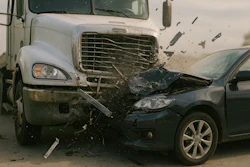
Premium inflation occurred despite the fact that heavy-duty truck-involved crash rates fell significantly following the pandemic, according to ATRI's most recent report. By 2024, injury crash rates were 15.3% lower and fatal crash rates were 13.9% lower than their respective peaks in 2019. The cost pressure stems directly from the severity and expense of crash claims, rather than their frequency, ATRI found. Inflation-adjusted per-mile liability losses shot up by 33.1% from 2021 to 2024, largely driven by social inflation and multi-million-dollar nuclear verdicts.
As litigation increasingly penetrates higher thresholds, the premium rates for upper layers of excess insurance coverage grew at a much faster rate than baseline primary layers:
- $5M–$10M layer: Rose by 34% to an average of 1.58 cents per mile.
- $10M–$15M layer: Rose by 45% to an average of 1.05 cents per mile.
- $15M–$20M layer: Rose by 36% to an average of 0.78 cents per mile.
Standard insurance market capacity contraction forced 33.3% of fleets to purchase more individual policy layers just to assemble and maintain the same total coverage limit they held in 2021, according to ATRI.
Small fleets, operators with 25 trucks or fewer, bear the heaviest burden, paying 20.3 cents per mile on liability premiums in 2024—nearly double the 10.4 cents per mile paid by mid-sized fleets with 101 to 250 trucks. For these small motor carriers, insurance consumed nearly 5% of total asset-based revenue, according to ATRI's report.
Flatbed and oversized carriers faced some of the highest premium rates at 13.2 cents per mile. Less-than-truckload (LTL) carriers experienced the lowest per-mile premium baselines due to an operational skew toward larger fleets.
To combat rising commercial premiums, many fleets actively chose to adjust their insurance structures.




Thanks to lingering higher operating costs and extended periods of lower freight rates, Chad Krueger, vice president and managing director at Central Analysis Bureau (CAB) by Fusable, said fleets are doing anything they can to reduce their insurance costs—including taking higher deductibles, which works just like an auto insurance policy.
"If you self-retain a higher deductible amount, your premium decreases," he said, "or at least it goes up less."
Fleets that safely absorbed an increased share of risk in their initial coverage layer (retaining up to 10% of risk through high deductibles or self-insurance) successfully minimized their total cost of risk, ATRI's report noted.
Motor carriers that reduced their total purchased coverage per mile saw an inflation-adjusted 2.4% reduction in combined risk costs. Fleets that elected to keep coverage unchanged or increased their purchased layers saw combined risk costs climb by 4.8% and 6.1% respectively.
"Bottom line is a motor carrier will retain more risk when they have predictable losses that can be internally financed or when they must reduce their overall insurance premiums to stay financially viable," Krueger said.
All of the 501 to 1,000 truck fleets surveyed by ATRI were self-insured for their primary layers to leverage capital liquidity and lower premiums. Krueger noted that there are often more positives than negatives if a motor carrier can get into a captive. "They need a good safety program, culture, history, and money," he said. "The group captive will pool the first layer and basically self-insure, with a reinsurer over the top for catastrophic losses."
To protect themselves against legal negligence and offset the exposure of lower overall coverage limits, motor carriers sharply increased the deployment of cab safety technologies. Six specific technologies (forward collision warning, lane departure warning, collision mitigation systems, automated emergency braking, blind spot detection, and adaptive cruise control) demonstrated a statistically significant correlation with lower per-mile liability losses in 2024.