










By upholding federal Graves Amendment protections, a landmark New York ruling limits rental fleet liability and defense costs against runaway jury verdicts stemming from driver negligence.
- Federal Preemption Established: The New York Court of Appeals clarified that the federal Graves Amendment supersedes N.Y. Vehicle and Traffic Law Section 370 regarding mandates that rental companies provide primary liability coverage to renters.
- Direct Reduction in Legal and Claim Costs: Shielding fleet operators from primary indemnity obligations limits exposure to ballooning settlements and massive jury awards exceeding $10 million.
- Increased Underwriting Predictability: The ruling gives commercial auto insurers a clearer basis to calculate risk, curbing recent trends of spiking premiums and diminished underwriting capacity.
- Ongoing Risks for Fleets: Despite this defense victory, operators must maintain rigorous maintenance and compliance records to defend against alternative plaintiff theories like negligent entrustment.
A legal sea change has taken place following the Second Child v. Edge Auto decision, having a deep impact on millions of annual rental agreements across the U.S. truck, rental car and insurance industry landscape. The April 2026 decision by the New York Court of Appeals — in a case initiated in 2023 — and a motion for reargument denied in June by that same court result in a drastic change in liability exposure for the owner (or an affiliate of the owner) engaged in the trade or business of renting or leasing motor vehicles.
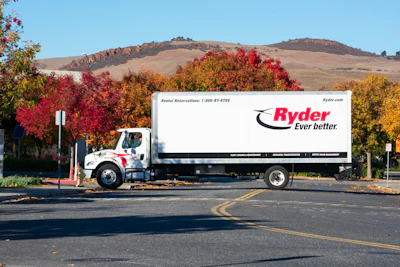
Currently, all U.S. rental companies are protected by the Graves Amendment, a 2005 federal law that shields vehicle rental and leasing companies from being held vicariously liable for the negligent operation of rental vehicles by their customers.
While this case will continue to be analyzed, the ruling has strengthened and reinforced the liability protections available to truck and auto rental providers, particularly in the context of higher-limit claims. The ruling affects not just claims paid, but claims expenses incurred by rental companies and their liability carriers.
The ruling reaffirms the long-established principle that fleet and vehicle rental companies should not be looked at as the primary risk bearers for vehicle operator negligence.
In this case, plaintiffs rented a vehicle from its owner, defendant Edge Auto Inc. A nonparty commenced an action against plaintiffs seeking damages arising out of a traffic accident involving their operation of the rented vehicle.
Plaintiffs filed a third-party complaint against Edge Auto and its insurer seeking a judgment declaring, among other things, that Edge Auto was statutorily obligated to provide insurance to plaintiffs on a primary, noncontributory basis pursuant to Vehicle and Traffic Law Section 370; that Edge Auto or its insurance company was required to undertake the defense and indemnity obligations of plaintiffs in the underlying action; and that Edge Auto was prohibited from seeking indemnification from plaintiffs or their insurer for amounts up to the statutory minimums imposed by Section 370.

After defendants answered, plaintiffs moved for summary judgment seeking substantially the same relief requested in the third-party complaint. State Supreme Court denied plaintiffs' motion.
The Court of Appeals clarified that the Graves Amendment preempts Vehicle and Traffic Law Section 370 to the extent it requires rental companies to provide primary liability insurance to renters up to statutory minimums. The opinion emphasized that requiring rental car companies to provide coverage for their renters conflicts with the federal statute.
Among organizations providing an amicus brief in support of Edge Auto in the case were the American Car Rental Association, the Truck Renting and Leasing Association, and the American Financial Services Association.
Over the past two decades, the Graves Amendment served as a crucial shield for rental companies against most claims of vicarious liability that involved operator negligence. The decision in Second Child v. Edge Auto clarifies the impact of the federal statute on a rental car company’s duty to defend and indemnify renters.
Adding to the pressure on rental fleet owners is the rise of runaway jury verdicts that award massive, often disproportionate damages to the plaintiff. Between 2020 and 2025, the frequency of verdicts exceeding $10 million tripled. As a result, insurance premiums have risen, and in some cases, underwriters have reduced their maximum capacity.
As plaintiffs’ attorneys have sought to broaden the scope of liability to include rental fleets in the hopes of maximizing payouts from ballooning jury awards or settlements, the distinction between the responsibility of a rental company and that of the renter or driver serves as a vital check on this effort.
By reinforcing the boundaries of liability, the court’s decision will improve predictability for insurers as they calculate risk for rental fleets. It further emphasizes the benefits of strong contractual language, as well as proper vehicle maintenance and documentation.
Rental fleet owners that can prove stringent compliance with industry best practices and regulatory requirements can better position themselves to take advantage of the protections offered by the Graves Amendment.
While this ruling is certainly positive news for rental fleet owners, they must continue to anticipate that the plaintiffs’ bar will probe legal theories such as negligent maintenance and negligent entrustment to circumvent the protection afforded by the Graves Amendment.
Second Child v. Edge Auto is a victory for rental fleet operators and insurers. Now that they have been shielded from exposure to claims seeking massive damages payments, insurance costs and legal expenditures will be more manageable.