










New EPA emissions regulations taking effect in 2027 and 2028 will significantly increase the cost and complexity of private truck fleets, making this a critical window for U.S. shippers to lock in predictable transportation economics by transitioning to an outsourced dedicated fleet model.
- Impending cost reset: Stricter EPA emissions standards starting in 2027 (medium-duty) and 2028 (heavy-duty) will fundamentally shift fleet economics by raising equipment costs and downstream maintenance risks.
- Material capital exposure: Regulatory compliance is estimated to add $15,000 to $25,000 per Class 8 truck, forcing a substantial and structural capital requirement for private fleet owners.
- The parity shift: While dedicated contract carriage traditionally carries a premium, locking in pre-2027 contract rates can bridge the financial gap, turning a historic cost disadvantage into an economic hedge.
- Strategic de-risking: Transitioning to a dedicated fleet model removes equipment inflation, compliance complexity, and liability risks off the shipper's balance sheet, allowing capital to be reallocated to core business growth.
For U.S. shippers operating private fleets, or businesses where customer-service-intensive transportation is mission-critical, the balance of 2026 represents a narrowing window to make a high-impact strategic decision. The convergence of regulatory change, rising capital costs and increasing operational complexity is reshaping the economics of fleet ownership.
At the center of this shift are the EPA’s coming emissions standards for light- and medium-duty trucks in 2027, and heavy-duty trucks in 2028 and beyond. These mandates will materially increase the cost of truck procurement and the complexity of lifecycle management. For private fleet operators, the implications are clear: The traditional private fleet model is becoming more capital-intensive and less predictable — just as supply chain agility and cost certainty have never been more critical.
In this article, I will illustrate why private fleet operators ought to consider outsourcing their fleets now and the potentially high cost of procrastination.
The cost reset in transportation assets begins in 2027
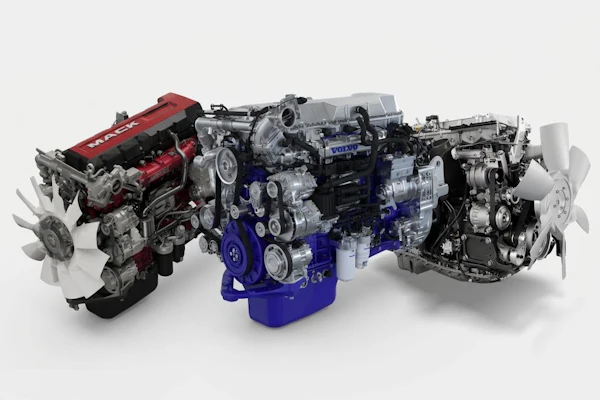
Starting with light- and medium-duty trucks in model-year 2027, followed by heavy-duty trucks in 2028 and beyond, new EPA regulations will impose significantly stricter emissions standards that require original equipment manufacturers (OEMs) to deploy more advanced and more expensive technologies.
The business implications for shippers are substantial:
- Higher capital costs per truck.
- Increased equipment complexity and reliability risks.
- Longer procurement cycles and supply chain volatility.
- Greater uncertainty in maintenance and residual values.
In short, companies that own and operate their own fleets are entering a period of rising capital costs, increasing risks and diminished downstream predictability.
Quantifying the impact: A $15,000 to $25,000 decision per truck
Initial estimates indicate that new regulations will increase the cost of a Class 8 tractor by approximately $15,000 to $25,000 per unit for trucks built in model-year 2028. For private fleet operators, this is not abstract. It translates directly into material capital exposure.
Below is a simple sensitivity analysis based on a hypothetical number of trucks needing replacement:
| Fleet Size | Incremental Cost (Low) | Incremental Cost (High) |
|---|---|---|
| 25 trucks | $375,000 | $625,000 |
| 50 trucks | $750,000 | $1,250,000 |
| 100 trucks | $1.5 million | $2.5 million |
Note: Table depicts a structural cost reset, not a cyclical fluctuation.
The ROI reality: Private fleet vs. outsourced dedicated
To understand the strategic implications, consider a five-year total cost of ownership (TCO) comparison.

Private fleet economics
Assuming a baseline 100-truck operation:
- $75 million in total five-year costs (pre-new-regulation baseline).
With regulatory-driven cost increases included:
- $76.5 million to $77.5 million post-2027.
The increase may appear modest in percentage terms ... but it introduces:
- Timing risk (when the capital is invested).
- Risks associated with adopting new technology platforms in their first year.
- Increased lifecycle cost uncertainty associated with downstream maintenance and repair.
Dedicated fleet economics
An outsourced Dedicated Contract Carriage (DCC) model converts transportation into a service-based cost structure, typically priced at a 3% to 8% premium versus baseline private fleet costs.
This results in:
- $77.25 million to $81 million over five years.
At first glance, this appears to be a simple exercise showing that outsourced DCC service-based costs are higher. However — and this is the critical strategic insight — dedicated contracts are almost always negotiated before the full regulatory cost impact is realized, locking in the pre-increase economics.
The inflection point: Cost parity and beyond
The financial gap between private fleets and dedicated networks is rapidly narrowing:
| Scenario | Private Fleet | Dedicated | Outcome |
|---|---|---|---|
| Pre-2027 | Lower cost | Higher cost | Private fleet advantage |
| Post-2027 (low increase) | Near parity | Slight premium | Neutral |
| Post-2027 (high increase) | Higher cost | Lower cost | Dedicated advantage |
In other words, the economic advantage of private fleets is eroding and could reverse entirely as regulatory costs take hold.
The Strategic advantage of acting now
A critical, time-sensitive opportunity exists. By commencing a three- to five-year outsourced dedicated fleet agreement ahead of 2028, private fleets can:
- Lock in pricing before equipment costs rise.
- Gain enhanced multiyear cost predictability.
- Capture the economic benefit of a "pre-buy" without deploying capital.
This is effectively a financial hedge against regulatory inflation.
While cost parity is the tipping point, the broader value of dedicated fleets lies in four areas:
1. Capital allocation advantage
Private fleets require substantial capital investment, often more than $15 million for a 100-truck fleet. Outsourcing this function in a DCC service arrangement enables:
- Capital redeployment to core business growth.
- Reduced balance sheet exposure.
- Elimination of asset depreciation risk.
2. Risk transfer
Private fleets absorb regulatory uncertainty, technology adoption risks, residual value volatility and all the risks of on-road incidents. Conversely, outsourced dedicated fleet providers absorb equipment cost escalation, maintenance variability, compliance complexity and most of the risk of accidents.
3. Cost predictability
Private fleet economics are increasingly volatile due to equipment timing risks, inflation exposure and supply chain constraints. Outsourced dedicated fleets deliver relatively fixed pricing over three to five years, reducing budget variability and improving forecast accuracy.
4. Operational simplicity and service reliability
As emissions and safety standards evolve, operational complexity increases across compliance requirements, maintenance sophistication and workforce challenges. Dedicated providers deliver the centralized expertise that comes from core competencies, standardized processes and scalable service models.
Why waiting is a risky gamble
The emissions standards for 2027, 2028 and beyond represent a turning point in fleet economics. For private fleets, the decision is no longer operational, but strategic:
- Continue owning an increasingly costly and complex asset.
- Or transition to a model that delivers equivalent or better service with lower risk and greater flexibility.
A three- to five-year dedicated fleet agreement executed now offers a compelling path forward to lock in pre-increase cost structures, avoid millions of dollars in incremental capital spend, transfer risk to your DCC partner and enhance service performance.
In a period defined by regulatory change and cost pressure, the most valuable outcome is not simply cost reduction, but cost certainty, strategic flexibility and risk mitigation. Now may be the last opportunity to secure all three.