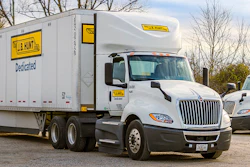
Unlike for-hire carriers, private fleets are often seen as cost centers by executives of the companies that use their own trucks to distribute their products. As a cost center, the managers of these fleets should be focused on reducing their expenses and trying to operate as efficiently as possible.
The good news is that these fleet managers have a wealth of data at their fingertips that they can use to benchmark their performance. Analyzing data from telematics devices should give them a snapshot of how well the trucks are performing and provide a solid picture of the average MPG of the fleet.
Once they have their MPG numbers, they can see how they compare to the national average, which today is around 6.9 MPG, according to the Federal Highway Administration.
I should point out here that there are many fleets routinely seeing much higher MPG, including Mesilla Valley Transportation, which has an average of 9 MPG. During Run on Less—Messy Middle, an MVT truck achieved 14.29 MPG on its best day and 10.05 MPG on its lowest day. That’s a big improvement over the national average.
MVT is able to achieve these high MPG numbers because it is highly focused on efficiency and has invested in a number of technologies and operational practices that help it be best-in-class when it comes to fuel efficiency. Private fleets can learn some lessons from MVT’s success.
Improving fuel economy is one of the fastest ways for a private fleet to reduce its costs. MVT Solutions has completed more than 1,200 fuel economy tests on a variety of products, including tractor and trailer aerodynamic devices, tires and wheels, electrical devices, lubricants, and additives. As a result of all these tests, we know it is possible for fleets—whether for-hire or private—to improve their average MPG by investing in technologies that will lead to fuel economy gains.
Private fleets that make fuel efficiency a priority will lower the overall cost of operating the fleet and have a better departmental bottom line.