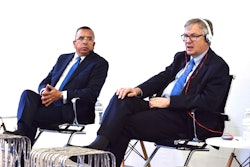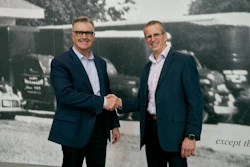











 Martin Daum has been tapped to lead Daimler Trucks’ global operations after nearly 7 years as head of Daimler Trucks North America, the parent company of Freightliner, Detroit and Western Star.
Since 2009, Martin Daum, former president and CEO of Daimler Trucks North America and newly appointed Member of the Board of Management with responsibility for the Daimler Trucks and Daimler Buses, was responsible for the global truck manufacturer’s North American operations. In that time, DTNA steadily grew its market share to become the leader in NAFTA Class 8 truck sales from roughly 29 percent in 2009 to 40.0 percent in 2016.
Commercial Carrier Journal caught up with Daum late last week as he settled into his new role to reflect on DTNA’s success in a period of rapid technology development for the commercial vehicle industry.
CCJ: What has been the biggest change you’ve seen in the North American trucking industry in the last eight years?
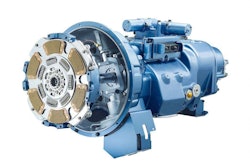
Daum: The biggest change is without question the automated manual transmission. Broader than that, the North American trucking industry really began to embrace technology. Fifteen years ago, if you compared a North American truck and a European truck, the European truck was five to eight years ahead in terms of technology. Today, that has changed dramatically, and we are now at eye level. Because DTNA’s product cycle is six months ahead of the rest of Daimler Trucks, it could soon be other way around.
CCJ: How have fleet customers’ wants and needs changed in terms of equipment since 2009?
Daum: North American customers started to embrace technology and even began to push us for new technologies as well. For example, we were surprised about the demand for safety technology. We didn’t see a market for it in the United States and then suddenly it started to explode. This shift of a more traditional market was amazing.
It’s ultimately about total cost of ownership and the realization that fleets sell miles based on cents per mile and have costs in cents per mile. They have become more sophisticated in that concept and make better decisions based on data. On the other side, improvements in fuel efficiency have helped increase profitability and predictive maintenance has improved uptime.
CCJ: To what do you attribute to DTNA’s growth in market share since 2009?

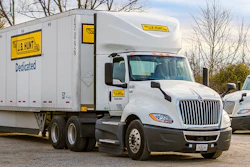
Daum: In those eight years, we had a 2010 engine launch, Cascadia Evolution launch, Western Star 5700 and now the new Cascadia. Product is just one pillar of that success. The other pillar was creating a consistent service experience across the country. In the beginning, the dealer was focused on servicing his customers, resulting in subpar service to [out-of-network] customers that stopped in. We have completely changed that not just by preaching to dealers, but by consistently upgrading service and defining service metrics. Now at our annual dealer meetings dealers are challenging each other to change the way they operate.
CCJ: From a global perspective, how has Daimler’s strategy supported DTNA’s success since that time?
Daum: We have a rich heritage and knowledge pool of technology. DTNA doesn’t have to invent everything by itself. We can pick and choose what technologies to adopt, and then contribute back with new as well.
CCJ: Why did you decide to take the opportunity to become a Member of the Board of Management at Daimler?
Daum: Daimler has done so much for me during my career, I feel that I owe it to them. Secondly, they asked for the right reasons – that I bring the same culture of collaboration with colleagues, customers, employees and media. They want to repeat the North American culture all over the place and grow the idea that we are a global powerhouse that can meet local needs.