










Overlooking AI camera "false negatives" can arm plaintiffs' attorneys with discoverable evidence of systemic fleet safety failures, turning undetected driving habits into costly courtroom verdicts.
- The danger of AI false negatives: Automated video safety systems can miss critical driving risks — studies show roughly 30% of AI-triggered event clips contain secondary risks the software failed to flag.
- Compounding "judgment debt": Storing raw video that contains unflagged, uncoached driving behaviors quietly creates discoverable evidence that plaintiffs' lawyers use to prove systemic safety failure.
- No courtroom defense in automation: Judges and juries reject the defense that "the AI didn't catch it," holding carriers strictly liable for any driver misconduct captured on their video footage.
- The need for human-in-the-loop review: Achieving total risk visibility requires pairing automated computer vision with human reviewers to weed out false alerts and catch subtle safety infractions before video reaches fleet managers.
Artificial intelligence video safety systems are transforming how motor carriers manage risk, but reliance on automated detection without human verification is quietly creating legal liabilities for fleets.
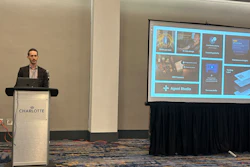
Speaking at the American Trucking Associations’ Management Conference & Exhibition, trucking defense attorney Doug Marcello and Solera Fleet Solutions Vice President Sean Ritchie warned motor carriers against outsourcing safety oversight entirely to automated computer vision.
While dash cameras and telematics have long served as objective evidence to exonerate commercial drivers from fault, the blind spots inherent in modern AI systems are arming the plaintiff’s bar with new avenues to pursue nuclear verdicts.
"The video itself is what's going to determine the case in virtually every situation, because it is the objective evidence," Marcello said. "Otherwise we're left to the vagaries of what the plaintiff, the claimant, their attorney will come up with."
The danger of the 'false negative'
The primary vulnerability facing motor carriers is what safety experts call a false negative—when an AI system monitors driver behavior, fails to recognize an actual hazard or infraction, and leaves the event unflagged.
Because modern fleet managers operate lean safety departments that rely on pre-filtered dashboards, raw footage containing unflagged risky driving behavior often sits untouched in company archives.
Ritchie called the compounding risk "judgment debt," noting that automated systems can lull motor carriers into a false sense of security while undocumented liabilities quietly accumulate behind the scenes.
"The concern is you outsource it to automation and stop asking the question: What could it be missing?" Ritchie said. "You've taken that layer of human intelligence out of the equation. And your judgment debt from that perspective starts to compound until you now have lost control of what you're really trying to manage."
Recent studies by fleet technology providers indicate that roughly 30% of videos triggered by AI detection contain additional secondary risks that the software failed to flag entirely.


Undermining the 'reptile theory'
In serious crash litigation, plaintiff attorneys rarely limit their case to the immediate circumstances of the collision. Instead, litigators routinely demand entire historical libraries of telematics and video archives through the legal discovery process to build a narrative of systemic neglect.
Marcello warned that fleets can't hide behind an automated system's shortcomings in the courtroom.
"If you have the activity of the driver captured by the video, you are going to be responsible for it," Marcello said. "And the defense of being able to say, 'Wait, well, AI didn't pick it up,' is not going to be responsive. It's not going to be an excuse."
Using trial strategies like the reptile theory, plaintiffs' attorneys search for evidence that a motor carrier failed to maintain a proactive safety culture. A single pattern of historical, uncorrected behavior—like documented bouts of drowsiness, speeding, or hard braking that the carrier possessed on video but never coached—can be framed by litigators as corporate indifference, regardless of whether that behavior caused the crash at hand.
Marcello pointed to a recent case in Philadelphia where a jury awarded a $26 million verdict against a carrier whose driver drifted off the roadway. The plaintiff’s case hinged on unrelated speeding events that had gone unaddressed in company records over the preceding year, despite both sides' accident reconstruction experts testifying that speed did not cause the collision.
Marcello also cautioned carriers against falling into the "discovery fallacy," the mistaken belief that ignoring unflagged video archives shields the carrier from liability.
"The fallacy is, 'We can prevent discovery by not looking at it,'" Marcello said. "It'll be discovered, the data itself. You've got your choice: Either you're going to get ahead of it, analyze it, and monitor for it, or you're going to be held accountable by the plaintiff."
Closing the gap with human review
To establish what Ritchie termed "risk totality," both speakers emphasized that fleets must pair automated computer vision with human verification layers before video files enter a safety director's management queue.
While AI systems excel at parsing vast amounts of visual data and tracking baseline road conditions, human review remains essential for contextualizing driver actions, filtering out false alerts, and catching subtle safety infractions that software models overlook.
"The more levels of scrutiny we have, the better it is," Marcello said. "If that video can have human perspective on it before it gets to you, the chance that somebody might not pick something up is greatly reduced."
Ritchie urged motor carriers to audit their current technology vendors to understand whether footage delivered to safety departments has been screened for false negatives, or if the burden of discovery remains entirely on the carrier's internal staff.
"You have to ensure that both layers of intelligence are in place and working together," Ritchie said. "That liability does not become negligence."