










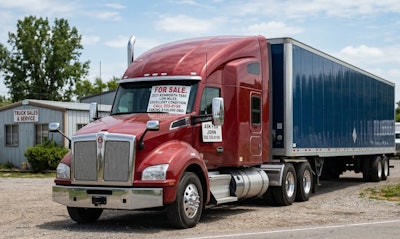
The Federal Motor Carrier Safety Administration (FMCSA) on Friday issued a stern warning to motor carriers: USDOT Numbers and Operating Authorities are not commodities to be traded on the open market.
In a move to bolster safety and transparency and crack down on chameleon carriers, the agency announced it will aggressively inactivate numbers and revoke registrations found to be part of unauthorized sales, rentals, or leases.
Can I sell my USDOT number?
Under federal law, a USDOT number acts as a permanent fingerprint for a motor carrier. According to the FMCSA, these identifiers belong to a specific legal entity forever and cannot be sold or transferred outside of legitimate corporate transactions.
The agency likens a USDOT Number to a driver’s license in that identifies exactly who is behind the wheel of a business. This distinction becomes critical in how different business structures are handled:
- Sole proprietors: If "John Doe Trucking" sells his trucks, the buyer cannot take John’s USDOT number. Because a sole proprietorship is tied to the individual, the buyer must apply for their own identifier.
- Corporations: If "John Doe, Inc." is sold as a complete legal entity, the USDOT number remains with the corporation. However, if the corporation is dissolved or merged into a new company, the old number must be retired as out-of-business.
FMCSA said it will deactivate immediately USDOT numbers that it discovers are being used by anyone other than the legal person to whom it was assigned.
What about MC numbers?
The FMCSA also clarified the rules regarding Operating Authority (MC Numbers). Historically, these were frequently transferred because they were tied to specific, limited routes. Today, because carriers can operate nationwide, the agency noted that transfers offer little benefit and are increasingly rare.
While the FMCSA may still record a transfer during a legitimate corporate merger—provided safety management and controls remain the same—it warns that failing to update records or apply for new authority will trigger revocation proceedings.
- Sole proprietor: If a sole proprietor (i.e., John Doe d/b/a Doe Trucking) sells his business, FMCSA may require the purchaser to obtain separate operating authority or may record a transfer of operating authority, depending on the details of the transaction. In every instance, however, John Doe will be required to file an out-of-business notification.
- Corporation: In corporate transactions, FMCSA will record a transfer of operating authority only if motor carrier operations will continue with the same safety management oversight and controls after the corporate transaction. In many cases, following a corporate transaction, motor carriers are only required to report ownership or corporate officer changes – no transfer is required. In other cases, if a new entity is formed, a transfer may be recorded or new operating authority may be required.
FMCSA said it will initiate proceedings to revoke operating authority, despite the intent of the parties, for failure to apply for new authority or record a transfer or failure to make filings to update the company record.