










The Supreme Court on Tuesday denied Florida’s request to file a lawsuit against California and Washington over claims that the two states violated federal law by issuing commercial driver's licenses to undocumented immigrants who lack English proficiency.
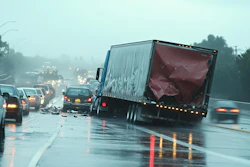
The legal tussle stems from an Aug. 12, 2025, traffic fatality on the Florida Turnpike, where, according to court documents, a tractor-trailer driven by Harjinder Singh—an Indian national who entered the United States illegally through the Mexican border—made an illegal U-turn and caused a collision with a minivan. All three passengers in the minivan were killed, and Singh faces charges of vehicular homicide.
A Federal Motor Carrier Safety Administration investigation revealed that Singh could only identify one out of four highway signs and failed a basic English proficiency test. Despite failing his commercial driver’s license (CDL) test multiple times in Washington and once in California, both states ultimately granted him commercial driving privileges. Washington later admitted it erred in issuing the license. Although Singh failed his initial driver’s test in California, the state said it issued a nondomiciled CDL after he eventually passed.
The Department of Transportation recently cited "systemic non-compliance" with federal CDL standards in several states, including California, as a contributing factor to an increase in commercial trucking accidents. Singh's crash, and those similar to it, has helped spur sweeping trucking safety reform.
Florida, which filed suit in October, argues that lax licensing enforcement constitutes a public nuisance and poses a direct threat to public safety and contended that federal mandates requiring CDL holders to be proficient in English and possess lawful immigration status preempt state laws in California and Washington.
Florida sought to invoke the Supreme Court’s original jurisdiction—a constitutional provision allowing states to sue one another directly in the high court. The decision to toss the case drew sharp dissent from Justice Clarence Thomas, joined by Justice Samuel Alito, who argued that the nation's highest court cannot legally refuse to hear disputes between individual states.

"We have no more right to decline the exercise of jurisdiction which is given, than to usurp that which is not given," Thomas wrote, quoting a historic 1821 ruling by Chief Justice John Marshall.
Thomas argued in his five-page dissent that if Florida were an independent nation, a dispute over a foreign government sending dangerous drivers into its territory would be a major diplomatic incident resolved through international arbitration or self-help measures. Because Florida joined the Union, Thomas wrote, it relies entirely on the Supreme Court to arbitrate these conflicts. He criticized the majority's hands-off approach, adding that the Supreme Court has exclusive jurisdiction over state-against-state controversies, meaning no other judicial body can resolve them.
"Unfortunately, the Supreme Court leaves Floridians with no avenue to hold California accountable for putting dangerous, illegal alien truck drivers on our roads, despite the U.S. Constitution’s mandate and Congress directing the Court to hear controversies between the states," Florida Attorney General James Uthmeier's office told CCJ.
The Attorneys General of California and Washington told CCJ that they were pleased with the outcome.