










Because advanced GPUs and servers command premium black-market prices among sanctioned foreign buyers, shippers must overhaul baseline transit measures with multi-layered verification and active fraud monitoring.
- Unprecedented black-market value: Scarcity and stringent export controls mean high-end GPUs and servers fetch up to double their retail price in restricted foreign markets, turning individual trucks into multi-million-dollar targets.
- Escalating criminal tactics: Traditional cargo thieves typically avoid confrontation, but the massive payout of AI freight has driven syndicates to stage highway crashes, breach security escorts, and operate on behalf of state-backed buyers.
- Supply-chain and hardware-tampering risks: A stolen shipment can stall multi-billion-dollar data center builds for months, while supply-chain infiltration introduces the even greater danger of tampered hardware being deployed directly into core infrastructure.
- The need for layered security: Standard GPS tracking dots are no longer sufficient; shippers must adopt real-time anomaly detection, digital bills of lading (BOLs), vendor-tier vetting, and strict multi-point driver verifications.
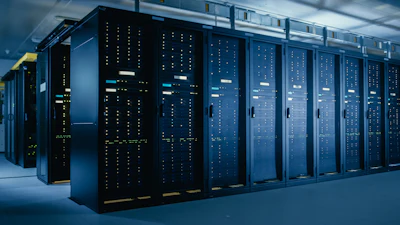
The artificial intelligence industry has been booming, and it is triggering a wave of data center construction.
Spending in the U.S. hit $81.5 billion in the first half of 2026, already surpassing the full-year total for 2025, according to ConstructConnect. Every one of those facilities needs servers, graphics processing units, networking equipment and power infrastructure physically delivered to the build site, which means more high-value cargo is moving overseas and on roads.
Organized criminal networks have taken notice. In the past few months alone, criminals in California stole two shipments containing millions of dollars in data center equipment, and in Illinois, police recovered a shipment of stolen AI hardware worth more than $1 million.
GPUs can be worth more per pound than gold, and they are small enough that a significant haul fits in the bed of a pickup truck. A single rack of servers can be worth more than a full truckload of pharmaceuticals.
What pushes AI hardware into a different category is the scarcity and the international demand on top of that inherent value. There is so much demand for this technology that it has created shortages of products, such as memory chips, meaning even legitimate buyers can wait more than a year for certain components. As a result, a stolen shipment cannot just be reordered; it can delay a data center build by months.
Because this technology is export-controlled, parties in restricted regions cannot obtain it through legitimate channels and are willing to pay well above market value. Servers reportedly sell in China for roughly double their U.S. retail price. That premium attracts a different caliber of criminal. These criminals are often connected to larger global syndicates that trade with state actors seeking the sanctioned technology.
All of this has led to a sharp rise in both the frequency and sophistication of cargo theft targeting AI hardware and data center equipment. Because these criminals may only have a few chances to target shipments like this, organized groups have become much more confrontational in pursuit of these cargoes.


Usually, organized cargo thieves in the U.S. are risk-averse and know that any confrontation or threat of violence will increase their prison sentences. But with AI hardware, criminals have used tactics like causing car crashes to separate private security escort vehicles from the shipments they were guarding, allowing millions of dollars in cargo to disappear.
While this level of confrontation is still rare, the resources and coordination behind these incidents suggest they may not remain isolated. So far, these tactics have worked, giving criminal groups a strong incentive to continue testing them.
Even more worrisome than the risk of theft: If criminal networks with ties to foreign state actors can infiltrate a conveyance to remove AI hardware, they can use that same access to insert hardware. That threat is bigger than the financial loss from a stolen shipment. This involves compromised infrastructure and tampered equipment deployed inside data centers. The consequences of that breach extend far beyond the value of what is on the truck.
While the electronics industry is used to its cargo being targeted, many organizations still operate under the assumption that, because they have not been hit yet, it will not happen to them. But these shipments are so specialized and valuable that baseline security measures are insufficient.
Shippers must adopt enhanced security and apply it at every layer:
- Implement carrier and driver verification at each handoff, not just the origin. That means vetting the carrier before arrival and verifying the driver again when they arrive at the gate. If the information provided in advance does not match who arrives, treat it as a red flag.
- Push security requirements to vendors and suppliers. Shippers need to hold vendors that move RAM, chips and networking hardware to the same standards as the production lines. This is one of the most under-protected parts of the AI hardware supply chain, but a stolen inbound shipment creates the same downstream delay as a stolen finished product.
- Upgrade documentation standards. Hold receiving facilities to a higher standard by using digital bills of lading, not ink-and-paper documents that can easily be forged.
- Deploy proactive compliance monitoring. Visibility into shipments and real-time tracking is only a starting point. Putting a dot on a map shows where a shipment is, but it does not alert anyone if something is wrong. An effective program requires monitoring that can detect fraud patterns in real time — such as anomalies in carrier behavior, documentation mismatches and route deviations — and respond before the cargo goes completely off the grid.
- Establish immediate escalation protocols. The response plan must include reliable contacts who can be reached during an active recovery operation to verify information, provide supporting evidence such as product serial numbers and file necessary reports quickly.
Data center construction is accelerating, and every new facility that goes up means more high-value cargo is hitting the road. Some organizations shipping and receiving AI hardware have built serious, layered security programs, but too many are failing to implement proper protections. Criminals will do what is necessary to obtain this product. The organizations moving it should do the same to thwart them.