










There are significant parallels between today’s emergence of electric vehicles and the emergence of diesels a century ago. George Santayana’s quote sticks in my mind: “Those who cannot remember the past are condemned to repeat it.”
Considerable parallels exist in the history of diesel-electric powertrains supplanting steam engines to power American railroads. For most of us born after 1960, all we have known are diesel-electric trains pulling freight. Steam engines are relegated to museums and tourist attractions—anachronisms of history no longer relevant to modern life.
Executives at companies like Ford, PACCAR, Daimler, Volvo, and particularly GM should spend some time revisiting the history of their U.S. rail predecessors, such as Lima Locomotive Works, Baldwin Locomotive Works, Fairbanks-Morse, ALCO (the American Locomotive Company), EMC (Electro-Motive Corporation) and its successor EMD (Electro-Motive Division of GM), and General Electric. All of these manufacturers had a market presence in 1928, but the majors were Baldwin (estimated at 40% to 50%), ALCO (estimated at 20% to 40%), and Lima (estimated at 10% to 20%). Baldwin had just built a major new 600-acre factory in Eddystone expected to support increased volumes.
Companies do not control history; it marches to its own drummer. 1929 saw "Black Tuesday" hit the stock market. The Great Depression began. World War II happened.
In 1928, Baldwin, owning the lion’s share of the market, supplied the world with trains. They were considered innovators with strong engineering teams. They actually introduced diesel-electric train engines to the market in 1925 but, after an initial product launch, decided that steam would dominate rail at least until the 1980s. They abandoned diesel-electric powertrains after stubbing their toes on the first product launch with high maintenance times, poor parts availability, and insufficient performance. They were the preeminent experts in steam power and felt diesels were, at best, a non-competitive niche market.

Meanwhile, EMC and later EMD, who did not have a vested interest in steam trains, saw diesel-electric engines as the next great thing. They saw the potential positives and worked through the technical issues to address the drawbacks. They recognized that diesel-electric engines were three times more energy-efficient moving freight. They felt that reliability would be much higher than the complex steam engines that required constant attention. They believed maintenance could be greatly simplified and stretched out versus the demanding steam engines. They capitalized on the standardization of designs and mass production techniques being deployed in automotive factories. They believed they could change the market from one where railroad customers demanded and received custom-designed, low-volume steam engines to one where the train manufacturer supplied limited choices in high volumes.
There were a handful of diesel-electric trains in 1925. By 1940, steam engine sales were capturing only 30% of the market. By 1948, new steam trains represented only 2% of sales. By 1960, old steam trains were being relegated to niche locations, scrapyards, or museums.
The parallels between Baldwin’s initial failed launch of diesel-electric engines and Ford’s recent struggle with the Lightning pickup truck are significant. Baldwin engineers knew everything about designing steam engines, but they were new to designing diesel-electric ones. Their first try failed on several levels. Rather than learning from those mistakes so they could make a better product, they bailed and then doubled down on their steam engine heritage. This allowed startups to innovate, solve the issues, and produce a market-winning line of products.
Our truck OEM history is dominated by two major factors: nearly all trucks are custom orders, and we know diesels. The long-expected launch of Tesla’s Semi seems like a déjà vu moment—that moment when Baldwin management began a 30-year decline into oblivion by resting on its laurels. Baldwin expected the steam engine market would always require specialized, customized products that they were well-staffed and equipped to provide. They failed to see the market shift that standardization would create.
OEMs in the U.S. and Canada are constantly fighting a battle with option permutations exploding in the pursuit of giving each customer exactly what they want. That mentality drives costs into product development, as each permutation requires engineering, testing, and field support. It creates parts supply challenges, as the millions of permutations need warehousing and supply chains. It leads to parts shortages when single manufacturers have challenges.
What EMD did was standardize the design of diesel-electric trains. This increased reliability, reduced supply chain issues, helped maintenance by reducing training complexity, reduced costs, and reduced failure modes. The market changed from getting bespoke products for each customer’s request to one where the OEM limited choice.
That market shift from customized products to standardized ones was largely responsible for killing off industrial giants like Baldwin, Lima, ALCO, and others.
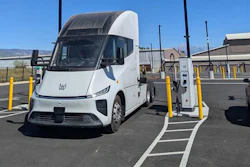
The upcoming launch of the Tesla Semi may start a similar shift for the heavy-duty trucking market. Those OEMs retrenching on diesels should take note that battery-electric trucks are three times more efficient than diesels; they promise greater standardization, simpler maintenance, and lower costs—all those flags that Baldwin missed in 1928.
Baldwin stopped making trains in 1958. Lima made its last steam engine in 1949. ALCO stopped making steam trains in 1948 and quit making trains entirely in 1969. GE exited the train business in 2019, ceding it to Wabtec. Only EMD has survived to the present as part of Progress Rail under Caterpillar.
As Union Pacific launches its "Big Boy" steam train on its nationwide celebratory tour this year, take time to learn from the history of steam engine companies. That train was built in 1941 and was arguably the epitome of steam train design. Its last revenue run was in 1959, replaced by diesel-electric trains.
When will diesel trucks be replaced by the next innovation? It’s already happening.