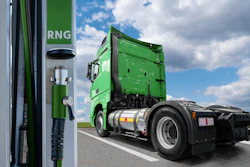











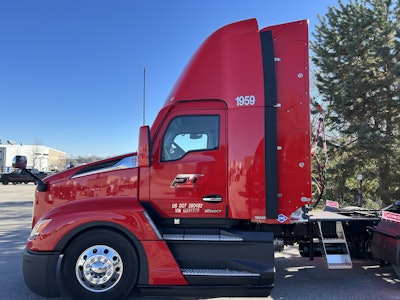
Paper Transport (PTI) last year booked more than 5 million miles using Renewable and Compressed Natural Gas (RNG/CNG).
The De Pere, Wisconsin-based carrier's 5,365,231 miles exceeded its initial 5-million-mile goal for 2025. By utilizing RNG-powered trucks, PTI (CCJ Top 250, No. 105) reported a reduction in lifecycle carbon emissions of up to 90% compared to traditional diesel, providing a verifiable boost to its customers' Scope 3 emissions reduction efforts.
"We don’t just run natural gas trucks—we build strategic, dedicated partnerships that make sustainable freight real," said Jared Stedl, Paper Transport CCO. "Our ability to exceed this goal is only possible because of our customers, who are invested in long-term emissions reduction."
Wisconsin, with 44, is among the top states with CNG stations, behind California (318), Oklahoma (99), Texas (95), Pennsylvania (72), Florida (59) and Georgia (49). The number of existing stations in the United States by the end of last year climbed to 1,385 stations dispensing CNG and 81 stations dispensing liquified natural gas (LNG), according to The Transport Project.
PTI attributes its success to seven long-term dedicated partnerships with major shippers in the retail, packaging, and consumer packaged goods (CPG) sectors.
The impact by the numbers
The transition to alternative fuels has resulted in a large reduction in diesel dependence. Since 2010, PTI has logged more than 84 million cumulative natural gas miles, resulting in:
- 13.6 million gallons of diesel fuel displaced.
- Increased lane density across the Midwest, Southeast, and Southern California.
- A proven model for shippers to embed sustainability directly into their supply chains rather than relying on carbon offsets.
PTI CEO Tyler Ellison emphasized that the company's focus remains on providing measurable, reportable data for their partners. "Reducing emissions in freight takes more than fuel—it takes commitment," Ellison said. "We’re proud to provide a proven model for shippers who want to embed sustainability into their transportation, not just their marketing decks."