










Indiana Senator Jim Banks on Wednesday introduced the Dalilah Law, less than 24 hours after President Donald Trump called on Congress to adopt the measure that would require states to remove illegal immigrant truck drivers from the road.
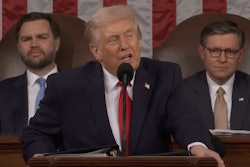
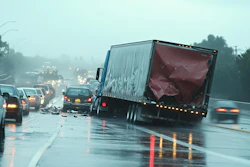
During his State of the Union address Tuesday night, President Trump recalled the story of then-5-year-old Dalilah Coleman, who in June 2024 was involved in a violent wreck when "an 18-wheel tractor-trailer, traveling at 60 miles an hour or more, plowed into her stopped car," Trump recalled. "The driver was an illegal alien, let in by Joe Biden and given a commercial driver’s license by open-borders politicians in California."
The crash resulted in her inability to walk, talk, eat orally, or attend kindergarten as planned. She was in a coma for three weeks and required six months of hospital treatment before her family could bring her home. While in the hospital, she had a craniectomy and was without half of her skull for four months.
Dalilah experienced a broken femur, skull fractures, and has since been diagnosed with diplegic cerebral palsy, global developmental delay, and will need life-long therapy.
The driver of the rig, an illegal alien from India named Partap Singh, allegedly entered the U.S. through Mexico in October 2022. The California Highway Patrol (CHP) Traffic Crash Report states that Singh drove at an unsafe speed and failed to stop for traffic and a construction zone.
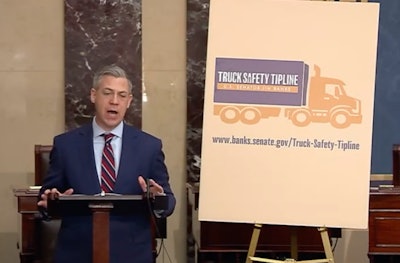
"This is a national crisis and I'm sick of it," Banks said from the Senate floor Wednesday. "We need real accountability and a major overhaul of the system."
What is Dalilah's Law?
As a condition of receiving Department of Transportation funding, the Dalilah Law would require states to limit trucking licenses to U.S. citizens, lawful permanent residents, and certain work visa holders only: E-2 (Treaty investors), H-2A (Temporary agricultural workers), and H-2B (Temporary non-agricultural workers). Additionally, it would require states to revoke all CDLs currently issued to undocumented immigrants and individuals with temporary status—regardless of work authorization—and to offer CDL knowledge and skill tests in English only.

"This is common sense," Banks said. "This will be a common-sense law."
More than 14,000 drivers have been placed out of service for English Language Proficiency violations. U.S. Transportation Secretary Sean Duffy and Federal Motor Carrier Safety Administration (FMCSA) Administrator Derek Barrs last week announced action that would require CDL tests be administered in English.
Senator Banks' bill requires that states re-certify "all individuals" with a CDL within 180 days of the law's enactment. Recertification requires verification that the driver meets the citizenship, residency, or visa requirements; is proficient in the English language; and has passed all required knowledge and skills examinations in English. States must revoke the license of any individual who fails to recertify within the 180-day window or who is found during recertification to be ineligible based on status, English proficiency, or testing language.
The bill also calls for the Secretary of Transportation to disqualify an individual from operating a commercial vehicle for life if they operate a CMV without the required citizenship, residency, or visa status (unless they possess specific travel authorizations or admission records).
Marcus Coleman—who attended the State of the Union address Tuesday night with his daughter, the proposed law's namesake—posted to his X (formerly Twitter) account that the particulars of the Dalilah Law would include elements geared toward slowing "chameleon carriers." However, there is no mention of such an effort in the text of the bill itself. Nor is there any mention of the Dalilah Law applying to gig-economy companies like DoorDash, Uber, or Lyft.
Senator Banks earlier this week sent a letter to FMCSA Administrator Barrs calling for an immediate investigation into potential chameleon carrier trucking networks operating in Indiana.
Banks also launched the Truck Safety Tipline for truckers and those who work in the trucking industry to share concerns about carriers employing or contracting with drivers who are not legally in the United States, who are not authorized to drive a truck, or who cannot meet required English-language safety standards.