









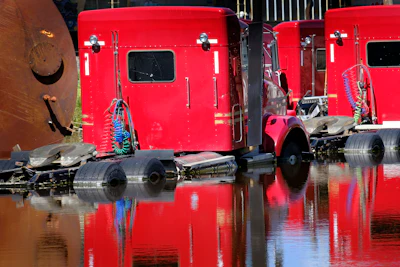
The storm season across the U.S. brings a range of threats. Tornadoes tear through the Midwest with almost no warning, hurricanes bear down on the Gulf Coast over a span of days, and blizzards and temperature extremes can strain equipment across central corridors. Each type of storm presents a different planning challenge—hurricanes offer a week or more of lead time, while tornadoes offer almost none—but the downstream effect on freight networks is the same. Trailers end up in the wrong place, and the imbalance sets in fast. These days, most fleets have little room to absorb it.
ACT Research shows that fleets experienced steady contraction in 2025, which is only expected to intensify this year. Many operators are running as lean as possible. Routes are planned tightly, and equipment is committed to active freight with very little sitting in reserve. That strategy makes sense in a stable environment but creates a domino effect across an entire regional network when a major storm shuts down a corridor.
That lack of margin was on full display this past January, when Winter Storm Fern hit more than 20 states. Tender rejection rates jumped from 9.75% to 12.19% in a single week. Equipment froze in place, drivers sat idle, and the imbalances that followed took weeks to work through. It was one of the most disruptive storms in years.
Even a weather event that hits a handful of states can throw equipment off balance almost instantly. Once it hits, the local supply of available trailers is effectively gone within the first 24-hour window. Assets within a 200-mile radius get sent out to help, but it’s almost never sufficient to meet the surge. When the next ring of available equipment gets called up, there’s often a bottleneck of inbound trailers, especially when roads are closed or access is restricted. Meanwhile, the markets that sent equipment toward the impact zone run short themselves, spreading the disruption even further.
Then there’s a surge in demand for specific trailer types that pulls equipment out of normal commercial service, creating shortages for shippers who were never in the storm’s path. Refrigerated trailers are typically the first called into a disaster zone because they’re critical for moving food, medicine and temperature-sensitive supplies, particularly when power is out and cold-chain integrity depends entirely on the reefer fleet. Dry vans follow in a second wave for water, dry goods and general relief.


Even when the right trailers exist in a nearby region, physically getting them to where they’re needed is its own bottleneck. Driver availability is often overlooked. When multiple fleets are all trying to reposition toward the same impact zone simultaneously, third-party drivers and logistics vendors get committed fast. Fleets that are slow to mobilize often find that the drivers needed to move equipment are already spoken for.
The fleets that manage through storm season without major service failures tend to share a few practices. They maintain real-time visibility into equipment through telematics installed on trailers, giving operators a clearer understanding of where assets are positioned and which regions are beginning to tighten before shortages spread more broadly through the network.
They also tend to plan for disruption before there’s an active storm path. Some fleets now reserve and pre-position trailer capacity in advance through programs like TEN Ready, rather than scrambling for equipment after freight corridors begin shutting down.
But even strong planning only goes so far once disruptions begin unfolding in real time. The operators that recover fastest are often the ones with established relationships across leasing, maintenance, and logistics networks that can help reposition equipment or source additional capacity quickly when internal resources are stretched thin.
While forecasts provide a starting point for disruption plans, operators still need flexibility when conditions shift. Reported hurricane forecasts are calling for more frequent and more severe storms, and the ones that do hit are proving less predictable than they used to be. Last year, when a hurricane was projected to hit Tampa, Atlanta was the logical location to stage backup equipment. But then the path shifted to move right through Atlanta, which meant plans needed to change to make Charlotte the new secondary spot. The need for that agility is becoming more frequent.
The storm season doesn’t pause for fleets to get organized. Hurricanes and winter storms may give operators a week to prepare, but tornadoes can pop up in minutes, and the equipment imbalances can take months to sort out. The operators who come through the season with their networks intact have a plan before there’s even a forecast to react to.