Trucking news and briefs for Friday, Oct. 2, 2026:
XPO expands with two new service centers
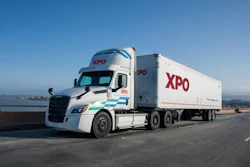
XPO (CCJ Top 250, No. 10) has opened two new service centers in Mesa, Arizona, and Cameron, Missouri, expanding the company’s capacity to meet growing freight demand in the Phoenix and Kansas City metropolitan areas.
The 51,000-square-foot Mesa facility has 86 dock doors and a team of more than 100 employees. Located in one of the nation’s largest and fastest-growing metropolitan areas, it complements XPO’s existing Phoenix service center, adding capacity to meet increasing freight demand fueled by industrial investment and cross-border trade with Mexico.
The 13,000-square-foot Cameron service center has 32 dock doors and a team of more than 30 employees. Located at the intersection of two major highways, I-35 and U.S. 36, it enables more efficient freight movement along key north-south and east-west freight corridors in the Midwest.
“These new service centers deepen our presence in two critical freight markets and reflect our strategic approach to investing in our network,” said Matt Carroll, president of XPO’s West Division. “We’ve added capacity where our customers need it most, positioning us to support their growth while delivering the world-class service they count on.”
XPO has opened nearly 35 new service centers across the country since 2021, expanding its network dock door capacity by 15%. Construction at the Mesa and Cameron sites was completed this summer, and their openings bring XPO’s North American network to 300 service centers, which provide direct service to 99% of U.S. ZIP codes and cross-border service to and from Canada and Mexico.
Company’s request to allow CLP drivers to operate with no CDL holder denied
The Federal Motor Carrier Safety Administration has denied a petition from Agri-Tech Aviation that would have allowed its commercial learner’s permit holders who have passed the CDL skills test but not yet obtained their CDL to drive without a CDL holder in the front seat.
Similar exemptions have previously been granted to other fleets, including C.R. England, Covenant, Wilson Logistics and others.
Agri-Tech Aviation is a five-truck fleet that serves farmers in Iowa with aerial application needs. It operates two straight trucks that hold 500 gallons of jet fuel for dry operations, and three Ford F-550 flatbed trucks with a 30-foot gooseneck capable of carrying up to 900 gallons of jet fuel and 1350 gallons of crop protection products, most of which fall under Class 9 (miscellaneous hazardous materials) and do not require placarding.
The company said it needed the exemption because the brief operational season for aerial applications makes it “nearly impossible to recruit qualified drivers.”
FMCSA said it received 38 comments on the application, none of which supported granting the exemption.
In denying the request, the agency said the request “raises safety concerns because of multiple complicating factors identified in the application, including the potential use of CLP holders to transport hazardous materials (HM),” adding that Agri-Tech “does not address any safety countermeasures relating to the transportation of HM under the exemption.”
Additionally, even though the company’s CLP holders would have passed the CDL skills test, federal regulations still prohibit CLP holders from obtaining an HM endorsement.
FMCSA renews, consolidates steel manufacturer’s HOS, equipment exemptions
A steel manufacturer that operates a plant in East Chicago, Indiana, has received a provisional renewal of an exemption that allows certain company drivers to operate for up to 16 hours per day, as well as to use specialized coil carriers to transport steel coils.
Cleveland-Cliffs uses specialized tractor-trailer combinations designed to transport steel coils within the Indiana facility. The trailers are designed with cradles that hold between one and five steel coils.
According to Cliffs, the vehicles have an unloaded gross combination weight of approximately 77,000 pounds and may weigh as much as 263,171 pounds when fully loaded. The vehicles have a maximum speed of approximately 30 to 33 miles per hour and operate at approximately 15 miles per hour when fully loaded.
The coil carriers cross public roadways at two locations, both of which are controlled intersections. The company currently averages approximately 32 crossings per day at each location.
FMCSA originally granted the steel-coil exemptions in 2016. The exemption also allows covered employee-drivers, limited to Cliffs' coil carrier CMVs, to work up to 16 consecutive hours in a duty period and return to work following at least 8 hours off duty when necessary.
Cliffs also operates two trucks that transport scrap metal across the same two public-roadway crossings used by the coil carriers. On May 11, 2022, FMCSA granted Cliffs a separate exemption from the HOS requirements for the drivers of these scrap trucks.
In July, the company requested a 5-year renewal of both the steel coil and scrap metal exemptions and that FMCSA consolidate them into a single exemption.
FMCSA provisionally renewed and consolidated the exemptions for six months, subject to the terms and conditions of this decision and the absence of adverse public comments that would cause the Agency to revoke the exemption. The consolidated exemption is effective through March 23, 2027.
FMCSA is accepting public comments on the provisional renewal here through Oct. 30.
FedEx orders 2,000 all-electric Harbinger trucks
Harbinger this week announced it has received an order for 2,000 of its all-electric trucks from FedEx, with a total order value which exceeds $300 million.
This transaction, believed to be one of the largest binding orders for electric medium- or heavy-duty trucks in history, marks an expansion of FedEx’s use of Harbinger vehicles and is a step in its fleet electrification strategy.
 The vehicles are planned for delivery by the end of 2027 for deployment across FedEx pickup and delivery operations in the United States and Canada. Harbinger
This order builds upon a previous deployment of Harbinger vehicles within the FedEx network and FedEx’s previous co-lead investment in Harbinger’s $160 million Series C equity raise.
“FedEx is demonstrating that the business case for incorporating electric vehicles into real-world fleet operations at scale makes sense,” said John Harris, co-Founder and CEO, Harbinger. “Our previous work together gave FedEx firsthand experience with the performance and economic advantages Harbinger vehicles can deliver. We are proud that a global leader like FedEx is turning its sustainability goals into action by choosing Harbinger to help expand its electric fleet.”
Harbinger’s vehicles will serve as one-for-one replacements for conventional vehicles, supporting FedEx's efforts to reduce emissions and modernize its fleet. The order includes a mix of models from Harbinger’s all-electric vehicle lineup.
Harbinger plans to build and deliver all 2,000 vehicles within approximately 18 months. Harbinger’s Canadian dealer, Kaizen Automotive Group, will support the Canadian portion of the deployment.