










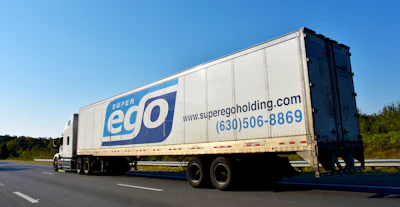
Super Ego, the center of an explosive 60 Minutes investigation earlier this year, announced last week it is expanding its "carrier success program," throwing a tactically worded combination of technology, financial incentives and — in a touch of corporate poetry — "personal wellness" tools at independent contractors.
It's worth noting that Super Ego's prior carrier success program, if you can call it that, is the focus of a 2022 class action lawsuit with about 800 drivers participating.
The real crown jewel of their recent announcement, though, is a sizable capital investment in equipment. But it's not all Super Ego's capital. The company has pledged that by 2028, every single truck and trailer in its lease portfolio (it's not a carrier, remember?) will be newer than three years old.
The transparency fallacy
The word "transparency," which the company uses in the release, is ambiguous. It's open to interpretation, making the details important. Reporters see that word, and they're going to ask a few basic follow-up questions that help define it and add context to it. I did. Three times. Over a seven day period.
I wanted to know how the promise of "financial and operational transparency" squares with the federal class-action lawsuit where hundreds of drivers accuse the company of systematically skimming their pay.
CCJ wanted to know if drivers under this new program would get to see unredacted, original broker documents. We asked if those new trucks would come with high fees that trap drivers in negative pay cycles, forcing them to owe the company money after driving thousands of miles — a reality highlighted on that primetime segment of 60 Minutes.
The response from Super Ego? Zero. Absolute silence. For a full week. Elizabeth, if you're reading this, hi! This is not how transparency works.
It is a fascinating PR strategy: scream your dedication to open communication from the rooftops, and then climb into a hole when someone asks to see the math.
Why focus on pesky details like driver compensation when you can focus on modernization? Who cares if a driver brings home a net balance in the red after an 80-hour work week as long as the truck they are sleeping in (the one they are paying to use) is a 2026 model?



Super Ego wants the industry to look at its shiny new bumpers, not the legal wreckage accumulating on federal court dockets. They want to talk about "predictable payment structures" for independent contractors while completely ignoring the allegations that prompted this kind of overhaul in the first place.
I'm all for lease-purchase programs that give drivers a pathway to small business ownership. Is that what this is? I'm not sure.
A new truck doesn't mean much to an independent if the company holding the lease refuses to provide straight answers on where the money goes. Super Ego's silence speaks far louder than its press release, and it tells drivers everything they actually need to know.
Here are the questions I asked (three times). What do you think the answers are?
- The announcement promises "financial and operational transparency." Will independent contractors be given direct, unredacted access to the original broker rate confirmation sheets to verify that their percentage (e.g., 75% to 88%) is being calculated from the actual gross amount paid by the shipper?
- Will Super Ego implement a third-party portal or independent auditing system where drivers can verify freight pricing without company intervention?
- Drivers often report that "zero-down" lease programs are offset by high weekly deductions for insurance, technology and maintenance. What specific steps are being taken to make the breakdown of weekly deductions fully transparent before a driver signs a lease?
- If carriers are using company-issued fuel cards that receive network discounts, will those precise savings be passed directly and transparently to the independent contractors, or does the company retain a percentage of the fuel rebate?
- The release says that by 2028, all leased equipment in Super Ego’s portfolio will be less than three years old. What is the enforcement mechanism for this? If a driver is currently in a lease-purchase agreement for an older truck, will they be forced to upgrade, and will that reset or increase their weekly payment structure?
- The announcement mentions "capital preservation opportunities." If a driver encounters significant mechanical downtime with these vehicles, does the company provide transparent, capped maintenance costs, or do drivers absorb the full financial risk of the equipment upgrades?
- Super Ego has historically maintained that it is strictly an equipment leasing company and not a motor carrier responsible for driver safety or dispatch. Yet, this initiative outlines a comprehensive program combining "technology, financing and tools" for carriers. How does Super Ego reconcile acting as a deep operational partner while maintaining it has no legal employer-employee or carrier relationship with these drivers?