










Trucking news and briefs for Friday, April 17, 2026:
‘Not a carrier’: Super Ego says 60 Minutes report is ‘misunderstanding’
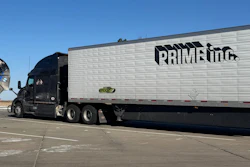
Embattled transportation company Super Ego, the focus of a 60 Minutes investigation that aired Sunday, released a statement to the Serbian Times this week defending itself from allegations of being a Chameleon Carrier, cheating drivers out of pay and hours of service violations. Parent company Super Ego Holding, based in Elmhurst, Illinois, was founded by Serbian entrepreneur Aleksandar Mimic.
“The company calls on the public and media to understand a fundamental fact that the segment ignored entirely: Super Ego is an equipment leasing company, not a carrier company,” the company said. “Every claim made in the segment, including allegations about driver clocks, DOT rate sheets, DOT numbers, and pay, is false and derives from this central misunderstanding.”
CCJ parent company Fusable provided data analysis for the story: carrier safety scores, hours-of-service violation patterns, crash metrics and insurance cycling data built on the FMCSA's carrier safety framework.
Super Ego Holding noted in its statement that it operates a freight brokerage subsidiary called Gray Falcon United. It claims that Super Ego leases equipment to more than 1,200 licensed carrier companies and that "those carriers employ their own drivers and dispatchers and maintain full authority over them. Super Ego does not hire, pay, supervise, or contract drivers or dispatchers who are not its own employees or independent contractors.
“When a carrier’s driver arrives at a Super Ego facility to pick up a truck bearing the Super Ego name, or causes dangerous conditions on the road, that driver works for the carrier and not for Super Ego,” the company’s statement continued. “The segment was especially misleading by exclusively showing video clips of Super Ego trailers, when carrier trailers have no marking requirements and are rarely connected to the carrier that is operating the tractor.”
60 Minutes spoke with seven drivers that claim Serbia-based managers siphoned a range from hundreds to thousands of dollars from their pay in excessive leasing fees, insurance, and repairs. A class action lawsuit with more than 800 participants calls it a conspiracy “to engage in a widespread, longstanding scheme to defraud semi-truck drivers with whom they contract to steal part of their compensation.”

ATRI’s 2026 research priorities focus on safety, driver health, weather, more
The American Transportation Research Institute (ATRI) Board of Directors recently reviewed and approved its 2026 Top Research Priorities, which were identified last month by ATRI’s Research Advisory Committee.
ATRI’s RAC selected a diverse set of research priorities designed to address some of the industry’s most critical issues focused on improving safety, enhancing driver health and wellness, and understanding how major weather events impact trucking operations. The 2026 ATRI top research priorities are:
- Outcomes of Coaching Practices and Front-Line Management on Safety. Through a series of data collection efforts and statistical analyses, this research will identify industry best practices for driver coaching that have the greatest impact on safety outcomes.
- Advancing “Beyond Compliance.” Over 15 years ago, ATRI published the first research examining potential benefits of an “Alternative Compliance” program – a concept that would motivate and reward motor carriers for voluntary investments in safety technologies, strategies, and programs that have proven safety benefits. Now referred to as “Beyond Compliance,” that same concept continues to generate interest by industry and government. This research will examine potential incentives for participation in a Beyond Compliance program and develop a pilot test methodology and evaluation plan.
- State Benchmarking: Identifying the Best Business Climate States for Trucking. There currently exists significant variances in the 50 states’ economic, operational and regulatory environments for motor carriers. This research will develop a benchmarking index based on state data relating to each state’s business climate measures including insurance costs and litigation exposure, taxes and fees assessed on truck fleets, labor costs including workers compensation, and operational costs such as fuel prices, tolls and parking availability.
- Assessing the Costs and Benefits of Federal and State Regulations by Stakeholder Group. The trucking industry is subject to myriad regulations at the state and federal levels, many of which present increased costs, decreased productivity, and unclear benefits, while others may provide measurable benefits but are not enforced. This research will develop a template for trucking industry regulatory cost-benefit analyses that index regulations based on how beneficial they are, whether or not they are clearly understood and implemented by the industry, and the degree to which they are enforced.
- Quantifying the Relationship Between Medical Card Status & Operational Impacts. Truck drivers face myriad health and wellness challenges exacerbated by the sedentary nature of truck driving, extended periods away from home, and inconsistent support for exercise and healthy eating. These challenges also increase the industry’s operational costs including healthcare, workers compensation, reduced driver productivity and increased driver turnover. This research will utilize drivers’ medical card status as a proxy for driver health and quantify the nexus between driver health and increased industry operational costs.
- Major Weather Event Impacts on Trucking. Major weather events such as hurricanes, wildfires and snowstorms have a significant impact on roadway operations, particularly when the impacts close major freight routes for an extended period of time. This research will utilize case studies to identify best practices for fleets, state DOTs and state trucking associations for preparing for and responding to major weather events.
New Hampshire blitz sidelines 35 trucks, 14 drivers
Dozens of commercial vehicles were taken off New Hampshire’s roads Tuesday, April 14, as part of an Operation Airbrake enforcement blitz.
New Hampshire State Police troopers assigned to the Troop G barracks participated in the initiative organized by the Commercial Vehicle Safety Alliance (CVSA).
The goal of the initiative “is to reduce the number of highway crashes caused by faulty braking systems on commercial motor vehicles by conducting roadside inspections and educating drivers, mechanics, owner-operators and others on the importance of proper brake inspection, maintenance and operation,” NHSP said.
During the one-day event, troopers conducted 176 commercial vehicle inspections, primarily at the weigh station facilities on I-93 in Windham and along Route 101 in Epping. The inspections resulted in the removal of 35 commercial vehicles from the road due to unsafe mechanical conditions that posed an imminent hazard. There were 22 critical violations identified related to brake components. Additionally, 14 drivers were placed out of service due to improper credentialing.
Truck parking among top priorities for Ohio’s 2026 construction season
The Ohio Department of Transportation recently announced the kickoff of a $3.4 billion construction season statewide, which totals 977 projects, including some to help truck drivers with additional parking.
Already underway is the conversion of a decommissioned weigh station along I-75 in Northwest Ohio, south of Bowling Green, which will offer 16 truck parking spaces when completed in the coming weeks.
A total of 144 truck parking spaces will be constructed at decommissioned weigh stations throughout Ohio as part of the state's response to a national need for truck parking.
In addition to converting weigh stations, the first projects to construct truck parking within a larger statewide initiative will begin this year. That initiative will add more than 1,400 truck parking spaces across the state over the next two years.
In northwest Ohio, 65 spaces will be constructed along U.S. 33 at Willipie Street in Auglaize County, and 50 spaces will be added at the eastbound and westbound rest areas on U.S. 30 in Wyandot County.
In addition to truck parking, ODOT is also kicking off resurfacing projects and bridge work along I-75, I-475, I-90, I-70 and elsewhere around the state.