










June 2026 marked a pivotal shift in the freight market as rising truckload (TL) rates began outpacing less-than-truckload (LTL) pricing for the first time in four years, though a persistent multiyear pricing gap means volume migration back to LTL networks will be gradual.
- Historic Pivot: June 2026 PPI data showed year-over-year truckload price growth surpassing LTL growth for the first time since 2022, creating a financial incentive for shippers to move mid-sized loads back to LTL.
- Capacity Pressures: Tightening truckload capacity—driven by stricter safety enforcement, ELD crackdowns, and regulatory rulings like Montgomery—has fueled double-digit truckload pricing gains.
- Persistent Pricing Discrepancy: LTL prices remain 59% above January 2020 levels compared to a 36% cumulative increase for truckload, creating an obstacle that requires further TL rate increases before substantial volume shifts back to LTL.
- Divergent Industry Structures: LTL operates as a disciplined oligopoly capable of maintaining price resilience during downturns, whereas the fragmented truckload market experiences sharper, supply-driven rate swings.
Less-than-truckload (LTL) shipping companies received a rare glimmer of hope in June as truckload (TL) shipping rates began rising faster than LTL rates for the first time in four years, signaling a potential return of heavier shipments to LTL networks. However, a multiyear pricing gap between the two sectors means a full volume recovery will take time.
According to analysis of the Bureau of Labor Statistics’ recent Producer Price Index (PPI) data, June 2026 marked the first time since 2022 that year-over-year price growth for general freight truckload carriers overtook LTL price growth. When TL rates rise more rapidly than LTL rates, it historically creates an economic incentive for shippers to migrate mid-sized freight back to LTL carriers.
"Whenever TL rates rise more rapidly than LTL rates, LTL carriers benefit by seeing some shipments shift from TL to LTL," said Jason Miller, professor of supply chain management at Michigan State University.
Historical cycles and market acceleration
The relationship between TL and LTL pricing has historically dictated LTL volume swings. During periods of rapid TL rate inflation—such as in 2018 and from mid-2020 through mid-2022—LTL carriers experienced robust shipment growth.
This tightening truckload market is already playing out on the ground. In its second-quarter 2026 earnings call, transportation giant J.B. Hunt reported a dramatic shift in the market, noting that safety-focused enforcement and broader supply pressures have severely constrained available truckload capacity.
"Several industry indicators, including higher tender rejections [and] higher spot pricing... moved toward levels not seen since 2021 and 2022," said Spencer Frazier, J.B. Hunt’s executive vice president of sales and marketing, highlighting the sudden acceleration of the truckload market.
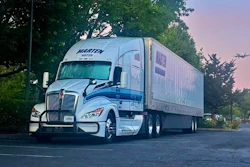
Marten Transport CEO Randolph Marten noted that during his carrier's second quarter, Marten Transport is "successfully securing higher pricing from our customers for our premium services" while improving freight quality.
Conversely, when the market turned from late 2022 through 2025, LTL rates either fell more slowly or rose more quickly than TL rates. During this prolonged stretch, LTL carriers saw significant volume declines, a trend reflected in the quarterly earnings of major players like Old Dominion Freight Line and FedEx Freight. While the June data officially snaps that four-year trend, Miller noted that LTL carriers still face a steep uphill battle to win back the market share they lost over the last three years.
Earnings mirror market tensions
The operational realities of this shifting dynamic were echoed throughout second-quarter earnings reports across the freight sector. Executives at Knight-Swift Transportation reported a rapid acceleration in truckload fundamentals that directly aligns with the PPI trends.
"The Truckload freight market has rapidly progressed over the past few months, with spot rates trending well ahead of normal seasonality, tender rejection rates reaching levels not seen since 2021, and contractual bid activity growing increasingly supportive," noted Adam Miller, Chief Executive Officer of Knight-Swift Transportation. "Revenue per mile accelerated in June as the more recent bids reflecting the tighter backdrop started taking effect. These bid outcomes largely brought double-digit percentage gains in pricing."
Despite the surge on the truckload side, carrier leadership acknowledged that LTL spillover effects are present, albeit lagging. Andrew Hess, Chief Financial Officer at Knight-Swift, pointed out the nuanced cross-segment dynamic:
"While the LTL sector has not seen the same sharp tightening as Truckload, demand that has been generally stable is seeing pockets of improvement, in addition to some indirect benefits from Truckload tightness."
J.B. Hunt's truckload revenue rose 35% to $240 million on a 14% increase in volume. However, the segment reported an operating loss of $1.3 million compared to an operating income of $3.4 million last year, weighed down by higher third-party capacity costs.
Persistent pricing gap and divergent models
The primary obstacle to a swift LTL recovery is the vast pricing discrepancy that has built up since the onset of the COVID-19 pandemic. Using January 2020 as a baseline, Jason Miller noted that TL rates initially soared more than 50% to a peak in May 2022, while LTL rates rose a more modest 30%. This initial gap prompted shippers to consolidate smaller shipments into abnormally large LTL loads (e.g., 12,000-pound, 10-pallet shipments) to capture discounts.
By Q2 2023, the dynamic reversed. As TL rates collapsed, LTL rates remained resilient, widening the gap and pushing borderline shipments out of LTL networks into direct or multi-stop TL services. As of June 2026, cumulative LTL prices stood 59% higher than January 2020 levels, compared to a 36% cumulative increase for TL prices.
| Market Metric (Jan 2020 Baseline vs. June 2026) | Cumulative Price Increase | Market Dynamics |
|---|---|---|
| LTL Sector | +59%
| Disciplined oligopoly; high barriers to entry; resilient pricing. |
| Truckload (TL) Sector | +36%
| Highly fragmented; rapid rate swings; supply/demand sensitive. |
"We will need further significant upward increases in TL rates relative to LTL rates to unlock volumes lost to the TL carriers over the past three years," Jason Miller added, emphasizing that any transition will remain gradual.