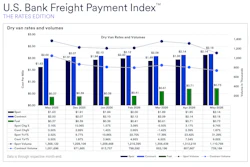












The Q3 2026 TD Cowen/AFS Freight Index reveals that consumer spending sectors are in a slump, but massive technology capex for AI computing is injecting unexpected demand into truckload spot rates.
- Fuel and capacity squeeze: A 51% surge in diesel prices and a 90% spike in jet fuel have combined with a regulatory reduction of 48,000 drivers to severely restrict market capacity, pushing truckload and LTL rates to historic highs.
- Shifting demand narrative: While expansionary pricing was initially attributed almost entirely to supply-side issues, a surprise 1.4% year-over-year jump in May’s trucking ton-mile index reveals a significant demand injection.
- The AI infrastructure boom: The unexpected demand is lopsided, fueled nearly 100% by an unprecedented capital expenditure boom in sectors tied to the physical AI computing ecosystem (such as electrical goods up 28.3%), masking deep declines in consumer and housing sectors.
- Historical freight recession risk: Analysts warn this tech-heavy concentration echoes the 2013–2014 hydraulic fracking boom; if AI infrastructure capital expenditure experiences a major downturn, it could trigger a broader economic recession that would cascade into the shipping market.
A mix of climbing fuel prices, shrinking carrier capacity, and an artificial intelligence infrastructure boom is driving shipping rates nationwide to historic highs, according to the third-quarter 2026 TD Cowen/AFS Freight Index released Tuesday.
Oil price shocks fueled by renewed conflict in the Middle East have rippled through the shipping sector, pushing rates well above previous projections. However, new macroeconomic data reveals that a recent surge in spot rates is no longer just a supply-side story, thanks to an unprecedented wave of technology capital expenditure that is injecting unexpected demand into the market.
"With this edition of the freight index, the fuel numbers tell the story," said AFS Logistics CEO Andy Dyer, adding that second-quarter diesel prices jumped approximately 51% compared to January and February levels.
Shrinking supply, AI offsets consumer weakness
Spike-driven costs are forcing smaller truckload carriers working on tight margins to park trucks, further restricting capacity.
"Carriers have regained real leverage in this market, and shippers who don't adjust will have trouble getting their freight picked up," said Alex Fuller, vice president of commercial intelligence at TRAFFIX, adding that tightening truck capacity, not diesel prices, is the primary force keeping freight rates near multi-year highs.
According to the RigDig database, the U.S. carrier population has seen a net loss of more than 50,000 prospects in the last 12 months, even as more than 28,000 verified vehicles came online. RigDig is owned by Fusable, the parent company of CCJ.
While early data suggested a purely supply-driven market correction due to regulatory enforcement shrinking the driver pool, the underlying demand narrative is shifting, according to Eli Broad Endowed Professor of Supply Chain Management at Michigan State University, Jason Miller. May’s trucking ton-mile index showed an unexpectedly sharp seasonally adjusted gain of 0.7% month over month and 1.4% year over year, forcing analysts to re-evaluate the market.

Miller said he previously attributed 90% of the inflationary pricing conditions to supply contractions and only 10% to demand. His revised estimates now attribute 30% of the price surge to a highly concentrated demand spike.
An analysis of the 41 constituent series generating the ton-mile estimate reveals that freight growth is almost entirely propelled by the physical ecosystem required for AI computing:
- Wholesale trade gains: Massive year-over-year gains were recorded in electrical goods (+28.3%), professional and commercial equipment (+11%), and machinery and equipment (+5.3%).
- Manufacturing increases: Primary metals (+4.3%) and machinery (+4.4%) also saw substantial upturns.
- Consumer and housing slump: Conversely, sectors tied to consumer spending and housing remain in decline, including beverage manufacturing (-6.5%), furniture (-4.6%), paper (-3.0%), and wood products (-2%).
The lopsided growth draws historical parallels to the 2013–2014 hydraulic fracking boom, Miller said, which similarly masked broader economic softness before a 2015 energy bust triggered a freight recession. Miller warned that since current trucking volume growth is reliant on AI infrastructure, a significant downturn in AI tech spending could trigger a broader economy-wide recession that would immediately cascade into the logistics sector.
For the immediate future, however, momentum is projected to carry into the third quarter, with the truckload rate per mile index expected to hit a four-year high of 17.7% above the baseline — an 11% year-over-year increase, according to the TD Cowen/AFS Freight Index.
LTL surcharges explode
 Q3 TD Cowen/AFS Freight Index
In the less-than-truckload (LTL) sector, falling shipment weights continue to reflect broader softness in standard industrial and manufacturing sectors. However, rate relief for shippers has failed to materialize as average LTL fuel surcharges in the second quarter surged to over 60% above June 2025 levels.
Looking ahead to the third quarter, the LTL rate per pound index is projected to reach a new record high of 76.8% above the January 2018 baseline, rising 5.9% year over year, according to the TD Cowen/AFS Freight Index.
Beyond fuel, the LTL competitive landscape is bracing for seismic changes.
"Amazon's full-scale entry into the LTL market signals a major force for the future," said Mich Fabriga, vice president of LTL pricing at AFS Logistics, adding that the spin-off of FedEx Freight will also free the carrier to compete more aggressively without the constraints of its parcel business.
Mode-by-mode analysis from TRAFFIX projects that tight capacity will keep dry-van rates elevated through the remainder of 2026, while robust infrastructure and construction demand will drive flatbed rates higher. In response to the contracting truckload market, intermodal shipping volumes are forecast to surge more than 20% year over year as shippers hunt for alternatives. Meanwhile, refrigerated capacity is expected to stay constrained through the end of the produce season, while cross-border shipping remains generally steady despite tighter conditions for refrigerated, expedited and high-demand U.S.-Mexico lanes.
"Surcharge fatigue" and new competitors
Frustrated by ongoing adjustments to fuel, peak and handling surcharges by dominant players FedEx and UPS, shippers are turning to alternative carriers. Regional and last-mile carriers more than doubled their volumes from 2024 to 2025. Too, Amazon Supply Chain Services has opened its dense delivery network to external shippers, threatening the long-term pricing power of the legacy giants.
Still, current parcel rates remain punishingly high:
- Ground parcel: Despite minor seasonal easing expected in the third quarter, ground parcel rates are on track to make 2026 the highest cost-per-package year on record, driven by tight carrier discounting and updated fuel surcharge tables. Under new carrier rules, even if diesel falls to $4 per gallon, shippers will pay a 24% to 24.5% fuel surcharge compared to 21% under previous tables.
- Express parcel: Driven by elevated fuel surcharges, higher billed weight and demand surcharges, the express parcel rate per package index is projected to reach a record 15.8% above the 2018 baseline in the third quarter, an 11.1% jump year over year.
"This shifting carrier landscape is a welcome development for shippers who have long sought relief," said Mingshu Bates, president of parcel and chief analytics officer at AFS Logistics. However, Bates cautioned that capitalizing on these new alternatives requires shippers to navigate complex carrier offerings and sophisticated rating technology.