










Federal regulatory enforcement and tightening carrier vetting standards are fundamentally reshaping the trucking industry, creating structural capacity constraints that Knight-Swift CEO Adam Miller says will pave the way for a durable market recovery.
- Unprecedented Rejections: National load rejections have climbed to 11% to 12% despite muted consumer demand, creating a historic dynamic where supply-side constraints are driving market pressure.
- Regulatory Exits: Federal crackdowns have revoked roughly 40,000 non-domiciled CDLs, issued 29,000 English proficiency out-of-service orders, and shuttered about 10,000 substandard training providers.
- Broker Liability Surge: Legal rulings and landmark nuclear verdicts are forcing brokers to drastically tighten vetting standards and reduce their active carrier pools to mitigate massive legal and insurance risks.
- Technology & Outlook: Emerging tech like autonomous trucks and electric semis face heavy operational and financial hurdles, leaving disciplined asset-based carriers positioned for a sustained market turnaround by 2027.
An unprecedented supply squeeze driven by regulatory crackdowns, mounting broker liability, and prolonged market attrition is laying the groundwork for a more stable and durable freight recovery, according to Knight-Swift Transportation (CCJ Top 250, No. 3) Chief Executive Adam Miller.
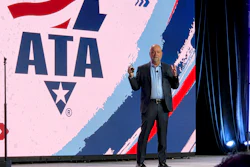
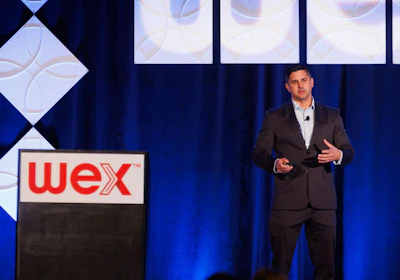
Miller told attendees at the WEX OTR Summit in Ponte Vedra, Fla., this week that despite sluggish consumer demand, national load rejections have climbed to 11% to 12%—levels rarely seen outside the height of the 2021 pandemic peak.
“We’ve really never seen a market where rejections went up with demand down," he said. "I’ve never seen it in the 24 years I’ve been in trucking. We’re in somewhat uncharted territory.”
The dynamic is departure from past freight upcycles that were traditionally triggered by surges in consumer spending. Instead, now, capacity is draining from the market due to aggressive regulatory actions, strict enforcement, and soaring operational expenses.
Federal regulators have tightened oversight significantly over the past two years. Authorities have revoked or declined to reissue approximately 40,000 non-domiciled commercial driver's licenses (CDLs), placed about 29,000 drivers out of service for English language proficiency violations, and shut down roughly 10,000 fraudulent or substandard CDL training providers.
Miller noted that during the pandemic boom, the industry issued upwards of 850,000 CDLs annually (more than double historical norms), allowing noncompliant carriers and bad actors to enter the market and drag down freight rates. The current enforcement push, he argued, creates overdue barriers to entry that will curb reckless expansion during future upcycles.
At the same time, the legal landscape for freight brokers has undergone a seismic shift following court rulings on broker negligence, including a recent $604 million nuclear verdict in Dallas County against C.H. Robinson. With shippers and insurers reevaluating risk, brokers are facing escalating liability and surging insurance premiums, forcing them to vet motor carriers far more rigorously. Miller noted that Knight-Swift’s own brokerage operation has reduced its active carrier pool by 70% as it tightens safety standards.

Chad Krueger, vice president and managing director of risk intelligence at Central Analysis Bureau (CAB), underscored that plaintiff attorneys actively target fleets operating at the minimum compliance level. If an accident occurs, attorneys will rigorously examine a fleet's safety standards, making voluntary, beyond-compliance programs essential for legal defense.
These supply constraints are already pushing rates up. While retailers maintain lean inventory levels ahead of peak shipping season, carriers are aggressively resetting rates mid-cycle by double-digit percentages.
Miller noted that Knight-Swift expects rate increases in the mid-teens during upcoming contract bid cycles to restore profit margins above its capital costs.
Miller also offered his measured assessment of emerging transportation technologies, pushing back on immediate industry hype. He characterized autonomous long-haul trucking as still facing critical hurdles, including terminal drop-and-hook logistics, cargo theft vulnerability, and monitoring costs that currently exceed driver wages. He was similarly blunt about electric semi-trucks, citing range limits, severe payload weight penalties, and high capital costs.
“We call that yard art because they don’t do a lot. But they look nice,” Miller said, noting that electric trucks currently cost three times as much as diesel models while performing a fraction of the work.
Miller said his carrier is investing heavily in internal governance, expanded driver recruiting pipelines, and pragmatic artificial intelligence applications. Knight-Swift’s internal AI council oversees roughly 50 targeted initiatives designed to streamline road service calls, screen recruiting leads, and boost operational productivity.
With diesel prices averaging well above normal and placing acute financial stress on smaller operators, Miller projected that fleet capacity will continue contracting into next year, positioning disciplined, asset-based carriers for a sustained market turnaround by 2027.
"I think we’re in for a pretty good market in 2027," he said.