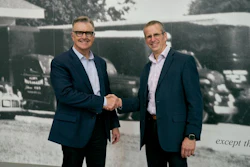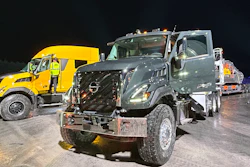











Is that a standard Class 8 tractor pulling onto the highway, or a glimpse into the future of logistics? CCJ Editor Jason Cannon goes behind the scenes with Jacob Castro from International Motors to explore a heavily modified, yet surprisingly stealthy, self-driving International LT.
Hidden in plain sight
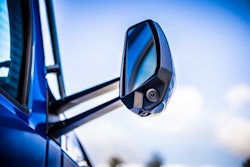
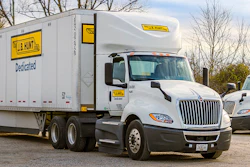
Unlike other autonomous vehicle players with obtrusive "unibrow" sensor rigs, International has seamlessly concealed its cutting-edge perception system. The truck maintains its classic, everyday appearance while packed with heavy-duty tech:
- Sensor fusion: 10 radar sensors, 10 cameras, and 3 lidar sensors (detecting objects up to 300 meters away) provide total 360-degree coverage for both the tractor and trailer.
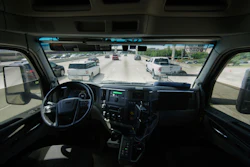
- Sleek cab design: The interior remains a familiar, spacious sleeper cab, hiding the central computing power beneath the bunk while integrating an engineer monitor and a driver validation interface.
Real freight, real highways
This isn’t just a concept—it’s actively hauling customer freight. Through a partnership with Ryder, the truck runs the critical I-35 corridor to Laredo, Texas. Once it merges onto the interstate, the autonomous system takes complete control, leaving human safety drivers to simply monitor the ride.
Roadmap to driverless
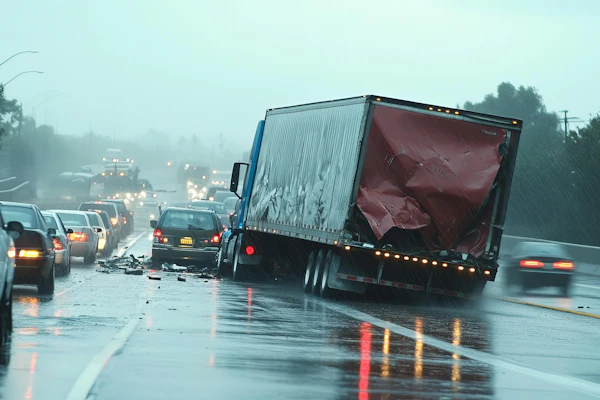
The ultimate destination? Complete driverlessness. International’s vision scales up to a hub-to-hub model managed by a 24/7 remote control tower. If a mechanical issue occurs—like a blown tire—the truck’s autonomous software executes a minimum risk maneuver to safely pull over, while cloud connectivity alerts the remote team to deploy roadside assistance.
Powered by Plus AI’s advanced software stack and built on International’s rugged hardware, autonomous trucking is hitting the highway.
00;00;00;08 - 00;00;20;02
Jason Cannon
Hey everybody, CCJ Editor Jason Cannon Here behind me we have an international light you've probably seen In Light before, but the unique thing about this is this is a self-driving international LTE. It's unique, and it's an opportunity for us to get up close with a truck that, under some circumstances, doesn't require a person to be sitting in the driver's seat for it to sort of do its thing.
00;00;20;02 - 00;00;37;04
Jason Cannon
We're going to talk to Jacob Castro with International Motors. He's going to tell us all about it. For the latest news on autonomous trucking and everything else trucking, sign up for our newsletter and visit us at Digital Now. Jacob, we know a lot about the international LTE. It's been around a while, but this is just a little bit different.
00;00;37;04 - 00;00;45;29
Jason Cannon
This is not your everyday international light, so walk us through some of the technology and what makes this truck capable to kind of drive without somebody in the driver's seat.
00;00;46;01 - 00;01;11;22
Jacob Castro
Yeah that's correct. So essentially we've up fitted this your standard LTE with all the required hardware and computing to allow this vehicle to engage an autonomous system. So essentially it can operate on its own. So just to kind of walk you through it, the truck is fully equipped with ten radar sensors, three leader sensors and ten cameras. So all of those are essentially fuzed together to essentially create a perception system that's going to be able to identify any type of objects while the vehicle is in motion.
00;01;11;22 - 00;01;31;24
Jacob Castro
So as you can see here, we have two of the radars up front across the windshield. Here we have about four cameras, I believe at the top. That's our long distance leader that's going up to distances of 300m. Moving here to the sides we have additional leaders 360 perception here on each mirror. Additional radar sensors here that also can be utilized.
00;01;31;24 - 00;01;49;23
Jacob Castro
And at the top my personal favorite we have kind of a cluster. It's a combination of radar sensors and cameras that are getting those blind spots, as well as the texting any objects not only for the tractor, but also for the trailer that's accompanying detracted. So really what we've done when we were designing this is we wanted to make it as concealed as possible.
00;01;49;23 - 00;02;06;03
Jacob Castro
If you look at other AV players currently in the market, it's much more obvious as far as the leader they're trying to take in the unibrow concept. It's much more in your face that this is the vehicle we personally want it to essentially include all the acquired hardware to to create that perception model, but make it much more concealed.
00;02;06;03 - 00;02;26;12
Jacob Castro
So it still looks like your your regular class A tractor. So I'm going to go ahead and give the opportunity to look in the interior. Again, nothing really out of the ordinary. It still looks like your standard cab for a light sleeper. So here specifically the call it I wanted to have is we have this monitor here that this is basically giving you kind of an idea of what the engineer is seeing on their end.
00;02;26;12 - 00;02;53;02
Jacob Castro
So it's showing the whole perception system from the actual leader and radar portion of the model. And then you also have the 360 camera view. We also do have an additional HMI here. This is really the validation tool for our driver. So this basically gives them communication as far as when the system is engaged when it's not. And they also have kind of a small snippet of what you're seeing here as far as the actual sensor suite and being able to detect any of those objects within the road.
00;02;53;02 - 00;03;14;26
Jacob Castro
We also do have all the computing here that is under the sleeper. So again, very concealed. We want the actual truck just to look like your standard sleeper here with our future future development, our next gen truck, it'll be much more compact. I guess you can say as far as where the computing will be stored. And then kind of a similar approach with the miss.
00;03;14;28 - 00;03;25;10
Jason Cannon
What are these trucks doing on the road for you guys right now? I mean, we've we've we've been through phases of testing with fleet trials. And then we have people in the market that are hauling customer freight. So you know, where are you guys out with this solution?
00;03;25;11 - 00;03;50;24
Jacob Castro
Yeah, we're also very we had the opportunity or we're currently having the opportunity to haul freight for customers. So we have a partnership with writer. So what that entails is Monday through Friday we're heading down to Laredo, Texas, which is a critical piece of transportation. A lot of a lot of merchandise is coming from across the border. So we grab the goods there and Laredo at their crosstalk and then the driver with the truck, of course, once they merge on to the actual I-35 corridor, is when they engage the system.
00;03;50;24 - 00;04;01;13
Jacob Castro
So that's where the magic happens. So from off ramp to on ramp, the system is fully engaged, running autonomously, drivers just monitoring and handling any deviations as necessary.
00;04;01;13 - 00;04;14;08
Jason Cannon
It sounds like you just told me first and final mile is my job. The middle mouthpiece, which is the significant part of that, is sort of the computer's job. So what happens to me? I get it on the interstate, I hit the button, maybe I slide over into the passenger seat and I'm just sort of on watch.
00;04;14;09 - 00;04;36;00
Jacob Castro
Yeah. So good point. Just to clarify on that, Jason. So our goal is for it to be completely driverless. So these vehicles will be going from point A to point B, essentially long haul without any driver entirely. So when the vehicle arrives at the terminal, it essentially will be it'll land in a designated area to which a field operator will come out, and they'll handle kind of the manual portion.
00;04;36;00 - 00;04;55;12
Jacob Castro
So they'll take the vehicle, they'll drop the trailer hook to the other trailer, do any type of inspections feeling as necessary, take it back to that designated area, which will now act as a launching pad and essentially contact our control tower, which will be a remote, 24/7 surveillance team, to basically say, this vehicle has been inspected and it's ready to roll, to which it'll be deployed out.
00;04;55;13 - 00;05;09;19
Jason Cannon
Is your way, or these things are prone to red breakdowns and just general crap happening to them. So, you know, tire sensor says, I've got a tire going down. What what does what does it look like when when the everyday thing happens? How does the technology handle something like that.
00;05;09;21 - 00;05;38;22
Jacob Castro
Yeah. So it's going to be crucial that all of the ECM or the modules are talking with each other. Right. And also our ads, which is the autonomous software. They're also communicating. There's two way communication will say, oh, I have an issue from there. It's going to have to conduct what we call a minimum risk maneuver. So it's going to have to be able to observe its environment and basically determine, make an educational or intelligent decision to say, can I continue to my final destination, or is this a critical event to where I have to essentially pull over to the curb while it's also pulling over the curb?
00;05;38;22 - 00;05;58;18
Jacob Castro
It has to be considerate of the other vehicles or in a construction zone, you know, it's going to. That's where the apes comes in. So we're going to ensure that this truck can make those decisions effectively on its own. And then from there, and as your example, with the blown tire, we'll have our control tower observing. They'll realize the vehicle will communicate out through the cloud and say, I have an issue.
00;05;58;18 - 00;06;16;01
Jacob Castro
From there, our team will basically be able to to manage or mitigate that issue. So they'll call roadside assistance, or they'll basically look at the overall status of the health of the vehicle and determine, you know, this isn't as severe as we thought. Let's just allow the truck to to safely hop to its final destination, where it'll get service there.
00;06;16;06 - 00;06;24;23
Jason Cannon
International's autonomous aspirations are sort of in partnership with plus. Jacob, can you tell us a little bit about that partnership and what pieces are plus and what pieces are international?
00;06;24;24 - 00;06;48;28
Jacob Castro
Yeah, so it's a really simple approach. Plus AI is essentially our tier one provider of the software stack. Everything else related to the actual hardware, the vehicle, the overall solution will be owned by international. But plus it's kind of working in the background, continuing to develop that software integrated into our vehicle, where we kind of take over and be the customer facing model or just overall the contact for customers when we're actually deploying these vehicles out.