










Flock Safety's ALPR cameras raise legitimate privacy concerns for trucking operations. AI generated some concerns about competitive threats, but those proved unlikely. The real risks, according to the experts, involve data breaches, insider abuse by law enforcement and cargo theft profiling.
- Flock ALPR cameras capture license plates, vehicle make/model, and physical features but not DOT or motor carrier numbers, limiting their direct threat to carrier bidding strategies.
- Google AI Mode initially claimed FOIA requests could expose proprietary lane data. It was an admitted hallucination that was "logistically flawed and structurally useless for commercial bidding."
- Real security threats include data breaches, law enforcement abuse and cargo theft profiling through historical movement logs during vulnerable retention periods.
- Flock's response includes a new limitation on data retention, Audit Assistance features, and required case codes for searches, but experts recommend stricter access controls like subpoenas.
- GenLogs offers a commercial alternative focused exclusively on truck data while protecting driver privacy and helping smaller carriers compete in freight markets.
Flock Safety ALPR (automated license plate recognition) cameras are under fire of late, receiving intense backlash due to privacy concerns surrounding the massive historical movement logs the platform collects. If you apply that context to trucking operations, Google AI Mode paints a scary picture for carriers.
AI Mode, powered by Gemini, claims those logs could “significantly impact trucking operations by exposing proprietary lane volumes,” enabling competitors to “utilize local lane frequency data to underbid freight contracts, destroying a carrier's geographical pricing advantage.”
I went down the rabbit hole so you don’t have to. "How is this possible?" I asked. The response: law enforcement logs, publicly accessible via Freedom of Information Act (FOIA) requests.
“If a request is processed within that rolling active window (the seven to 30 days before Flock deletes data) — or targets data that was previously saved to a local case file — the police department is legally obligated to hand over the unredacted spreadsheets of localized vehicle traffic,” according to Google AI Mode.
Cue the hysterical laughter.
My first language is journalism, then trucking. It doesn’t make sense from a trucking perspective for many reasons, including Flock cameras’ capabilities, the type of data they log (license plates, make, model, color and unique features, not DOT numbers or motor carrier numbers) and the locations they are in. But I knew by this response that it definitely didn’t make sense from a journalistic perspective.
There are so many flaws to point out here:
- FOIA applies only to federal agencies, not the local police departments that own the data captured by these cameras.
- FOIA requests — or state-specific public records laws in this case — typically take so long that by the time a response is supplied, the logs would no longer be pertinent.
- The operative words “legally obligated” and “unredacted” are laughable. Public records requests almost always have redactions, and many state laws provide legal exemptions to turning over such data.
When I called its bluff in a separate chat, Google AI Mode admitted its hallucination.
“Using FOIA requests for raw ALPR logs to map commercial freight lanes is operationally impossible, logistically flawed, and structurally useless for commercial bidding,” it said.
The movement of trucks
There are much easier methods for obtaining the necessary data to underbid and poach freight, such as digital freight matching platforms and aggregated TMS data providers. Additionally, the Federal Motor Carrier Safety Administration (FMCSA) reports the time, date and location of trucks when they are inspected.
“The larger carriers tend to operate in most markets/lanes, and those patterns are already evident in the FMCSA inspection data,” said Ryan Joyce, CEO of GenLogs, a truck intelligence platform that provides data on motor carriers via a nationwide network of roadside cameras.
Truckers are monitored by numerous technologies: ELDs, telematics, in-cab safety camera systems and every time they pass through a weigh station or are pulled over for a roadside inspection. The government collects all this data, and it’s public record. Companies like Central Analysis Bureau (CAB), a provider of data-driven risk management for the transportation industry and a sister company of CCJ, pull that data from government sources and provide analysis to insurance carriers and brokers to aid in their evaluation of carrier risk profiles.
GenLogs gathers the same data as the government but by capturing front, back and side views of trucks and trailers. Unlike Flock, GenLogs focuses exclusively on commercial vehicle data, using AI within its cameras to extract identifiers like DOT numbers, motor carrier numbers, license plates, equipment logos and types of equipment, while blurring windows to ensure driver privacy along commercial highways and interstates.
GenLogs also doesn’t pose a threat to carrier bids. Instead, Joyce said it can benefit the smaller carriers that tend to get lost in the noise.
“GenLogs has observed over 32,000 active motor carriers that have never had an inspection, and they tend to be the smaller and newer carriers,” he said. “They struggle to get loads from shippers or brokers, especially if there are no data to prove that they are real. GenLogs is now that common source of ground truth of which carriers are real, operate in certain regions and have the right equipment. We help eliminate fraud and illuminate 'dark' capacity.”
GenLogs’s commercial customers use the platform for carrier vetting. The provider also engages law enforcement when a customer reports a stolen asset to aid in its recovery. Joyce added that GenLogs has a contract with the Department of Transportation to support cargo theft or cabotage-related investigations.
Flock also aids law enforcement in criminal investigations, claiming to help solve more than 2,200 crimes on average per week.
“Where I've really seen Flock cameras to the positive is freight fraud,” said National Motor Freight Traffic Association Chief Operating Officer Joe Ohr. “When they use those cameras, they can track down stolen cargo. In fact, they found some stolen tungsten oxide powder.”
The real threat
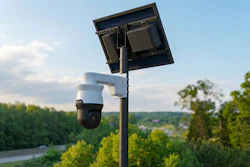
Flock’s ALPR data isn’t readily available to the public right now – only to those who install cameras and subscribe to the software such as local law enforcement, homeowners’ associations and logistics sites. These entities only have access to their own camera data unless the owner opts into a data-sharing agreement with a law enforcement entity.
Supply chain attorney Matthew Leffler of Armchair Attorney said “carriers and brokers could face competitive pressure if movement data becomes more widely available or is used to map preferred routes,” but Flock states on its website that it is prohibited from selling user data or disclosing any captured data to third parties without explicit customer authorization.
But that doesn’t mean Flock data can’t be hacked, Ohr said.
One fleet manager noted to CCJ that even though the private fleet owns and controls its data on platforms it uses, like ELDs and telematics, that data is still on the web and a provider’s servers.
“So, it is vulnerable,” they said.
Ohr said his concern would be cargo theft profiling and possibly even terrorism. Flock’s system cannot identify the type of cargo carried on any given truck. However, historical movement logs could enable sophisticated cargo theft rings to map vulnerable layover locations if a cybercriminal successfully infiltrates the system during the new seven-day data retention period Flock rolled out last week in response to public backlash over privacy concerns. Another risk is an inside job.
Ohr recalled reports of police officers abusing their access to the system to stalk people. So, who’s to say there isn’t a dirty cop somewhere using the camera data to stalk trucks?
Ohr recalled reports of police officers abusing their access to the system to stalk people. So, who is to say there isn’t a rogue officer somewhere using the camera data to stalk trucks?
Flock notes on its website that all images and metadata are encrypted throughout their entire lifecycle using KMS-based encryption, which limits access to encryption keys to protect data in the Amazon Web Services cloud. But CJIS (FBI Criminal Justice Information Services Division) data is available to law enforcement agencies.
Flock CEO Garrett Langley announced in a blog post last week that the company recently introduced Audit Assistance, which detects abnormal activity and flags it for administrator review, and will require case codes for all law enforcement searches by the end of the year.
“Abuse of Flock technology, at any level, is unacceptable,” he said in the post. “In recent weeks, those reviews have been associated with arrests of several law enforcement officers who allegedly abused the system.”
Ohr said Flock data needs to be secure and anonymized, and stricter guidelines should be implemented to restrict access to the data, such as a subpoena or a court order.
“I think that right now, with Flock, it's a little too easy to get the data … Making it harder to get the data is key,” he said. “The movement of trucks is not something we want to be public knowledge.”