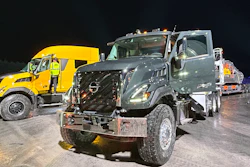











In the small town of Robinson, Texas, the local police department is using Flock Safety automated license plate reader cameras to track semi trucks coming through the town.
A YouTube video from 25 News KXXV reported that the town recently reviewed its semitruck policy following resident complaints about noise pollution. The town determined that more than half of the 63 trucks passing through during a 30-day period had local destinations. Large trucks are restricted from certain parts of the community and are not permitted as through traffic.
“Police chief should tell people if they don't want to hear the trucks they should stop buying things we have to deliver,” YouTube user @ISLANDTRUCKER said in a comment on the video.
Another user commented that “your quality of [life] would be worse without a truck.” Other comments raised privacy concerns.
Flock Safety cameras have experienced significant backlash from citizens across the nation, leading to groups mapping and vandalizing the devices. According to Flock camera tracker DeFlock, 100 cities have rejected (canceled or deactivated) Flock cameras. These protestations even led Flock CEO Garrett Langley to announce on Thursday that the company has made changes to its platform that limit data retention and police misuse.
Privacy and mass surveillance concerns mostly stem from private citizens. Although trucking companies’ assets are also tracked via Flock cameras, the concern there is more muted.
One trucking fleet manager told CCJ that while the company has no direct experience with Flock cameras, other camera companies have sent photos of its trucks—none showing the driver—passing through tollbooths or traffic lights.
“I understand there are privacy concerns but commercial drivers with ELDs know that there is nothing private about where they are, how fast they are going, etc.,” said the fleet manager who asked not to be named. “I was at Mount Rushmore last weekend. There were a large number of tourists with their phones out taking video as they walked around. I am sure I am in those videos, and the videos are posted on the web, so is that invading my privacy?”


Trucking concerns
Privacy has long been thrown out the driver-side window of truckers’ rigs.
Truckers are monitored by numerous technologies: ELDs, telematics, in-cab safety camera systems and every time they pass through a weigh station or are pulled over for a roadside inspection. The government collects all this data and it’s public record. Companies like Central Analysis Bureau (CAB), a provider of data-driven risk management for the transportation industry and a sister company of CCJ, pull and analyze that data for insurance carriers and brokers to evaluate carrier risk profiles.
National Motor Freight Traffic Association COO Joe Ohr said the privacy issue has a smaller impact in the trucking community because of all the surveillance they already experience in the cab, on the road and at customer facilities and truck stops.
That is not to say privacy concerns are nonexistent, added Jay Stanley, a senior policy analyst with the American Civil Liberties Union’s Speech, Privacy and Technology Project. The ACLU is one of Flock’s most prominent opponents.
“Trucking is already highly regulated, and when truckers are on the clock, they're working, not engaged in their off-work, private lives, where you're driving to see doctors, you're driving to maybe political events, gun shows, abortion clinics, psychiatrists' offices, whatever it may be,” Stanley said. “So I would think that in that kind of commercial context, the expectations of privacy would be reduced.”
Among its updates, Flock now defaults to a recommended seven-day retention period before data is permanently deleted, with exceptions for longer-running investigations. Langley noted in a blog post on Flock's website that existing customers will retain their democratically approved retention periods, allowing each community to choose the timeframe that fits its public safety strategy.
Legal experts say other concerns extend beyond privacy.
Supply chain attorney Matthew Leffler, The Armchair Attorney, said Flock data was cited as evidence in at least one hours of service violation when the camera showed a truck moving while the log indicated it was stationary.
“I would expect more of this as time goes on,” Leffler said.
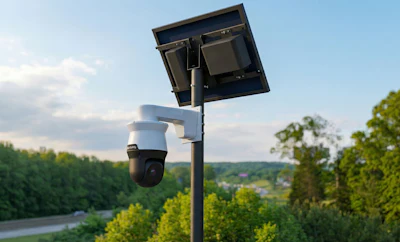
Flock Safety cameras are fixed, solar- or battery-powered automated license plate readers mounted along public roads and neighborhood entrances that capture bursts of six to 12 still photos rather than continuous video when a vehicle passes. The system uses artificial intelligence to log the vehicle's license plate, make, model, color and distinct features such as dents or roof racks, cross-referencing the details in real time against crime databases like the National Crime Information Center for stolen vehicles or Amber Alerts.
Leffler said most police departments claim data gathered from cameras is used solely for investigations, such as locating stolen vehicles or missing persons. Langley wrote in his blog post that Flock technology helps law enforcement solve more than 1 million crimes annually, adding that more than 1,000 missing people and more than 20,000 stolen cars were located in July alone.
The cameras do not detect speed, but they can capture vehicles traveling up to 100 mph from up to 75 feet away. An FAQ section on Flock's website notes that recording activity over a specific area is also possible.
Robinson Police Chief Larry Adams, in 25 News KXXV’s YouTube video, noted that the city's Flock cameras are also used for city planning and analysis.
Leffler warned that all use cases could expand and evolve.
“Cities already use the footage to support citations for local truck restrictions. Expanding to other enforcement like weight limits, route bans or even handheld-device violations if the cameras improve, is possible if local rules allow it,” he said. “Legality depends on state law and how the data is collected and retained.”
He noted citations are more legally enforceable when an officer reviews the data before issuing a ticket rather than relying on full automation. Langley similarly emphasized that a Flock alert is merely an investigative lead.
“The final safeguard is human,” Langley said. “Before acting, an officer visually confirms the plate and confirms the stop complies with law and agency policy. No stop should ever rest on an unverified alert standing alone.”
Flock cameras reportedly lack the integration with municipal citation systems required for automated speeding or red-light tickets.
Doug Marcello, a trucking and commercial transportation attorney at Saxton & Stump, said because the devices record vehicle identification, location and time, law enforcement could theoretically use them to calculate speed over distance.
“There is also the potential for use to determine vehicle accident involvement as well, tracking a vehicle at specific locations relative to the accident,” Marcello added.
When Ohr previously needed location data from a cellphone or telematics device during criminal investigations, he said providers like AT&T required a search warrant. With Flock, police access vehicle locations without a warrant. Leffler noted that courts generally treat license plates as public information, making warrantless scans routine.
“I think we need to start thinking about privacy differently,” the fleet manager said. “If you are in public space, there should not be an expectation of privacy, not reasonably. If you are in private space and you want privacy, you better turn off all of your devices.”