










Trucking news and briefs for Monday, May 4, 2026:
Hirschbach aims to add 500 autonomous trucks to fleet
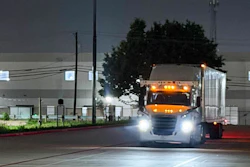
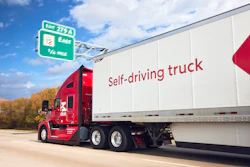
Hirschbach Motor Lines (CCJ Top 250, No. 44) is expanding its partnership with autonomous truck developer Aurora Innovation, which includes a plan for the fleet to own 500 Aurora Driver-equipped trucks.
The plan is reflected in a memorandum of understanding (MOU) outlining a path to scale with the final commercial terms and timing to be set in binding agreements expected to close later this year.
The final deal will allow Hirschbach “to aggressively scale its national network with 500 million driverless miles, while establishing a multi-year revenue stream for Aurora valued in the hundreds of millions of dollars,” Aurora said. Hirschbach has been an early adopter of Aurora’s autonomous technology.
"The Aurora Driver will provide consistent 24/7 service to our customers, making it an important growth lever for our business,” said Richard Stocking, CEO of Hirschbach Motor Lines. “But autonomy isn't just a business move – it’s a quality-of-life investment for our people. The Aurora Driver will handle the lengthier, less desirable routes, providing our drivers with greater flexibility. It’s a win-win.”
[Related: Aurora triples driverless network, eyes 200-truck fleet by year-end]
Under terms of the non-binding MOU, Hirschbach will purchase 500 Aurora Driver-equipped trucks with delivery beginning in 2027. The carrier will subscribe to Aurora’s Driver-as-a-Service (DaaS) model.
The 500 trucks will be deployed across Aurora’s network with a focus on high-volume routes between customer facilities in the Sun Belt and beyond. Aurora recently transitioned to driverless deliveries to Laredo, Texas, to support one of Hirschbach’s key customers.
The carrier is also a key customer on Aurora’s 1,000-mile route between Fort Worth and Phoenix, a critical link for the carrier’s coast-to-coast business. To date, the Aurora Driver has driven more than 800,000 miles while delivering over 2,000 loads for Hirschbach.
”When early adopters see the benefits the Aurora Driver delivers for their business and their drivers, they don't just stay the course – they scale quickly,” said Chris Urmson, co-founder and CEO of Aurora. “We’ve been lucky to have such a thoughtful and innovative partner since our early days, and we look forward to growing with them. The industry is primed for this product, and our momentum toward meaningful commercial revenue is hitting a new gear.”

Hirschbach’s expansion strategy anchors on a hybrid network where autonomous trucks handle long-haul routes, allowing traditional drivers to focus on shorter hauls that get them home daily. The carrier’s million-mile drivers were instrumental in evaluating the performance of the Aurora Driver prior to the launch of driverless operations on Aurora’s inaugural Dallas-to-Houston route, the companies noted.
“We’re proud to deploy a hybrid network with our drivers and autonomous trucks as we move toward a safer, more efficient future for refrigerated freight,” added Stocking.
[Related: Aurora begins driverless commercial operations in Texas]
Penske, Bridgestone announce results of Decarbonization Lab’s first phase
Bridgestone Americas (Bridgestone) and Penske Transportation Solutions (Penske) have announced the findings of the first phase of their shared initiative, the Decarbonization Lab.
The Lab was designed to identify and validate commercially viable, near-term solutions that help reduce CO2 emissions for commercial fleets under real-world conditions. Penske and Bridgestone plan to continue refining their approach and testing additional solutions in a second phase of the Lab in 2026.
"Our Bridgestone team is proud to have partnered with Penske for more than a decade, from IndyCar racing to deploying millions of retreaded tires across the Penske fleet,” said Erik Seidel, head of sustainability for Bridgestone in the Americas, Europe, Middle East and Africa. “The Decarbonization Lab is a testament to how sustainable transformation can be accelerated when we work together.”
The Lab tested the performance of three core elements: tires and retreads, renewable diesel, and route optimization. In partnership with data analytics provider Dynamon, the Lab demonstrated compelling results from more than 500,000 fleet miles in the first phase, the companies said.
- Tire and retread performance: Deploying low-rolling-resistance retreads, IntelliTire pressure monitoring, and Bridgestone tire casings on Penske trucks demonstrated a 6.35% improvement in miles per gallon.
- Renewable diesel evaluation: With emissions-reduction benefits from renewable diesel already established, the teams set out to test the feasibility of deploying this drop-in fuel in Tennessee – a location outside of Low Carbon Fuel Standard (LCFS) states like California and Oregon. The test was also designed to study the long-term maintenance and efficiency impacts of running the premium fuel in the Penske fleet.
- Route optimization and logistics efficiency: Penske and Bridgestone logistics and engineering teams are working together to optimize Bridgestone's automotive tire retail distribution network. The collaboration is projected to result in a reduction of approximately 152,000 miles from this transportation network. If scaled across the Penske-Bridgestone dedicated fleet, this would be equivalent to a 4-6% decrease in CO2 emissions.
"We are honored to collaborate with Bridgestone to bring the Decarbonization Lab to the marketplace,” said Bill Combs, Senior Vice President, Partnership & Sustainability Strategy, Penske. “Our companies have enjoyed a successful history of uncovering great solutions that benefit our customers and the industry."
Proposed UCR fee increase comment period extended
The Federal Motor Carrier Safety Administration is giving motor carriers and other registered entities more time to comment on a proposed increase to Unified Carrier Registration fees for the upcoming registration year.
The agency announced its intention to increase the fees in an April 7 Federal Register notice. For the 2027 registration year and subsequent years, the UCR Board recommended a fee increase averaging 20%, with varying increases between $9 and $9,329 per entity, depending on the size of the fleet.
The comment period on the proposal was set to close May 7, but FMCSA is now giving interested parties through May 26 to file comments. The extension, granted at the request of the Small Business in Transportation Coalition, is “to provide an opportunity for the public to access the supporting documentation regarding fee calculations for the 2027 registration year,” the agency said.
SBTC requested the extension on April 24 because certain supporting documentation referenced in the proposal was not uploaded to the docket. That material was added to the docket April 24 and is viewable here.
“FMCSA believes it is in the interest of the public to ensure that commenters have access to these documents for a full 30 days, as originally intended, to allow for meaningful input on this proposal,” the agency said in extending the comment period.
[Related: FMCSA proposes UCR fee increase for 2027]