













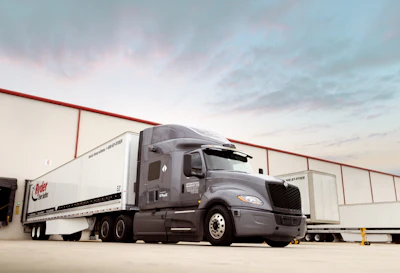
International Motors on Tuesday announced a joint autonomous truck pilot with Ryder System (CCJ Top 250, No. 7), marking a shift from closed-course testing to integrating self-driving technology into live freight operations.
The program makes Ryder the inaugural customer for International’s autonomous fleet trial. The pilot features a daily 600-mile round trip along the Interstate 35 corridor between Ryder facilities in Laredo and Temple, Texas. Early data from the Texas route shows a 100% on-time delivery rate and 92% autonomous route coverage, according to the companies. All hauls are currently supervised by a human safety driver.
Unlike previous industry trials that often required specialized autonomous terminals, this pilot aims to demonstrate that factory-integrated self-driving technology can operate within a customer's existing infrastructure.
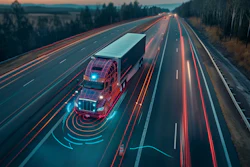
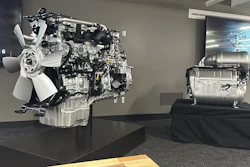
The pilot utilizes International’s second-generation autonomous tractor, an International LT Series truck equipped with S13 Integrated Powertrain; the PlusAI SuperDrive autonomous software system; and factory-Integrated lidar, radar, and cameras.
James Cooper, head of autonomous solutions at International, said the partnership is focused on delivering a "factory-ready" solution that mirrors the reliability of traditional trucks.
For Ryder, the trial represents a transition toward evaluating how autonomy functions in a high-demand logistics network.
"Operating an AV in an active logistics network... allows us to validate the technology where it matters most—on a real lane, moving real freight, for a real customer," said Seth deVlugt, senior director of RyderVentures at Ryder.
The companies reported that pre-trip inspections for the autonomous units are currently averaging less than 30 minutes, matching the expectations of standard fleet operations. The pilot has also shown improved fuel efficiency compared to traditional manual driving.
The long-term goal of the collaboration is to identify optimal use cases for long-haul transport and refine product features for a final commercial launch. Moving forward, International and Ryder plan to continue collecting data on vehicle uptime and serviceability to transform these pilots into scalable commercial solutions.