










An independent 1,000-mile evaluation by AMCI Testing found that while Tesla's FSD software shows dramatic improvements in vehicle control, persistent navigation glitches, driver complacency, and unvalidated severe-weather capabilities hinder its viability for full autonomy.
- Driver Complacency and Confirmation Bias: Smooth operation under fair conditions lulls drivers into a false sense of security, causing them to lower their guard and fail to intervene during sudden, split-second system errors.
- Unpredictable Navigation Errors: The system frequently makes unacceptable route-planning and lane-positioning mistakes, requiring unexpected driver takeovers to avoid hazardous situations.
- Level 2 Regulatory Limitations: Because FSD remains legally classified as a Level 2 driver-assist technology rather than a fully autonomous system, the constant burden of safety monitoring rests entirely on the human driver.
- Unproven Performance in Poor Weather: The camera-only approach lacks extensive validation in adverse conditions like rain, fog, or glare, leaving severe open questions about its reliability when visibility is compromised.
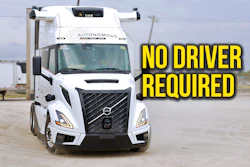
Tesla is just now beginning to ramp production of its long-awaited battery electric Semi, but the company has already set its sights on the tractor's potential for self-driving.
However, independent automotive research firm AMCI Testing, in findings from its latest evaluation of Tesla’s Full Self-Driving (FSD) software, concluded that driver assistance suite might not yet be ready for primetime, noting that while the camera-only FSD system has improved significantly, persistent navigation errors and driver complacency remain hurdles for the technology's readiness as a Robotaxi platform—an on-demand ride-hailing service that relies on Tesla's FSD software.
AMCI evaluated the FSD software over more than 1,000 miles under fair-weather driving conditions. Evaluators reported good vehicle control and lane positioning, but noted that the system continues to exhibit route-planning mistakes and occasional glitches.
Tesla will increase its focus on developing an autonomous version of the Tesla Semi in late 2026 or early 2027, CEO Elon Musk stated during the company's second-quarter 2026 earnings call July 22. Musk has never offered details on what type or version of FSD Tesla would deploy on its largest vehicle, or how it would account for the rig's size, weight and articulation.
"It will definitely be working next year and in time for the scale-up to high production of the Tesla Semi," Musk said.
AMCI researchers highlighted a psychological risk stemming from the software's smoother performance, warning that near-flawless operation under good conditions can create driver overconfidence.
"These steps forward continue to be a double-edged sword as they will tend to lull a driver into a false sense of security and not closely supervise the vehicle's driving while still not error free," said Guy Mangiamele, director at AMCI Testing. "From a regulatory standpoint, even now, it remains only a Level 2 system."
Under Society of Automotive Engineers (SAE) standards, Level 2 driver-assistance features require human drivers to monitor the vehicle constantly and intervene immediately if necessary. AMCI Testing noted that confirmation bias—where drivers assume the vehicle will continue performing well based on recent smooth driving—shifts the primary risk from system error to human distraction.


In addition to driver oversight risks, the testing uncovered multiple navigation and route-selection errors during routine drives. The firm expressed concern over how these errors would affect automated ride-hailing services, especially when paired with unproven performance in harsh environments.
"We're highly impressed by these latest camera-only system improvements in good conditions," said David Stokols of AMCI Testing. "The next phase of our testing – less-than-ideal conditions like rain, fog, etc. will be the ultimate acid test of FSD."
Founded in 1984, AMCI Testing conducts comparative evaluations across internal combustion, hybrid, electric, and fuel-cell vehicles, publishing independent certification data for the automotive industry.
The firm concluded that despite clear engineering progress, fundamental route-planning issues and limited validation in bad weather raise critical questions about how quickly Tesla can transition its software past Level 2 driver assistance toward a fully autonomous commercial vehicle.
Contents of this video
00:00 Is Tesla FSD Ready for Class 8 Semi Trucks?
01:10 1,000+ Miles of Real-World FSD Testing
02:08 Potential Failure Points & Major Questions Surrounding Legal Liabilities
03:12 FSD Supervised vs. Robotaxi Fleets: The Strange Performance Gap
07:44 Compute Overload & Hardware Limits
11:51 Speed, Weather, and Navigation Obstacles
13:58 Translating Passenger Car AI to an 80,000-lb Rig