










Sting told Roxanne that she didn't have to "put on the red light," but federal regulators are suggesting that driverless vehicles could put on a blue one.
In a notice of proposed rulemaking, the National Highway Traffic Safety Administration (NHTSA) offered updates to Federal Motor Vehicle Safety Standard No. 108, which governs lamps, reflective devices, and associated equipment. The proposal would modernize vehicle lighting standards to accommodate fully autonomous vehicles and introduced a standardized cyan-colored marker lamp to signal when a self-driving system is engaged.
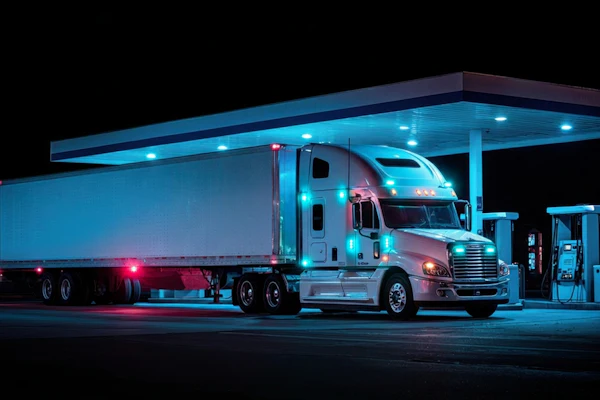
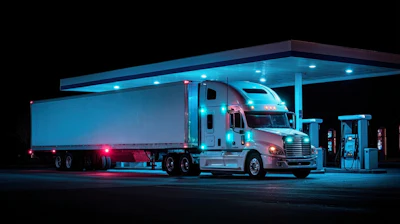
The optional Automated Driving System (ADS) marker lamps, if equipped, would include four to eight steady-burning cyan (blueish-green) lamps visible from the front, sides, and rear to signal law enforcement and other road users that the automated system is in full control.
The proposed changes address rules created when all vehicles relied on human drivers (remember those days?), and come at a time when autonomous trucking is really taking off.
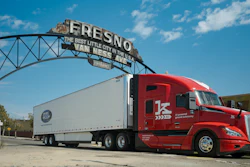
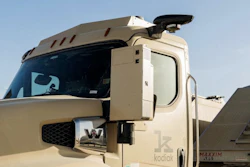
This month alone, Volvo Autonomous Solutions (V.A.S.) and driverless tech company Waabi launched their first joint commercial operation, deploying autonomous trucks to haul freight along the heavily traveled Dallas–Houston corridor for logistics provider Warp, and Autonomous trucking company Kodiak AI and Charger Logistics (CCJ Top 250, No. 171) announced a collaboration to haul refrigerated and dry freight for consumer packaged goods and food and beverage customers on the 435-mile lane between Charger’s terminals in Dallas and Laredo, Texas.
Other updates included in NHTSA's proposed rule include:
- Manual control flexibility: Excepts vehicles operated exclusively by an ADS from requirements mandating manual turn signal cancellation, hazard warning switches designed for human touch, and hand- or foot-operated beam-switching devices.
- Headlamp testing modernization: Eliminates the rigid 12.8-volt test requirement for integral beam headlamps, allowing manufacturers to certify performance at design voltages tailored to advanced LED systems.
- Vertical Headlamp Arrangement: Removes an outdated requirement dictating that lower headlamp beams must be placed above upper beams in a vertical orientation, giving designers greater freedom.
Vehicles equipped with manual controls will still be held to traditional standards.
For automated vehicles lacking turn signal telltales for human drivers, the agency proposes requiring a lamp failure telltale in clear view of all designated seating positions.