









The EPA proposed revised 2027 emissions regulations for commercial trucks that eliminate engine shutdown requirements for diesel exhaust fluid system failures, saving operators $12 billion annually while maintaining strict nitrogen oxide emission limits of 0.035 grams per horsepower-hour.
- The EPA proposal would save truck and machine operators $12 billion, including $6,000 per new truck purchased
- Eliminates engine deratement for DEF failures, allowing continued operation with alerts instead of shutdown
- Maintains strict NOx emissions limits at 0.035 grams per horsepower-hour during normal operation, more than 80% stricter than current standards
The Environmental Protection Agency (EPA) on Thursday published a proposal to revise regulations for commercial truck nitrogen oxides (NOx) emissions for the 2027 model year, dropping a requirement from the Biden-era rule that was widely panned as a contributor to acquisition cost.
Under its proposal that would affect on-highway trucks, off-road engines and farm machinery, EPA Administrator Lee Zeldin's office proposed to rescind an extended warranty requirement and restore the agency's previous warranty and useful-life rules. The Biden-era regulations required OEMs extend warranties to 450,000 miles from 100,000 and useful life limits to 650,000 miles from 435,000 miles. OEMs claimed those requirements passed upwards of $20,000 in added cost onto fleets — a number OEMs think now could be cut in half.
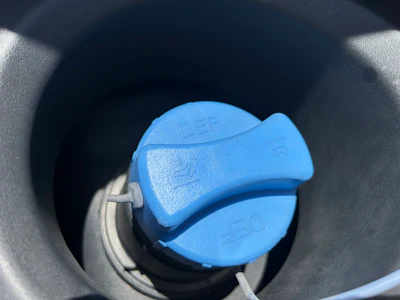
EPA also called for the elimination of engine deratement for diesel exhaust fluid (DEF) system failures. Instead of the vehicle shutting down, the driver or machine operator would receive an audible or visible alert of a DEF-related issue, but the engine would operate normally until a repair can be made.
The EPA said this proposal would save truck and machine operators $12 billion annually if approved, including savings of $6,000 for every new truck purchased and increased productivity by eliminating DEF deratements.
 From left to right: PACCAR CEO Preston Feight, ATA President & CEO Chris Spear, EPA Administrator Lee Zeldin, and EPA Assistant Administrator for the Office of Air and Radiation Aaron Szabo on Freedom Stage at the Great American State Fair on the National Mall.ATA
“Americans depend on reliable trucks to move essential goods across the country. If finalized, these changes will help manufacturers keep improving their vehicles without being forced to rush products to market before they’re ready," said EPA Administrator Lee Zeldin. "Combined with the Trump EPA’s first proposed deregulatory action to address ongoing DEF problems, this will ease real burdens for operators."


“Today’s proposed rule is about locking in long-term reform and delivering a diesel framework that lowers costs, restores equipment reliability, and puts the hardest working Americans first," added Kelly Loeffler, Administrator of the U.S. Small Business Administration.
NOx and particulate matter (PM) emissions limits, more than 80% more strict than the current allowance, remain intact for MY2027. The standards require heavy-duty commercial vehicles to limit NOx emissions to 0.035 grams per horsepower-hour during normal operation, 0.050 grams at low load, and 10.0 grams at idle.
American Trucking Associations President and CEO Chris Spear applauded the Trump EPA for Thursday's proposal, noting that since 1970, trucking has already reduced heavy-duty emissions by 99%.
In addition to changing the warranty requirements, EPA is also proposing a change to the useful-life requirements from the 2023 rule. Those useful life periods required manufacturers to demonstrate at the time of certification that the emission controls on their MY2027 and later engines are durable over longer periods, and manufacturers are responsible for ensuring that their engines will meet the standards in-use during those useful life periods.
Under the proposal, the longer useful life periods would apply beginning in model year 2030.
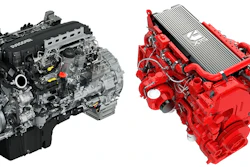
From a hardware perspective, OEMs already have EPA'27 compliant engines in the pipeline for the coming model year. Clearing the emissions hurdles was achieved with refinements to existing aftertreatment solutions, like adding more catalysts and electric elements that heat the system more quickly during startup.
In its updated ruleset, the Trump EPA also proposed expanding the availability and flexibility of the credit system manufacturers use to meet regulatory averages; permitting manufacturers to pay non-conformance penalties as a short-term alternative if they cannot immediately meet the hardware standards; and granting manufacturers more time to validate the reliability of new emissions-control systems under real-world operating conditions.
EPA noted that once the notice of proposed rulemaking publishes in the Federal Register, a 45-day comment period will open. The agency will then have to consider those comments before potentially finalizing any changes.
The Truck and Engine Manufacturers Association (EMA) on Thursday urged EPA to finalize its proposed ruleset, calling it “critical” that the rule be codified by year end “to provide manufacturers with the regulatory certainty necessary for compliance planning, go-to-market strategies, and product availability.
“That includes ensuring that regulatory mechanisms maintain the proven progress achieved through selective catalytic reduction (SCR) systems, while also reducing unnecessary vehicle or equipment downtime and avoiding operational impacts tied to regulatory inducements.”
How we got here
Administrator Zeldin announced in March 2025 that EPA was reevaluating the Biden-era 2022 Heavy-Duty Engine and Vehicle rule that regulates NOx and other emissions beginning with Model Year 2027, and EPA told CCJ in November that it planned to propose a rule in the spring of 2026. EPA's proposal cleared the White House Office of Management and Budget review earlier this month.
[Related: Diesel's future bright amid stringent 2027 regulations]
The Biden EPA's 1,153-page rule, too, required manufacturers to better ensure that vehicle engines and emission control systems work properly on the road, including demonstrating that engines are designed to prevent drivers and fleets from tampering with emission controls by limiting tamper-prone access to electronic pollution controls. The Trump EPA, however, has relaxed several emissions control measures in recent months that, the agency claims, make the systems more reliable and easier to repair, while also giving fleets and operators more flexibility.