










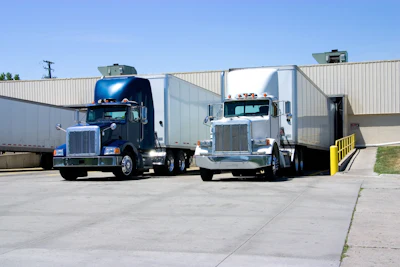
Freight brokers now face unprecedented legal exposure following a key Supreme Court ruling that allows state personal injury lawsuits to proceed directly to trial, creating a tightrope between proper carrier oversight and unlawful operational control.
- Loss of Preemption Defense: The Supreme Court ruled that federal law does not preempt state personal injury claims against freight brokers, interpreting carrier selection as part of the statute's motor vehicle safety exception.
- $604 Million Landmark Verdict: A Texas jury found C.H. Robinson directly liable for negligent selection and vicariously liable under the "borrowed employee" doctrine following a fatal multi-vehicle crash.
- The "Borrowed Employee" Tightrope: Brokers face a dual risk: failing to vet carriers invites direct negligence claims, while over-managing dispatch, tracking, or hours of service risks transforming independent drivers into statutory employees.
- Tighter Vetting Standards: The ruling makes FMCSA "Conditional" safety ratings and high out-of-service rates a major liability, forcing brokers to scrutinize third-party data and raw roadside inspection metrics.
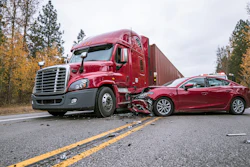
The Supreme Court in May ruled that federal law does not shield freight brokers from state-level personal injury lawsuits. Just two months later, that ruling was hammered home by a Texas jury and a $604 million judgment against logistics giant C.H. Robinson, motor carrier Lupus Superior, and a truck driver following a 2021 multi-vehicle crash that killed three people and injured two others.
For decades, property brokers had successfully fended off state-level negligent selection lawsuits by invoking the Federal Aviation Administration Authorization Act of 1994, arguing the federal law preempts state regulations affecting broker rates, routes and services.
Those days are over, according to Chad Krueger, vice president and managing director at Central Analysis Bureau (CAB) by Fusable, as the high court determined that personal injury and negligent selection claims fall squarely within the federal statute's safety exception, preserving state authority over motor vehicle safety. The SCOTUS ruling dismantled the procedural early-exit ramp brokers previously used to secure pretrial dismissals, ensuring that future broker liability lawsuits proceed directly to discovery and jury trials.
The financial consequences of that shift materialized in Dallas County, Texas, during the trial of Leip v. Lupus Superior—a lawsuit born from a fatal March 2021 multivehicle pileup in Mississippi involving an independent carrier moving a load arranged by C.H. Robinson. With the federal preemption defense no longer available, the case went to a jury, which returned a $604 million verdict against the defendants. While C.H. Robinson was assigned 23% direct fault for negligent selection, the jury also found the broker vicariously liable under a "borrowed employee" doctrine, concluding the intermediary exercised extensive operational control over the motor carrier and driver. C.H. Robinson has vowed to appeal the verdict.
The effects of the Montgomery case are already becoming clear. Landstar has reduced its pool of approved carriers from more than 100,000 in mid-2022 to approximately 64,000 at the end of the second quarter — a 35% reduction.

The 'borrowed employee' trap
In traditional freight brokerage arrangements, brokers operate as third-party intermediaries between shippers and independent motor carriers, and are shielded from the direct actions of contracted truck drivers. However, the legal doctrine of the "borrowed employee," or vicarious liability, is increasingly blurring that line in catastrophic accident litigation.
Under the common-law principle of respondeat superior, employers can be liable for the negligent actions their workers commit as part of their job.
"This is the same reason why motor carriers themselves are automatically responsible for any accidents that their drivers cause in the course and scope of their employment," said Brandon Wiseman, founder and president of Trucksafe Consulting.
While brokers are not direct employers, plaintiffs' attorneys are successfully arguing that intensive operational interference effectively turns an independent motor carrier’s driver into a broker’s borrowed hand.
"The more control that the broker has over the day-to-day operations of the motor carrier," Wiseman said, "the more likely you'll see these types of causes of action raised in these cases."
At issue is a broker's oversight of things that you would expect a motor carrier to be doing, he added.
"The more involved a property broker becomes in things like monitoring of a driver's hours of service, getting access to their ELD records, communicating directly with the drivers, calling them on their cell phones and asking them where they're at, and stuff like that—stuff that a motor carrier is normally the one doing—the more and more of that a broker takes on, in their capacity as the intermediary, the more likely it is that an argument that they were controlling that driver such that they become essentially their employer," Wiseman said. "Those granular-type, day-to-day operational meddling, essentially, in the motor carrier's operations that really exposes them to that type of argument."
The issue turns on the legal test of control. When brokers reach beyond rate negotiation and tendering freight to managing granular, day-to-day operations, they risk exposure to vicarious liability. High-risk practices noted by Wiseman include directly tracking and managing drivers’ hours of service, demanding and reviewing live electronic logging device data streams, bypassing carrier dispatch to contact drivers directly via personal cellphones for location checks, or dictating strict routing or handling driver-level dispatch decisions.
This dynamic creates a difficult dilemma for freight intermediaries. If a broker conducts too little vetting, it faces direct claims for negligent carrier selection. Yet, if it exercises excessive control to oversee safety and performance, it risks being labeled a statutory employer—leaving the broker legally and financially responsible for multimillion-dollar jury verdicts.
Conditional safety rating becomes a 'line in the sand'
For motor carriers, holding a "Conditional" safety rating from the Federal Motor Carrier Safety Administration has shifted from an operational headache to a commercial dead end.
Under federal oversight rules, safety fitness determinations—Satisfactory, Conditional or Unsatisfactory—are issued only after the government conducts a full compliance review or audit. A Conditional rating indicates federal investigators discovered systemic compliance defects or ineffective safety management controls, though not severe enough to order a mandatory fleet shutdown.
Because FMCSA audits are resource-intensive, fewer than 5% of the approximately 700,000 motor carriers operating in the United States have been audited and assigned a formal safety rating. The majority of fleets remain unrated.
Historically, freight brokers facing tight capacity have accepted conditionally rated carriers or placed them under secondary review. However, in the wake of recent high-stakes broker liability rulings, intermediaries increasingly view a Conditional designation as an indefensible risk in court.
Even if a carrier resolves the underlying violations, the Conditional rating remains permanently on its public record until the fleet formally petitions the agency for an upgrade and undergoes a subsequent review. As brokers tighten vetting standards to avoid negligent selection claims, fleets that fail to upgrade a Conditional rating risk being shut out of the brokered freight market entirely.
"If you're a for-hire carrier and you've lived with a Conditional rating, I'm just going to go ahead and say it right now: That is going to be a line in the sand now. You're going to have very few brokerage opportunities now after these cases where they're going to be okay with a Conditional rating, even if you've taken steps after the fact to to fix the issues," Wiseman said. "If you haven't gone the to the length of actually petitioning the DOT for an upgrade to that rating, then you're just going to lose out on business, because it is too risky now for brokers to be tendering freight to a conditionally-rated carrier. In most cases, that's going to be the case."
Wiseman noted that brokers are already turning to other sources of public-facing carrier information, like out-of-service rates, as they build out a fleet's safety profile.
"The fact that your out of service rates are published right alongside the national averages make it an easy metric for brokers and shippers to latch on to and just say, 'Hey, if you've got out-of-service rates that exceed the national averages, that's too risky of a proposition for me to to hand freight over to you,'" he said, noting that, too, comes with problems as a low inspection count can disproportionately affect motor carriers.
"If my trucks have only been inspected twice, and one of them was placed out of service, I've got a 50% vehicle out-of-service rate, well above two times the national average," he said. "If you're just looking at that number standing alone and not considering the data that's flowing into it, then then you are causing problems for the carrier, and you're not really understanding what it is you're doing with the data."
The lack of a a uniform safety standard for picking trucking companies, which the Transportation Intermediaries Association (TIA) has petitioned FMCSA to provide, has made carrier selection more haphazard than exact science, Wiseman said.
"All of the metrics that we are using—that brokers are currently using—none of them, in my opinion, have much to say at all about whether this particular carrier is safe or not," he said. "None of the available metrics do that because none of them were intended to to tell us whether a particular carrier is safe or not. Just look at the FMCSA's own statements on this issue over the years. They publish a statement to this effect on their CSA website that says these scores were never intended to be used to tell whether a particular carrier is safe or not. The system is a prioritization system. It helps the DOT determine what motor carriers they should prioritize for audit. Maybe there's some loose correlation between that and whether that carrier is safe or not, but it's a loose correlation at best."