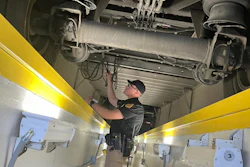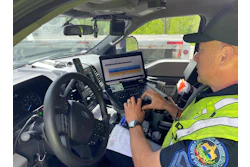











With the 2026 CVSA International Roadcheck fast approaching on May 12th–14th, truckers and fleet managers need to be on high alert. In this episode of The 10-44, hosts Jason Cannon and Matt Cole dive deep into one of this year's primary inspection focuses: ELD compliance.
Despite nearly a decade under the ELD mandate, hours of service violations remain the top cause for being placed out of service, with falsified logs still accounting for nearly 10% of violations. This discussion serves as a critical wake-up call for the industry to tighten up logbook accuracy before the three-day enforcement sweep begins.
A major highlight of this conversation is the widespread confusion surrounding personal conveyance and how it’s often misused—whether by mistake or intentional manipulation. Travis Baskin, Head of Regulatory Affairs at Motive, breaks down the FMCSA’s strict guidance, debunking the common myth that personal conveyance can be used as extra drive time to reach a safe haven after running out of hours.
Contents of this video
00:00 10-44 Intro: 2026 CVSA International Roadcheck
01:06 FMCSA’s guidance on personal conveyance
02:01 Misuse of personal conveyance and false log stats
02:38 Out-of-Service due to Hours of Service (HOS) violations
04:37 Mistakes and ELD edits
08:04 Connecting ELD at the beginning of trips
09:23 ELD edits and annotations; Why details matter
Speaker 1:
Listen up ELD users, road check is about three weeks away and history suggests about 30% of you are going to have some problems with law enforcement next month. Hey everybody. Welcome back to the 1044. I'm Jason Cannon and my co-host is Matt Cole. The 2026 CVSA International Road check is scheduled for May the 12th through the 14th of 2026. One of the focuses of this year's campaign will be ELD compliance, specifically targeting falsification, manipulation, and improper use of personal conveyance.
Speaker 2:
We're almost 10 years into the ELD mandate, so the industry has had a lot of practice with it. But last year alone, hours of service at almost 32% was the top driver out of service violation, and number four was falsified logs at almost 10%.
Speaker 1:
Whether it's a case of cheating or a simple mistake, the end result is about the same. Your truck is at risk of getting parked. Now, your best bet is to make sure that all drivers fully understand all of the rules that they're subject to, especially with something like personal conveyance, which is routinely something that is misused.
Speaker 3:
I think a lot of folks innocently don't understand FMCSA's guidance on personal conveyance. I think that it can be confusing in certain ways. If you boil it all the way down, the best way for folks to think about it is that you can use personal conveyance when you are off duty. Everybody understands what off duty means. It means that you're not working. And the only thing that personal conveyance does is it allows somebody to drive a vehicle without being put into the driving duty status. So if you understand that you're only using it whenever you're off duty, actually off duty, not performing work, then you can cut through a bunch of that. Potentially a bunch of these false logs violations. I do think though that there are folks that misuse it purposefully. A lot of folks try to use personal conveyance to hide otherwise appropriately recorded driving duty status time, and that's something that's going to be readily apparent through an interview during an inspection.
Speaker 2:
Of note, personal conveyance isn't extra drive time, and misuse of personal conveyance can show up in the false log stats.
Speaker 3:
A lot of folks think that you can PC to a safe haven whenever you've run out of hours. I see this periodically from customers at Motive. And that's just not the case. I think it might be an understanding that's generated from the guidance that the FMCSA put out years ago related to running out hours if you're being detained at a shipper. But a lot of folks think that they can just drive all the way up to their 11 and start rolling to find their parking at that time, and that's often cited as a misuse of personal conveyance.
Speaker 1:
Compliance is an everyday thing, and there's absolutely nothing special about road check. These inspections happen every day of the year in every state. But road check does serve as a good reminder that it's always a good idea to tighten up driver training and education, because again, about 30% of inspected drivers next month are probably going to be parked over an hour's problem.
Speaker 3:
The best medicine is prevention. You want to keep yourself and your drivers in your operation from having to make edits, from having to correct errors. And the way that you do that is by being diligent, coaching your drivers, making sure the expectations are set that your drivers are expected to be using the ELD diligently in the motive system, that means all multi-device-based electronic logging devices, which I think the majority of folks are using, that requires making sure that your app is connected to the vehicle before you start driving every time. Making sure that when you start driving, your driving duty status is automatically being recorded. And if it's not, if you notice something wrong, stop it right then. Getting the practice of doing that right now in anticipation of road check so that whenever you do get stopped, and everybody can expect to get stopped during road check, whenever you do get stopped, you're going to be able to produce an ELD record that is accurate and complete and have a successful encounter with that enforcement official.
The target for this year's road check is going to be ELD tampering and fraud. Enforcement officials are going to be looking for errors that are being made by drivers or more specifically intentional fraudulent entries being made in an ELD record. And they're going to be trying to look for locations and misuse of personal conveyance and unidentified driving, et cetera. If drivers are diligent upfront, then they're going to avoid being kind of maybe mischaracterized by an enforcement official during an interview or during an inspection as having tampered with making fraudulent entries to their ELD record.
Speaker 2:
Honest mistakes and oversights do happen, and sometimes ELD edits are necessary.
Speaker 3:
I would say that the right way to make edits is to not have to make edits. But in the circumstances when you do, we should keep in mind that drivers are always the first line for edits. Drivers own their record until they certify them and submit them to the motor carrier. So you want them to always, like I said, be diligent in their use of the electronic logging device, be diligent in their use of the app, depending on how your device is architected, and go back and insert a past duty status if you forgot to go off when you went to grab lunch. You know what I mean? Annotate something in your record if you need to explain what was going on, if it looks a little funny. And this is always coming up, unidentified driving records. If a driver forgets to connect to a vehicle, they should always remember that, and all of motor carriers should always remember that they can always assume unidentified driving from a vehicle that should have been attributable to them.
And in our system, you just connect your app to the vehicle gateway, which you should be doing every time you move the vehicle, but you connect it to the vehicle gateway and you're going to be prompted. You can just accept the unidentified driving events that you had on that vehicle. And that's going to be key during road check because you're going to get stopped. And if you've got unidentified driving on that record, the enforcement official's going to see it and you will be put out of service. Then next, fleet support personnel can suggest edits only once the driver certifies the record. And then the driver has to review it and either accept or reject that suggestion, and then they have to re-certify the log. Ultimately, you want to avoid having to do that because the driver is in control of their record, but obviously you've got folks in your operations that are reviewing records that are responsible for the compliance of these records they should be reviewing on a regular cadence and making those suggestions as they determine are necessary.
The focus of Roadcheck is going to be fraud and tampering. This whole focus came about because of some irreputable ELD providers that were allowing their customers to contact them and then make up ELD records from Whole Cloth. Everybody should know that that is not how reputable ELDs work. Reputable ELDs will have a record of every edit that is made to an ELD record. And so you should keep that in mind when you are making an edit that here we go. More details is much better. Go in, explain things. The enforcement officials are going to be presented with an extensive amount of data that they're going to be reviewing during this enforcement encounter, this inspection. And so you want to provide them with the data that's going to clearly explain what you've been doing. I think that's important to note. If you are presenting a record for a review that has a whole bunch of unidentified driving on it, the enforcement official's going to know that you're not being diligent, that you are not active in the platform.
And they're going to suspect potentially rightly that they're going to be able to find something wrong with what's going on. I always say that compliance is not supposed to be a gotcha. During the road check, it kind of can be. You got to have your Ts crossed and your I's dotted and you need to make sure that you're minding your Ps and Qs. But as a general proposition, if you are trying, you're going to get some relative leniency from enforcement personnel, but you got to be able to demonstrate that you're taking it seriously and you're trying.
Speaker 1:
The first step in ensuring you won't need to make any edits is to make sure your ELD is connected to the truck before you ever start your trip.
Speaker 3:
From my perspective, I think it is make sure that you are going to have your driving duty status automatically recorded whenever you move the vehicle. In our system, that means you got to log into the app and actively connect the application to the vehicle. You got to make sure that that app, vehicle gateway connection and in our system app vehicle connection is established before you start moving it. If you do that every time you drive, then you're essentially always going to have an accurate record. That's the biggest thing I think that pops up in my day-to-day, I suppose. When we're talking about general compliance best practices, motor carriers have to have clear policies for connecting, logging in to the ELD and for unidentified driving treatment. Drivers should all know that they're required to confirm that they are logged in, that the app is connected before they're driving.
And if they observe that they are not, they need to stop and reconnect anytime they notice that they are moving the vehicle and they're not in the driving duty status automatically. Most ELD issues that come from the field like falsifications are stemming from this specific instance, just not connecting, not logging in.
Speaker 2:
When it comes to edits and annotations, details matter.
Speaker 3:
If there is something that you can't get into your ELD record and fix, annotate it and explain it. You have to add a note that will go into the ELD record that'll explain some anomaly. And we should all keep in mind, enforcement officials are generally very reasonable. Enforcement officials are trained to review an entire record, including annotations and make reasonable determinations as to whether there's a violation that occurs or a violation they determine to include on a DVER. So if you give them more information, it's more likely that they're going to be able to exercise that discretion in a reasonable way, and it's going to allow you to get on down the road and not have to sit for 10. Details are always your friend with regard to your ELD record.
Speaker 1:
That's it for this week's 10:44. You can read more on ccJdigital.com. While you're there, sign up for our newsletter and stay up to date on the latest in trucking industry news and trends. If you have any questions or feedback, please let us know in the comments below. Don't forget to subscribe and hit the bell for notifications so you can catch us again next week.