










Prompted by high-profile legal challenges—such as the C.H. Robinson liability lawsuits and Landstar cutting 35,000 carrier partners from its network—freight brokers can no longer rely merely on basic government operating authority to clear carriers. The historical lack of accountability for negligent carrier selection has ended, creating an industry-wide need to address bad actors, fraudulent operations, and excessive contractual liabilities imposed by shippers.
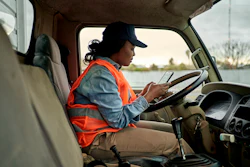
On the front lines, reps must verify driver CDLs against photo identification, cross-reference truck and trailer VINs with insurance policies, and confirm physical door signage before a load can even move. Adding that much administrative friction comes at a direct cost. Carrier sales reps who used to cover 15 loads a day are now managing closer to seven, effectively doubling the required headcount and overhead needed to service freight. That overhead, paired with tighter compliance thresholds, is driving up carrier onboarding costs and shifting financial pressures right back onto shippers.
Contents of this video
00:00 10-44 Intro; The Shift in Broker Liability & Carrier Selection
00:57 The Legal Risks of Wrongful Dispatch
05:37 The 100-Point Vetting Hurdle: FMCSA, VINs, and Compliance Tech
07:04 How Compliance Overhead & Reduced Dispatch Ratios Drive Up Costs
09:14 Purging High-Risk Carriers: Why the Carrier Pool Is Shrinking
12:21 Transitioning from Spot Market to Dedicated Carrier Sourcing
13:44 Market Outlook: Tightening Capacity, Rising Rates & Private Fleets
Speaker 1:
Fleet managers looking for ways to minimize fuel costs? Even small gains can lead to significant savings. Download our fuel savings strategy guide today for 80 actionable tips to boost your fleet's fuel economy.
Speaker 2:
As broker liability lawsuits and carrier vetting standards reshape the freight landscape, is the era of hands-off freight matching officially over? Hey everybody. Welcome back to the 1044. I'm Jason Cannon and my co-host is Matt Cole. High profile litigation and skyrocketing nuclear verdicts have fundamentally altered the liability landscape for freight brokers and 3PLs. For years, simply vetting a carrier's federal operating authority was considered enough due diligence to book a load, but recent court rulings are holding transportation intermediaries directly accountable for wrongful dispatch and carrier selection, forcing the entire industry to reevaluate its contractual exposure and risk management strategies.
Speaker 1:
When you get online and you look at what everybody. Everybody's talking about the big buzzwords, right? And it's fraud, theft, and liability around carrier selection. And those are the big buzzwords. And everybody's online talking about all of these things that are going on in our industry right now. And it's like a paradigm shifts changing in our industry. And when I started the industry, there was no, how is the carrier safety score? What's the liability? What's the risk around this truck? Who are we putting on these loads? There was no thought process around what is the inherent risk here for carrier selection? I remember when I was young and new at this, it took a long time for safety to get into my vocabulary. I started dispatching trucks. Our safety director, I'll never forget, he came to me and he explained to me that a small trucking company locally, dispatch a driver illegally.
The driver said, "Hey dispatcher, I can't do this legally." And owner of company said, "You need to do this load." Safety director said, "You need to do this load. It's not that big a deal." Driver gets in an accident and it created a fatality. And almost every single one of the people of that company ended up getting charges pressed on them for wrongful death. And I think that was like a reality check for me. Safety director sat me down and said, "Hey, if you dispatch trucks illegally, you could be held accountable for your actions." And that's on the trucking side. And now you switch over to the brokerage space and used to, there wasn't any accountability for the broker and now there's a lot of accountability coming towards the broker for wrongful dispatch. You look at three years ago, we really started down this journey of how do we mitigate liability and risk from a circle perspective?
Some of the steps that we took from a leadership standpoint is we got to go start from the. It starts from the contract with the customer. What are we contractually liable with the customer and what does our insurance actually cover? When you look at what our insurance actually covers, I'm big on the sales perspective. And one of the things that's been extremely difficult is we started five years ago looking at all of our contracts and looking at all the risks that we have. And then we started three years ago really taking action and pushing back on customers saying, "Hey, we can't take that risk, that liability that you're asking us to take. There's not an insurance policy that's going to cover us for a $50 million wrongful death suit that we're named." And so we started pushing back on customers, "Hey, our insurance policy covers you guys up to 21 million.
You have no coverage after 21 million." Luckily, Circle's a large enough company that if we did get into a $50 million lawsuit, we would be able to cover the exposure there. We're a $800 million company. We're not covering a $600 million lawsuit that we're named in. It's just not going to happen. I mean, that puts the company out of business. I think when you look at contractual liability that we have with our customers, what is our contractual liability? Shippers need to understand that what they're asking carriers to do or brokers to do, a lot of brokers just don't have an insurance policy that actually covers the liability that's there. A lot of people in our industry, because I've talked to, I've interviewed a lot, probably interviewed close to 1500 people this year, just in the role I'm in is finding people for our job, five interviews a day, it's five, six interviews a day.
Talking to leaders that are out there, every single company that is, I would say $500 million or less that we've interviewed an executive for, they're just signing the contract and taking on the liability and the risk. When you look at the corporations, the shippers that we go get set up with, they're taking that inherent risk. A lot of companies are taking that inherent risk. Circle just doesn't do that. Our contracting process with shippers is a lot rigorous and a lot more difficult. A lot of times we get on the phone with the legal team at the shipper, they're like, "Oh yeah, you guys only want to cover up to the risk that you guys have insurance and actual liability coverage for." So I think that's an interesting take, understanding that shippers got to understand the liability and the risk that they're signing us up for.
Certain corporations can't actually adhere to what the contracts are signing. Nobody in the industry is talking about the contractual risk that is out there versus what a carrier base is signing up for. I think that when you look at the C.H. Robinson case coming out, a lot more carriers, brokers are going to be selective on the contracting phase. I think our industry's just starting on this. I think we started on this contractual liability risk, C.H. Robinson messed three years ago to try to prevent that. You've got all of our processes internally. I mean, you almost have to be an FBI agent to book a carrier on a load now at Circle. I mean, it's a lot more stringent of a process to get a carrier on a load.
Speaker 3:
The vetting process is no longer just a background check. It's an intensive operational hurdle. Freight brokerages are now deploying strict compliance standards using platforms like highway to track carrier out of service violations, do not dispatch lists, and FMCSA history. On the front lines, reps must verify driver CDLs against photo identification, cross-reference truck and trailer VINs with insurance policies and confirm physical door signage before a load can even move.
Speaker 1:
You have to come up with a vetting process. You have to look at changes in their FMCSA. You've got to look at, we've got a pool of information out there we use. If we broke down the steps that we take, currently the steps that we take, we look at carrier 401 data, out of service violations. We go into a highway, we've got permission sets inside a highway that say, "Hey, recent changes in their FMCSA, they're on a current..." There's do not dispatch lists that are out there that say, "Hey, this carrier's a bad actor." We have close to a hundred points on each carrier that we have to pass or fail. And so for them to say, "Hey, they were given a DOT, they were given an MC number, they were cleared by the federal government." Our industry has got kind of a shady morale to it.
I mean, we just need our stuff picked up and delivered. We don't care how it gets there. That's how it functioned for years. That's not how it's going to function going forward. Now that brokers can be named, you make bad decisions, you're going to get punished in the court systems.
Speaker 2:
Adding that much administrative friction comes at a direct cost. Carrier sales reps who used to cover 15 loads a day are now managing closer to seven, effectively doubling the required headcount and overhead needed to service freight. That overhead paired with tighter compliance controls is driving up carrier onboarding costs and shifting financial pressure right back onto the shipper.
Speaker 1:
Our industry's very commission-based. So when you think about it being a commission-based job and a carrier rep getting paid commission, our industry is almost you're incentivized to do the wrong thing and put the wrong carrier on the load because they're the most cost competitive. Well, now you can't do that, which is driving up cost for all the shippers. You've created a model to drive up cost just because there's lots of bad actors. The industry's not addressed this at all in the time that I've been doing it. There's not been a way to address using fraudulent carriers, using bad actors. Nobody has slowed down. Nobody has sat down a dispatcher or a broker and said, "Hey, you're inherently taking the risk and the liability if something goes wrong with this carrier." And now that whole landscape changed. So it's going to change the cost, it's going to change how we do business.
We've already started to change it and it's painful to go from you can use anybody you want, you can sign any contract that you want with any shipper that you want. And our owners are so risk averse because we're a privately held company. It's two business owners and they say, "Hey, we don't want to get into a situation that we have a $50 million lawsuit. We just don't want to do it." And so we have a quality team that just stops and says, "Hey, you guys failed on the dispatch here. We just shut it down. We can't do that. We're not going to do it." And so when you think about Circle's growth rate, yeah, Circle's growth rate probably has lagged some in the industry as far as like, "Hey, we're growing and what our growth trajectory is, but for good reason because we've mitigated risk." It's not really that much of a fun of a job, so you've got to pay a decent amount of money to have people do it, which causes the cost to go back on the shipper.
So it's exactly what we're seeing in the trucking market and the model of how expensive things have gotten. It just all ties back to a lot of people that said yes to liability for years. They're just not saying yes anymore.
Speaker 3:
This crackdown is actively shrinking the available carrier pool. Major brokerages like Landstar and Circle have purged tens of thousands of high risk or non-compliant carriers from their active networks. For smaller fleets and independent owner operators, strict requirements such as minimum fleet sizes or multi-month operating histories make direct broker onboarding increasingly difficult, favoring established fleets with proven safety records.
Speaker 1:
The 35,000 that you get rid of, you have a process where you can go back through and re-qualify them, right? Just because you took 35,000 and you said, "Hey, write down currently they don't meet the standard and the benchmark." We've got a whole team that goes back through and re-vets carriers, looks at things. How long have they been in business? What's the expectation? It's funny that Landstar comes out and says they can cut 35,000 people, but C.H. Robinson says, "Hey, we don't have a standard like that to set. They're the industry leaders." C.H. Robinson's the industry leaders, but Landstar says, "Hey, we can go through a vet and find out that 35,000 people need kicked out of the network just based on these certain standards." So when we did it, a lot of what we did is we sat down as a leadership team. We went through highway.
I'm sure you know who highways and their software. We just went through the compliance standards that we say, "Hey, this is a must have, this is a must have. We've got to meet those requirements." And then we decided, "Hey, this is the pool of carriers that we're going to leave out of the network." And so we took and marked them inactive in our software system. And it's one thing to mark people inactive and it's another to have a team that backs you. So when you think about our fraud and compliance team, I think we're up to close to 25 people that do the fraud and the vetting and carrier compliance, which is four years ago we had one or two people that did carrier compliance that looked at things and made sure they were doing safety. In three years, it grew to the size of a 20 person team, two leaders.
I mean, that's a lot of infrastructure that you're putting around. I think we had 60,000 carriers in our network and it had to be. We got down to 22,000, I think was the pool of carriers, so it's about the similar numbers. We are a very spot bid heavy company, which you need a large carrier base to just do one-off loads, and we switched our model to be spot heavy to contract heavy. How do we get this transitioned over? How do we work with our carrier bases? How do we push our call volume up to find that carrier that needs a backhaul in certain routes? Yeah, it was painful. We fought it at the start of it. Staff fought it at the start of it.This will never work. Our override compliance team, so we do have certain things that we override, but it's got to go into an auditing queue.
A lot of times what happens is when you go into that auditing queue, it might be sitting in the auditing queue for a half hour, 45 minutes, and by that time we found another truck that's active. And so it's eliminating a lot of the marketplace of people that can't get their safety standards up to what's necessary. And it's crazy to think you took a carrier base, there's 40,000 people that were bad actors in our software base three years ago, or Landstar, 35,000 people just said, "Hey, you're not going to do this with Landstar anymore." That shows you how bad the marketplace was for fraudulent people, for bad actors, for people that weren't up to their safety standards. And that's 35,000, say they're four trucks per company. You just eliminated a lot of the trucking base.
Speaker 2:
To maintain reliable capacity without taking on runaway liability, brokers are shifting focus away from the open spot market toward deeper, longer-term carrier procurement partnerships. Instead of chasing the cheapest one-off truck, third-party logistics providers are investing heavily in dedicated carrier sourcing teams to help compliant fleets scale.
Speaker 1:
When we go into our safety standards, and if you pass our highway safety standards, conditional carriers, we look at unrated carriers, we really don't. Part of the project that we have going right now internally is I personally see what's going on in the industry and we've created a sourcing vetting team internally to find carriers for our customers. We've got a staff of 20 in Arkansas we're building up to. Melissa Lindsay is kind of our director of carrier procurement, and we're just going to work on the deeper relationships with our current carrier base. How do we get more out of the current carrier base? How do we help them scale? And that's just been a project that we've taken on internally. Let's bring our trucks to market, let's bring our carriers to market, let's figure out what they like to do. So when you look at the unrated carriers, if they're not satisfactory, they're not in our software system, they're probably not getting business.
And we're just going to work and we're going to work our current relationship farm deeper with our current carrier base and that's kind of been our strategy and realistically that's how you really create a good partnership. Those carriers want to grow, the carriers that are good and satisfactory that want to grow, they're going to get rewarded for doing the right things.
Speaker 3:
Between regulatory crackdowns, language proficiency standards, and internal broker purges, capacity is poised to tighten further. As freight rates adjust upward to reflect stricter operating realities, shippers and carriers alike will have to adapt to a market where risk mitigation, not just bottom dollar pricing, dictates who gets the freight.
Speaker 1:
I think you're going to see a lot more corporations taking on trucks. I mean, it's going to shift trucking back too. It's going to make the rates go way up. I mean, they've kind of already went up. I think it's going to continue to make the push the rates higher over that course of the next two years. And then you're going to see a lot of corporations are going to say, "Hey, it's better just to run our own trucks. We know we can carry a safety team, carry a transportation manager, carry fleets, carry fleets on, service our trucks." I mean, it's going to shift. AI is going to shift a lot of white collar workers over into the blue collar space because it's going to pay well. I mean, truck drivers are going to get paid really well. I mean, it doesn't seem like they've figured out autonomous trucks yet, and so I think you're going to have a 10-year gap where you see a lot of people that went to college getting in a truck and the capacity tightening, it's going to make driving a truck a premo job again.
There for a long time, drivers didn't get paid a lot. They've not been able to get a reward for driving. So I dispatched trucks for a long time. Some of the best friends I have are truck drivers. They deserve to be paid well. It's a hard job. I couldn't imagine driving down a road all day long. I think you're going to see a shift in a lot of the transportation fleets coming back on at corporations. They're going to do a pricing model and say it's easier to just own our own trucks and own our own equipment. That, and you look at the brokerage space since I got in it, I mean, I think the brokerage space has grabbed 10% of the network since I've been in it. I though the space when I got in it would probably die off and how can't they get this organized?
We've all tried to run around and organized data for the last 15 years and find the cost savings. Nobody's figured out how to get it all organized under one command center. At one point I thought Amazon would get a large control of the space. They seem to have grown in the marketplace, but not one person's figured out how to independently control the whole market. And so if you can't get control of the market, it's a problem. It hasn't shifted much and AI is going to help some of it, I think. We're able to make jobs a little bit more efficiently here.
Speaker 2:
That's it for this week's 1044. You can read more on ccjdigital.com. While you're there, sign up for our newsletter and stay up to date on the latest in trucking industry news and trends. If you have any questions or feedback, please let us know in the comments below. Don't forget to subscribe and hit the bell for notifications so you can catch us again next week.