










One of the traditional functions of a transportation management system (TMS) is to help streamline rate calculations, said BeyondTrucks CEO Hans Galland. That’s easy to do, he said, if the calculation is simple such as that for formulating a line haul rate.
But fuel surcharge rates aren’t simple.
“It's not difficult math. The problem is everyone does (fuel surcharge calculations) differently,” Galland said. “There are so many different permutations of this out there that it becomes very hard – even for companies that have been in the market for 20, 30, 40 years – to have all the different possible ways a (fuel surcharge) rate can be calculated in their system.”
That’s why the AI-native TMS provider has rolled out a new AI capability that aims to redefine how carriers build and manage rate table libraries. BeyondTrucks RateAgents for fuel surcharges is the first in a broader set of AI agents.
Galland said carriers have three options for rate tables: they can build their own custom software, which is expensive but can be worth it for the larger carriers who have so much money at risk in this area; they can use what their TMS vendor offers or request the vendor build a specific rate table, which is costly and time consuming; or they can use an Excel spreadsheet and manually input fuel data from the Department of Energy, which is time consuming and prone to error.
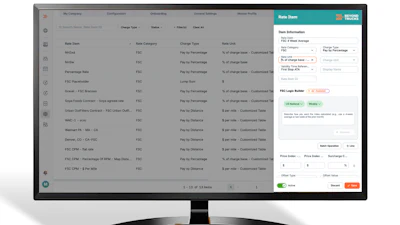
With RateAgents, the customer is given a set of dropdown menus: rate category (in this case, fuel surcharge); charge type (example: pay by percentage); rate unit (example: percent of charge base); charge unit; and validity time reference (when the surcharge begins). Then the customer can describe the math for their rate formula in plain language – exacly as they or the shipper would define them – in the fuel surcharge calculator.
In a demonstration, Galland typed “use the past six weeks rolling average for the West Coast PADD” in that field and clicked “calculation.”
Scanning and importing data directly from the Department of Energy fuel averages index, the AI automatically interprets the customer’s description and turns it into working code within the BeyondTrucks platform. Users can then test the output before deploying the code into their rate tables.

“The industry has very little standards around how these rates get calculated. Many of our customers may get paid on very complex rate tables, very unique tables that are a function of what they move. These tables can get very complicated and unique to the relationship between the customer and the carrier,” Galland said. “Because these rates are so complicated, they create a lot of work in the billing departments of the carriers because they need to calculate all these things, and they make mistakes.”
He said this new capability enables non-technical users like billing clerks and dispatchers to create rate tables.
“Think of it like a ChatGPT or Claude interface where you talk to it as if it were another person,” he added. “The whole purpose of this is to democratize software engineering. We are democratizing a skill, which is building custom code that these vendors use to hold hostage their customers, and we’re removing that barrier. So in an interesting way, I think this tool makes the market more competitive.”
Galland said this functionality in the BeyondTrucks platform covers every possible fuel surcharge permutation – something that has previously been impossible – while moving technical capability closer to the operational teams who understand the business.
Fuel surcharges is only the initial application of RateAgents.
Galland said his team started with the most difficult rate to calculate, and now any other RateAgents will become easier to launch.
“We can roll this agent out to other rate types, including line haul, detention rates, any other assessorial, etc. … There are many different rates we can apply this technology to,” he said.